
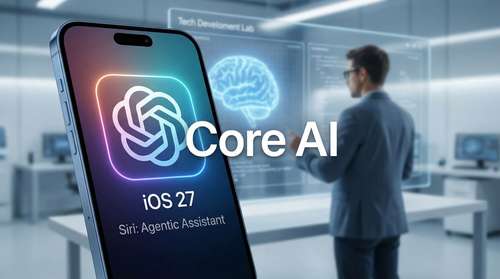
In a watershed moment for Apple's software architecture, leaked reports indicate the tech giant is retiring its decade-old Core ML framework in favor of a modernized system dubbed 'Core AI'. This strategic pivot, set to be unveiled at WWDC 2026, serves as the foundational bedrock for iOS 27 and a new, proactive Siri capable of autonomous cross-app execution. As the company prepares for its 'Special Experience' event on March 4, sources suggest this software overhaul addresses the underwhelming reception of Apple Intelligence in 2025, signaling a frantic push to dominate the agentic AI landscape.
The End of Core ML: Why Apple is Pivoting to Core AI
According to Bloomberg’s Mark Gurman, the transition from Core ML to Apple Core AI framework is more than just a rebranding exercise; it represents a fundamental shift in how Apple devices process intelligence. While Core ML successfully democratized machine learning for developers since 2017, internal memos suggest the term "machine learning" is viewed as antiquated within Apple Park, failing to capture the generative and agentic capabilities of modern models.
The new Core AI framework is reportedly designed to handle agentic workflows natively. Unlike its predecessor, which focused heavily on classification and pattern recognition, Core AI is built to facilitate complex reasoning chains directly on-device. This architecture allows developers to plug their apps into a system-wide "intent layer," enabling Siri to understand not just what an app does, but how to operate it on the user's behalf. This move is critical for the upcoming iOS 27 Siri overhaul, which promises to transform the assistant from a voice command interface into a proactive digital agent.
iOS 27: The Stage for a Proactive, Agentic Siri
The leak details that iOS 27 will be the vessel for Apple's most ambitious AI integration to date. Following the criticism of the initial Apple Intelligence rollout—which many users found limited compared to competitors—the new OS version aims to deliver on the promise of a truly "smart" assistant. The project, internally codenamed "Camp," reportedly leverages the Core AI framework to give Siri agentic capabilities.
Features of the New Agentic Experience
Sources indicate that the revitalized Siri in iOS 27 will possess "screen awareness" and "cross-app agency." For example, a user could ask Siri to "plan a dinner date for next Friday," and the assistant would autonomously check the Calendar for availability, reserve a table via OpenTable, and draft an invite in Messages—all without the user opening a single app. This level of Siri proactive features relies heavily on the new Core AI framework's ability to maintain context over long periods, a significant upgrade from the ephemeral nature of current interactions.
Imminent Hardware: The iPhone 17e Release
While software takes the spotlight in recent leaks, hardware remains the immediate focus. Analysts expect Apple to announce the iPhone 17e release during its scheduled media event on March 4, 2026. As the successor to the iPhone 16e, this device is rumored to be the budget-friendly entry point for the new Core AI ecosystem.
Leaked specifications suggest the iPhone 17e will defy "budget" conventions, packing the powerful A19 chip—a necessary inclusion to handle the on-device processing requirements of Core AI. Expected to start at $599, the device will likely feature a 6.1-inch OLED display and, for the first time in the "e" series, MagSafe support. By putting flagship-level silicon in a mid-range phone, Apple is ensuring that its massive user base is hardware-ready for the agentic AI features arriving with iOS 27 later this year.
The Google Gemini Partnership
A crucial component of this strategy involves a deepened partnership with Google. Reports from early 2026 confirmed that Apple would utilize Google's Gemini models to power the cloud-based components of its new agentic system. While Core AI handles sensitive, on-device processing and personal context, complex queries requiring world knowledge will reportedly be offloaded to a private, Apple-managed instance of Gemini.
This hybrid approach allows Apple to bypass the years of training required to build a foundational model from scratch, focusing instead on the "last mile" of user experience and privacy. It addresses the "hallucination" issues that plagued early AI attempts by grounding Siri's responses in verified data streams, a key differentiator for the Apple Intelligence 2026 roadmap.
Looking Ahead to WWDC 2026
With the Apple software leak 2026 gaining traction, all eyes are on the Worldwide Developers Conference in June. The retirement of Core ML marks the end of an era, but the introduction of Core AI suggests Apple is finally ready to compete in the agentic future. If the rumors of iOS 27 and the iPhone 17e hold true, 2026 could be the year Siri finally graduates from a digital assistant to a digital executive.