
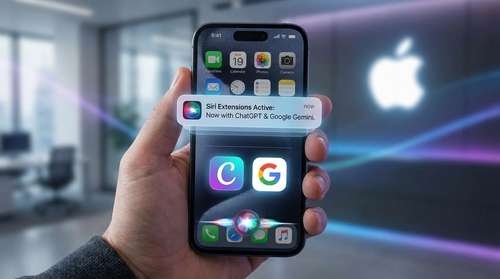
Apple is preparing a massive overhaul of its mobile operating system, fundamentally changing how iPhone users interact with artificial intelligence. Following a revealing report from Bloomberg's Mark Gurman, details have emerged about the upcoming iOS 27 update, which will finally break down the company's notorious walled garden. Starting with the WWDC 2026 keynote slated for June 8, Apple will officially open Siri to third-party artificial intelligence models. This monumental shift will allow users to seamlessly integrate ChatGPT on iPhone, Anthropic's Claude, and Google Gemini directly into the core user experience, marking a new era of flexibility for the world's most popular smartphone.
The End of the Exclusive OpenAI Era
For the past two years, Apple maintained a highly publicized, exclusive partnership with OpenAI. That 2024 agreement—which reportedly involved zero dollars exchanging hands—was a mutually beneficial stopgap. It gave Apple immediate, high-quality chatbot functionality without the grueling development timeline, while handing OpenAI access to millions of active iOS users.
However, the upcoming Apple Siri AI integration marks a dramatic shift toward an open ecosystem. By introducing a system-level feature currently dubbed "Extensions," Apple is giving consumers the power of choice. Users will no longer be locked into a single provider when their native voice assistant falls short.
How the New Extensions Feature Works
Code snippets from test versions of iOS 27, iPadOS 27, and macOS 27 reveal that Extensions will allow installed apps to act as seamless agents alongside Siri. If you prefer Claude's nuanced writing style or want specific Google Gemini Siri capabilities, you simply need to download the respective application from the App Store.
Once installed, users will navigate to the Apple Intelligence and Siri settings menu to set their default chatbot preferences. When Siri encounters a complex query beyond its native scope—such as generating a long-form essay, analyzing a complex codebase, or synthesizing vast amounts of data—it will intelligently hand the prompt over to your selected third-party model. To streamline this transition, Apple is reportedly adding a dedicated App Store section directly within the Siri settings menu to help users discover and download new AI services.
A Strategic Move for Services Revenue
While the iOS 27 features are undoubtedly a win for user flexibility, they also represent a highly calculated financial maneuver. By requiring users to download third-party AI assistants through the App Store to enable the Extensions feature, Apple positions itself to capitalize on the booming AI subscription market.
If an iPhone user decides to upgrade to a premium tier—such as ChatGPT Plus, Claude Pro, or Gemini Advanced—through an in-app purchase, Apple stands to collect its standard commission of up to 30 percent. This shift in strategy highlights a major theme in Apple AI news 2026: monetizing artificial intelligence without bearing the immense server and infrastructure costs of running every model internally. The company is effectively transforming what was once a rigid, proprietary system into a lucrative, open marketplace for AI tools.
The Standalone Siri App and Google Gemini Connection
Beyond third-party integrations, Apple is still pushing forward with its own massive overhaul of its native assistant. Internal sources suggest the company is actively testing a Siri standalone app, shifting the assistant from a simple voice-only overlay to a robust, text-based chatbot experience that mirrors its competitors.
Interestingly, Google retains a uniquely privileged position in Apple's broader AI strategy. Despite opening the door to Claude and ChatGPT, Apple's underlying infrastructure for the next-generation Siri and core Apple Intelligence features will still heavily rely on Google's Gemini models. Last year, reports indicated Apple paid Google roughly $1 billion to serve as the structural brains of the smarter Siri. This dual-track approach ensures the native Apple experience is powered by world-class infrastructure, while users who want specific third-party tools can still access them effortlessly.
Navigating the Apple vs. xAI Legal Drama
The pivot to an open chatbot marketplace comes at a critical time for the tech giant's legal department. Recently, Elon Musk's xAI startup filed a lawsuit against Apple and OpenAI, alleging their exclusive 2024 partnership constituted anti-competitive behavior designed to maintain market dominance. Musk has been highly vocal about wanting his Grok AI available on iOS. By unlocking the ecosystem to Claude, Gemini, and eventually Grok, Apple effectively neutralizes these exclusivity complaints while vastly improving the consumer product.
Looking Ahead to WWDC 2026
With the Worldwide Developers Conference fast approaching on June 8, the tech world is eagerly awaiting the official unveiling of these capabilities. Developers are already getting a taste of this openness, as the recent iOS 26.4 release quietly allowed AI chatbots to integrate with CarPlay for the first time.
The transition from a closed system to an open AI aggregator could redefine how we use our smartphones. Instead of debating which single AI model is superior, iPhone users will soon have the luxury of using all of them, customized entirely to their daily workflows. As developers scramble to update their applications for the new Extensions framework, the upcoming software release is shaping up to be the most consequential update in Apple's modern history.