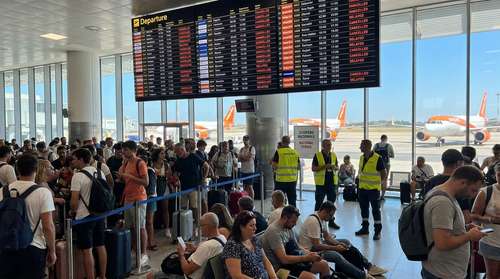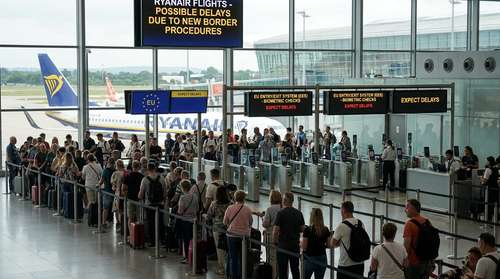
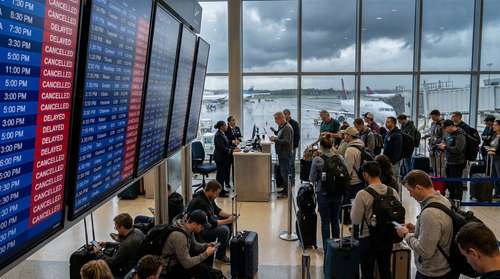
A volatile mix of severe spring thunderstorms and systemic airline staffing shortfalls has unleashed widespread travel misery this weekend, triggering over 2,000 US flight cancellations and delays across the nation's busiest airspace. As passengers pack terminals during the peak of the spring travel season, rolling delays have transformed major hubs into temporary holding areas. If you are traveling through the Northeast, the Midwest, or the West Coast, you are likely feeling the immediate impact of an aviation network stretched past its breaking point.
Spring Travel Disruption 2026: What's Driving the Chaos?
The root of the current gridlock stems from back-to-back storm systems slashing through critical air corridors. Just this weekend, powerful thunderstorms over the Bay Area forced the Federal Aviation Administration to issue sweeping ground stops at San Francisco International Airport. On Saturday evening, high winds and localized lightning shut down runways, creating average arrival and departure delays of nearly an hour that quickly ballooned to 160 minutes once traffic resumed. While local ground operations halted, simultaneous severe weather patterns swept through Texas and the Southeast, effectively trapping aircraft on tarmacs across the country. When bad weather closes major runways, the resulting ripple effect quickly destabilizes an already fragile flight schedule.
This spring travel disruption 2026 is further complicated by compounding operational pressures. Carriers are currently running their most aggressive, fully booked schedules in years. With very little slack remaining in the system, even a brief pause in departures means ground handlers, air traffic controllers, and flight crews rapidly hit their federally mandated duty-time limits. The result is a cascading wave of grounded aircraft that simply cannot be repositioned fast enough. Industry analysts note that airlines increasingly prefer holding flights in rolling delays over outright cancellations to keep crews in place, but this tactic ultimately leaves exhausted passengers stranded overnight.
Airline Delays Today: A Look at the Hardest-Hit Hubs
If you are looking up airline delays today, the aviation map is glaringly red. Major connection points are bearing the brunt of the capacity restrictions, and the congestion is spreading to international departures. Travelers checking their Chicago O'Hare flight status will find rolling delays extending past two hours as the Midwest hub struggles to clear backed-up arrivals. Missing a connection in Chicago right now often means waiting until the following afternoon for an available seat.
Further south, Atlanta airport delays continue to mount. As the world's busiest airport attempts to manage both heavy local demand and redirected flights from other storm-battered regions, the backlog has led to severely cramped boarding areas. On the East Coast, the situation is similarly grim. Passengers are reporting unusually long TSA wait times EWR at Newark Liberty International, where lingering disruptions from earlier in the week have left hundreds of frustrated travelers attempting to rebook simultaneously while navigating understaffed security checkpoints. When thousands of travelers are unexpectedly pushed to morning flights, security infrastructure is quickly overwhelmed.
Know Your Rights: Navigating Flight Cancellation Compensation
With thousands of passengers stranded far from their destinations, the immediate question is what airlines owe you when your itinerary falls apart. Not all disruptions trigger automatic refunds or hotel vouchers. Because weather is categorized as an act of nature and is the primary catalyst for this weekend's massive grounding, airlines are not legally required to provide comprehensive flight cancellation compensation.
However, federal consumer protection guidelines require carriers to offer a prompt, full refund if your flight is significantly delayed or canceled and you choose not to travel. For issues deemed within the airline's direct control, such as cascading crew-scheduling conflicts or sudden maintenance problems, passengers may be entitled to meal vouchers and hotel accommodations. Always ask the gate agent to clarify the official coded cause of the delay. Furthermore, check your premium credit card's travel protection benefits, which often cover incidentals and emergency lodging during severe weather disruptions.
Strategies for the Stranded Traveler
There is no immediate fix for a network-wide breakdown of this magnitude. While airline logistics teams are working feverishly through the backlog, travel experts warn that the knock-on effects of these massive disruptions will linger well into the coming workweek. Operations to and from secondary regional markets might take the longest to normalize, as carriers naturally prioritize fixing widebody trunk routes and lucrative international connections.
To navigate the remainder of this volatile weekend, proactive planning is essential. Avoid calling overwhelmed airline customer service hotlines, which are currently posting multi-hour hold times. Instead, use the airline's mobile app or website to process rebookings or re-route yourself through less congested secondary airports. If your journey involves international segments, stay highly vigilant. The reality of modern aviation is that localized weather events have global consequences. Data from aviation monitors highlights that global networks across Europe and Asia are already feeling the residual squeeze from delayed North American flights, leading to complex missed connections overseas.
Preparation and patience remain your best defenses in the face of this widespread gridlock. Build significant buffer time into your connections, pack essential medications and electronics in your carry-on luggage, and monitor official airspace advisories directly before heading out to the terminal.