The highly anticipated Cerebras IPO filing has officially dropped, sending shockwaves through the technology and finance sectors. On April 17, 2026, the Sunnyvale-based AI hardware challenger submitted its S-1 registration statement to the U.S. Securities and Exchange Commission. The company is targeting a mid-May debut on the Nasdaq exchange under the CBRS stock ticker. Driven by a staggering financial turnaround and multi-billion-dollar enterprise contracts, the move represents the first major public market test for a direct rival to Nvidia’s long-standing supremacy.
For investors and tech enthusiasts alike, this listing is more than just another tech debut. It signals a maturation in the semiconductor ecosystem, proving that purpose-built silicon can effectively compete against established giants. With deep-pocketed backers and a massive backlog of enterprise orders, this Nvidia competitor IPO is poised to be a defining moment in modern computing history.
Redefining the AI Chip Market 2026
The AI chip market 2026 has reached a critical inflection point. Over the last few years, Nvidia has held a near-monopoly on the high-performance graphics processing units (GPUs) required to train large language models. However, as the artificial intelligence industry shifts its focus from model training to real-time inference—the process of actually running the models to generate responses—the demand for highly efficient, specialized processors has skyrocketed.
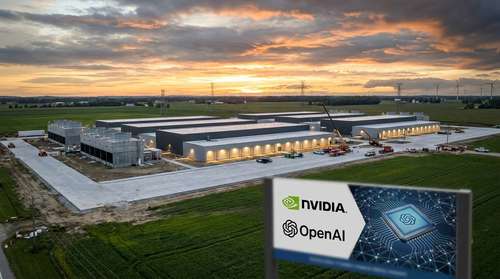
Cerebras has positioned itself perfectly for this transition. Central to the company’s recent explosive growth are strategic mega-deals that lock in long-term revenue and validate its technology. Earlier this year, Cerebras secured a landmark compute agreement with OpenAI. Valued at over $10 billion, the multi-year contract guarantees up to 750 megawatts of computing power through 2028, fundamentally diversifying the company's customer base.
Beyond OpenAI, the chipmaker has landed a massive infrastructure partnership to supply its processors to Amazon Web Services (AWS) data centers. These long-term commitments are triggering a broader shift in AI infrastructure investment, as cloud hyperscalers actively look to diversify their hardware supply chains and reduce their reliance on a single vendor.
The Hardware Revolution: Inside the Wafer-Scale Engine 3
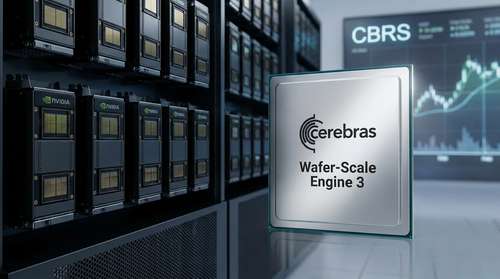
At the heart of this market disruption is the company's flagship hardware innovation: the Wafer-Scale Engine 3 (WSE-3). Traditional AI computing relies on networking hundreds or thousands of smaller GPUs together. This fragmented approach creates inherent physical bottlenecks, as data must constantly move between separate chips, consuming massive amounts of power and slowing down processing times.
Cerebras takes a radically different approach. Instead of slicing a silicon wafer into individual chips, the company uses the entire wafer to create a single, massive processor. The WSE-3 boasts an incomprehensible 4 trillion transistors and 900,000 AI-optimized cores. By keeping all processing and memory on one continuous piece of silicon, the company effectively eliminates the data transfer delays that plague traditional GPU clusters.
Technical Superiority for Fast Inference
This architectural advantage translates to dramatically higher memory bandwidth and faster inference speeds. CEO Andrew Feldman has publicly stated that the company essentially "took the fast inference business away" from competitors, a bold claim now backed by rapid enterprise adoption. Delivering performance that significantly outpaces standard compute models while utilizing less power, the wafer-scale design is rewriting the rules of data center efficiency.
Analyzing the $23B Cerebras Valuation and Financial Turnaround
The financial figures revealed in the S-1 filing paint a picture of a company rapidly scaling into its massive market potential. According to the documents, Cerebras achieved $510 million in revenue for the 2025 fiscal year. This represents a phenomenal 76 percent year-over-year increase from the $290.3 million reported in 2024.
Even more impressive is the company's success in mastering its operating costs. Cerebras has officially transitioned from burning venture cash to generating positive earnings. The filing details a dramatic swing from a GAAP net loss of $484.8 million in 2024 to a net income of $87.9 million in 2025. This profitability is bolstered by remaining performance obligations (RPO) totaling nearly $25 billion at year-end, providing a highly predictable and lucrative revenue backlog for the foreseeable future.
In February 2026, a $1 billion Series H funding round led by Tiger Global—with significant participation from Benchmark Capital—pushed the private Cerebras valuation to approximately $23 billion. With Morgan Stanley leading the underwriting syndicate, market analysts anticipate the public offering will seek to raise around $2 billion, targeting a valuation between $22 billion and $25 billion when shares finally hit the open market.
What the CBRS Stock Ticker Means for Investors
For retail and institutional buyers alike, the impending arrival of the CBRS stock ticker offers a rare pure-play opportunity to back a profitable, high-growth hardware innovator. While the broader semiconductor space has enjoyed a historic run over the past few years, this particular listing allows the market to invest directly in a proprietary architecture designed specifically for the generative AI boom.
The road to this public listing was not entirely smooth. Cerebras had to navigate complex regulatory hurdles, withdrawing an earlier IPO application in October 2025 due to a prolonged review by the Committee on Foreign Investment in the United States (CFIUS). The scrutiny centered around investments from UAE-based G42, but with those ties resolved and clearance officially secured, the company's financial foundation is stronger than ever.
As the mid-May listing date approaches, the Cerebras IPO filing will be closely watched as the ultimate barometer for the tech sector. If the offering meets its ambitious targets, it will unequivocally prove that viable, large-scale alternatives to legacy tech giants can thrive, ushering in an exciting new era of computational innovation.