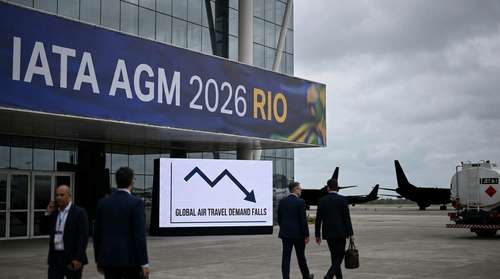
Global aviation executives have descended upon South America this weekend under unusually turbulent skies. Gathering for the 82nd IATA Annual General Meeting in Brazil, the industry faces an unprecedented dual threat: staggering energy costs and a sudden contraction in passenger traffic. In a stark reversal of the post-pandemic boom, global air travel demand falls for the first time since the COVID-19 era, plunging the sector into a high-stakes scramble. As geopolitical conflicts effectively choke key oil supply routes, carriers are grappling with soaring costs that threaten to upend summer vacation plans for millions of American travelers.
The Jet Fuel Price Crisis Aviation is Battling
The most pressing issue dominating closed-door sessions at the IATA AGM 2026 Rio de Janeiro is the skyrocketing cost of keeping fleets airborne. Following severe geopolitical escalations in the Middle East—specifically the conflict involving Iran and the resulting disruptions around the Strait of Hormuz—the energy market has sustained a massive supply shock.
According to the latest industry monitoring data, benchmark jet fuel prices have surged past $140 per barrel. This jet fuel price crisis aviation leaders are currently navigating represents a near-doubling of costs compared to earlier this year when barrels were trading near $80. Because fuel typically accounts for roughly a quarter of a carrier's operational expenses, every additional dollar per barrel adds billions to the global industry's collective fuel bill. The financial hemorrhaging has forced airline boards to make immediate, drastic operational changes heading into the busiest travel season of the year.
Rippling Effects Across Global Hubs
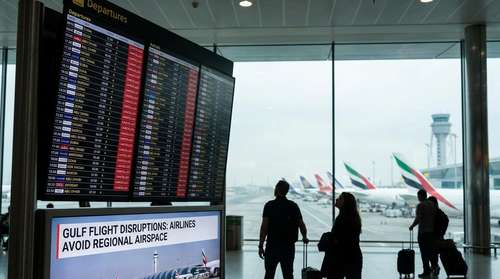
While North American carriers are feeling the financial squeeze at the pump, international counterparts are taking direct hits to their network operations. Middle Eastern hubs, usually bustling global transit points, have seen significant traffic rerouted. European carriers, heavily dependent on imported refined jet fuel from the Gulf region, are evaluating fuel inventories daily to avoid mid-summer groundings, adding a layer of logistical anxiety to an already strained system.
Why Global Air Travel Demand Falls
The latest data released just days ahead of the Rio summit paints a sobering picture of consumer hesitation. Total passenger demand, measured in revenue passenger kilometers (RPK), dropped by 3.4 percent year-over-year in April. This marks the first definitive contraction since the aviation industry's pandemic recovery began.
The decline is heavily localized but globally impactful. Middle Eastern carriers saw demand plummet by 46.6 percent due to regional airspace risks and shuttered transit hubs. While domestic travel demand in the United States slightly dropped by 0.6 percent, the broader dampening effect has sent a chill through the market.
"The 46.6 percent fall in demand for carriers in the Middle East due to war in the region was so acute that it dragged overall demand down 3.4 percent," noted IATA Director General Willie Walsh. "The situation for air transport remains highly volatile." Consequently, this environment of expensive oil and softening passenger volume is creating the perfect storm for major aviation industry news 2026 developments.
Flight Schedule Cuts June 2026: What It Means for You
In response to the volatile $140-per-barrel reality, carriers are actively trimming their networks to stem losses. Aviation analytics firms recently reported that roughly six percent of available seats have been abruptly wiped from global airline schedules over the past month.
These flight schedule cuts June 2026 reflect a deliberate strategy to consolidate passenger loads onto fewer, fuller flights. Airlines are quietly dropping underperforming secondary routes and reducing frequencies between major hubs. For the everyday traveler, fewer available seats translate directly to scarcity pricing and fewer options when booking late or trying to rebook after a cancellation.
Navigating Airline Ticket Prices Summer 2026
The days of affordable last-minute summer getaways appear suspended for the foreseeable future. With capacity constrained and overhead costs swelling, airline ticket prices summer 2026 are projected to test the limits of consumer budgets. Analysts warn that carriers have no choice but to pass the inflated fuel premium down to the passenger.
If you are planning an overseas vacation or a cross-country family trip, expect to pay a premium. The current environment strongly favors booking immediately rather than holding out for price drops that are unlikely to materialize while crude oil remains constrained. Legacy carriers and budget airlines alike are adjusting their fare classes to reflect the new economic baseline.
Bracing for Summer Travel Disruptions 2026
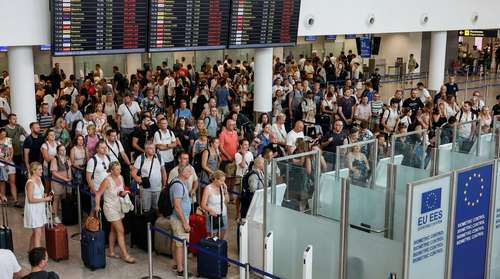
Beyond sheer affordability, the structural changes discussed at the Rio summit point toward potential operational chaos. The combination of tightened schedules, maxed-out load factors, and strained global fuel logistics leaves zero margin for error. A single localized weather event or minor air traffic control delay could cascade into massive summer travel disruptions 2026.
As the 1,500 delegates wrap up the IATA summit in Brazil this weekend, their mandate is clear: survive the fuel shock without alienating the consumer base. However, for the millions of passengers holding boarding passes for July and August, the immediate future promises fuller planes, higher fares, and an itinerary that requires maximum flexibility.