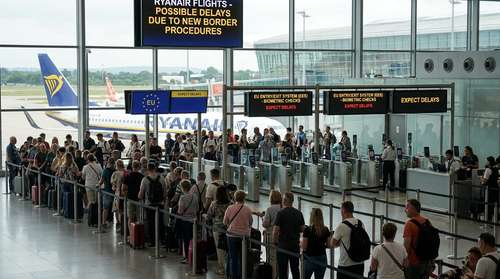
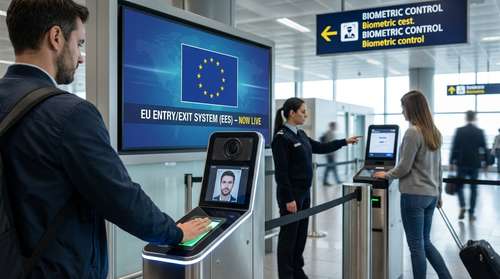
If you cherish the colorful ink stamps decorating the pages of your passport, prepare for a digital awakening. Following a phased rollout that began last year, the EU Entry/Exit System 2026 officially hit full operation on April 10, 2026, across all 29 Schengen countries. The era of manual border checks has abruptly concluded. Moving forward, millions of non-EU visitors will navigate a centralized biometric database designed to modernize European border control and drastically improve regional security.
Passport Stamps End 2026: Understanding the EES Rollout
European authorities confirmed that the digital system is now mandatory at all air, land, and sea borders. This shift fundamentally changes how customs officials track short-stay compliance for international visitors.
Instead of a border guard hastily stamping a visa page, the new protocol relies on mandatory EES biometric scans. When you arrive in Paris, Rome, or any other participating destination, automated kiosks and electronic gates will capture your facial image and scan your fingerprints. This biometric data is paired with your personal passport details and securely stored in a centralized European database.
This digital footprint eliminates the risk of human error and forged documents. In fact, during the system's testing phase, the European Commission reported that the database already caught over 24,000 individuals attempting to enter with fraudulent documents or unjustified reasons. It also provides border agencies with immediate, real-time data regarding exactly when you entered the bloc and when you are legally required to leave.
New Schengen Zone Entry Requirements for Non-EU Visitors
The new Europe travel biometric rules apply to all "third-country nationals". This broad legal classification encompasses anyone who does not hold citizenship in an EU or Schengen member state, including tourists, business travelers, and short-term students.
For Americans, Brits, and Canadians, the implications are immediate. If you are traveling to Europe from USA 2026, your visa-exempt status remains intact. You can still visit without applying for a traditional visa beforehand. However, your physical entry process is entirely overhauled.
Crucially, the Entry/Exit System automates the enforcement of the strict 90/180-day rule. Non-EU visitors are legally permitted to remain in the Schengen Area for a maximum of 90 days within any rolling 180-day window. Previously, border guards had to manually calculate these days by scrutinizing faded ink stamps. Now, the system tracks your remaining allowance down to the minute. Overstaying your welcome will trigger an automatic alert, potentially resulting in immediate fines, deportation, or bans on future entry.
Navigating the First-Time Registration Process
If this is your first time crossing the border since the system hit full operation, expect a slightly longer initial registration. Border agents must link your physical identity to your travel document. You will be directed to self-service kiosks where you scan your passport, pose for a digital photograph, and provide your fingerprints. Subsequent visits will be much faster, relying on rapid facial recognition to verify the profile already on file.
One distinct advantage of the digital switch is transparency for travelers. Because the passport stamps end 2026 transition eliminates the guesswork of manual calculations, the EU has integrated a feature allowing travelers to check their remaining duration of authorized stay online.
What to Expect from European Border Control Updates
The integration of 29 nations under a single technological umbrella is an unprecedented logistical feat. The Schengen zone expanded to include Bulgaria and Romania, meaning the geographic scope of this biometric dragnet stretches from the shores of Iceland to the Black Sea. Travelers should note that Cyprus and Ireland maintain their own separate border regulations and are not participating in the EES network.
Travelers should anticipate localized bottlenecks at major transit hubs over the coming weeks. Airport associations have warned of significant delays, with some processing times increasing drastically due to the new requirements. In response, the European Commission has granted member states limited flexibility to partially suspend EES checks for up to 90 days to manage severe summer travel congestion. Major airlines advise passengers departing Europe to arrive at least three to four hours early, as the system registers your exit just as rigorously as your entry.
The Next Step: Preparing for ETIAS
While the retirement of passport stamps marks a massive shift in physical border infrastructure, it is only the first half of the European Union's digital border overhaul. Later in 2026, authorities plan to launch the European Travel Information and Authorisation System (ETIAS).
Unlike the EES, which tracks your physical movement at the border, ETIAS will act as a mandatory pre-screening waiver. Visitors will need to apply online and pay a fee before boarding a flight. Until that launches, travelers must simply ensure their passports are valid, their biometrics are registered, and their stays remain strictly under the 90-day legal limit. The ink may be dry, but Europe's digital borders are fully awake.