A historically fractured central bank is colliding with rapidly escalating global tensions. In what is shaping up to be a defining moment for the Federal Reserve rate decision 2026, a fresh surge in consumer prices has severely complicated the timeline for any monetary easing. Chicago Fed President Austan Goolsbee delivered a blunt assessment on Saturday, effectively dashing Wall Street's hopes for near-term relief as energy shocks threaten to derail years of economic tightening.
The macroeconomic landscape is currently shifting from debates over when to cut rates, to whether borrowing costs might actually need to increase. With a high-stakes leadership transition looming and global commodities markets reacting violently to geopolitical instability, policymakers are navigating a remarkably narrow path.
The Austan Goolsbee Inflation Warning
Speaking over the weekend on Fox News, Goolsbee didn't mince words regarding the March Personal Consumption Expenditures (PCE) price index, which climbed at an unexpectedly hot 3.5% annual rate. He categorized the data plainly as 'bad news' for policymakers, emphasizing that the central bank requires concrete assurance that price pressures are genuinely receding before altering its current restrictive stance.
Hitting the elusive inflation target 2026 of 2% seems increasingly difficult as costs rise even in service sectors that are typically insulated from external shocks. Goolsbee noted that the internal composition of current inflation simply doesn't look promising. While he is not a voting member on interest rate policy this year, his hawkish tone carries significant weight. Goolsbee previously dissented against a rate cut back in December, warning then about accelerating inflation risks—a forecast that appears to be materializing today.
Geopolitical Turmoil: US-Iran War Economic Impact
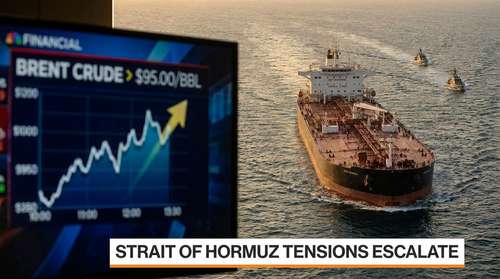
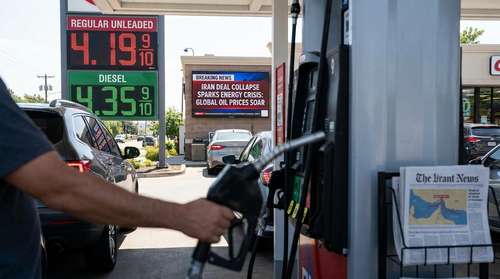
Domestic labor and housing data only tell half the story. The undeniable US-Iran war economic impact is currently sending shockwaves through global commodities markets, fundamentally altering the Federal Reserve's calculus. With Brent crude oil prices violently pushing toward the $100 per barrel threshold—and Energy Information Administration forecasts suggesting a peak near $115 in the second quarter—the energy shock is bleeding directly into everyday consumer costs.
These supply-side price spikes represent an external factor that domestic interest rates cannot seamlessly control. When energy costs skyrocket, they trigger a cascading effect across transportation, manufacturing, and retail logistics. Minneapolis Fed President Neel Kashkari even suggested recently that if disruptions like a blockade of the Strait of Hormuz persist, consecutive rate hikes might become a necessary countermeasure to prevent inflation from becoming entrenched.
The Most Divided Fed Vote 1992 Precedent
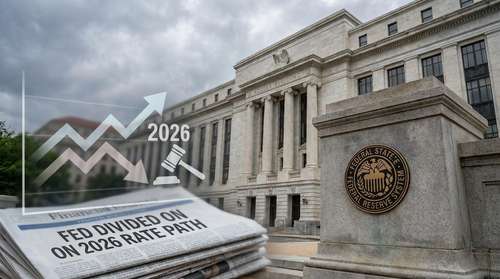
The friction between stubborn inflation and tight monetary policy has triggered an internal rift not seen in over three decades. Last week, the Federal Open Market Committee (FOMC) voted 8-4 to hold the benchmark interest rate steady in the 3.5% to 3.75% range. You have to look back to a divided Fed vote 1992 to find a board this openly fractured on its policy trajectory.
The four dissenting votes laid bare deep disagreements over forward guidance and market communication. Officials like Kashkari, Dallas Fed President Lorie Logan, and Beth Hammack reportedly objected to retaining an 'easing bias' in the policy statement. They argued the current environment demands a firmer hawkish posture, advocating for dropping the dovish language entirely. A split of this magnitude signals profound uncertainty about the economic trajectory, with futures markets quickly pricing out any realistic chance of a rate cut by year-end.
Jerome Powell Final Days and the Leadership Transition
Adding another layer of complexity to the policy deadlock is an unprecedented changing of the guard. We are currently witnessing the Jerome Powell final days as the central bank's chairman. His term formally expires on May 15, wrapping up a tumultuous era defined by pandemic crisis management and aggressive tightening campaigns.
Yet, in a highly unusual move last seen in 1948, Powell intends to remain on the Board of Governors even after yielding the chairman's gavel. This dynamic raises fascinating questions about institutional dynamics and potential tension as the new leadership takes the reins. Having a former chair stay on as a governor creates an unconventional power structure during a deeply vulnerable economic period.
Enter Kevin Warsh Fed Chair
The Senate Banking Committee recently advanced the nomination of the incoming Kevin Warsh Fed Chair with a narrow 13-11 party-line vote. Expected to be confirmed by the full Senate shortly, Warsh steps into an environment defined by internal gridlock and severe external shocks. He could officially preside over his first meeting as early as June.
Warsh, who previously served as a Fed governor and acted as Ben Bernanke's key advisor during the 2008 financial crisis, brings a distinct philosophical approach to monetary policy. Market analysts note his historical alignment with the 'Greenspan Put' philosophy of the 1990s, though today's persistent inflation presents a vastly different challenge than the technology-driven productivity booms of that era. How Warsh manages the dissenting voices while charting a path back to price stability will likely define the American financial landscape for the remainder of the decade.