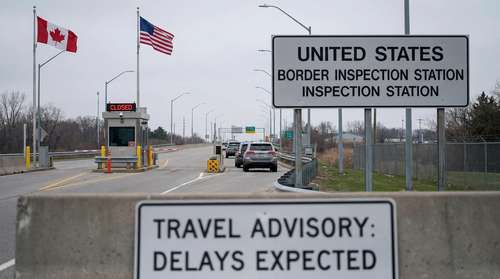
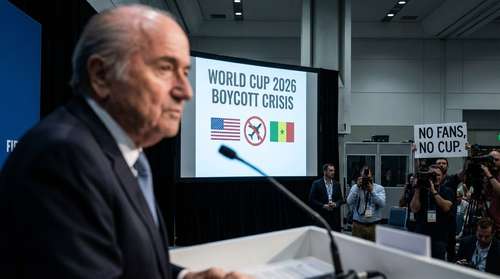
The countdown to the 2026 FIFA World Cup has hit a major diplomatic snag, with former FIFA President Sepp Blatter endorsing growing calls for a boycott of the tournament in the United States. The controversy, which has escalated significantly over the last 48 hours, centers on stringent new US travel restrictions 2026 and deepening security fears following incidents involving federal agents. As the football world prepares for what was promised to be the most inclusive tournament in history, the 2026 FIFA World Cup boycott movement is gaining traction among high-profile figures who argue that the host nation's current policies make it an unsuitable destination for global fans.
Sepp Blatter and Mark Pieth Lead Boycott Calls
The boycott narrative took a dramatic turn on Monday when Sepp Blatter publicly threw his weight behind Swiss legal expert Mark Pieth’s recommendation that fans should "stay away" from the United States. Blatter, who led world football’s governing body from 1998 to 2015, took to social media to support Pieth’s assertion that the safety of international visitors could not be guaranteed under the current political climate.
Pieth, a former chair of FIFA's Independent Governance Committee, cited "aggressive immigration tactics" and the recent death of a protester in Minneapolis during an operation by federal agents as primary reasons for his warning. "I think Mark Pieth is right to question this World Cup," Blatter stated, amplifying concerns that the tournament's spirit of unity is being undermined by domestic enforcement policies.
The sentiment is not isolated to Switzerland. Oke Göttlich, a vice-president of the German Football Association (DFB), recently told the Hamburger Morgenpost that the time has come to "seriously consider" a boycott, asking whether the life of a fan or player is worth less than the geopolitical interests of the host nation. This high-level criticism from European football officials marks a significant fissure in the usually united front of World Cup preparations.
Senegal and Ivory Coast Hit by New Travel Bans
At the heart of the World Cup 2026 fan entry issues is a new directive from the US administration that effectively bars entry to fans from several qualifying nations. The policy, announced earlier this week, targets countries deemed to have "screening and vetting deficiencies." Specifically, the Senegal Ivory Coast travel ban has caused outrage across the African continent.
Under these new rules, supporters from Senegal and Ivory Coast—both football powerhouses with large travelling fanbases—will be unable to obtain B-2 tourist visas in time for the tournament unless they hold pre-existing valid travel documents. They join fans from Iran and Haiti, who face similar blanket restrictions. This move has thrown travel plans into chaos and raised uncomfortable questions about the fairness of a "World" Cup where significant portions of the qualified teams' supporters are legally prevented from attending.
Critics argue that penalizing fans for their government's administrative issues goes against FIFA's statutes on non-discrimination. "It is up to the United States to provide the conditions... to allow the qualified countries so everyone can go and support their team," a Senegalese fan representative told the Associated Press, reflecting the widespread frustration.
FIFA PASS Visa Priority: A Flawed Solution?
In an attempt to mitigate the fallout and manage the logistical nightmare, US authorities and FIFA have launched the FIFA PASS visa priority system. This "Priority Appointment Scheduling System" is designed to fast-track visa interviews for verified ticket holders. The State Department has reportedly added 500 extra consular officers worldwide to handle the surge in applications before the June 11 kickoff.
Does FIFA PASS Guarantee Entry?
Despite the rollout of this system, officials have been clear that a priority appointment does not equate to a guarantee of entry. The FIFA PASS FAQ explicitly states that ticket holders must still undergo "thorough screening" and that scheduling an interview "does not guarantee the visa will be issued." For fans from the banned nations, the existence of a fast-track system is moot, as they are currently ineligible for the visas the system is designed to process.
This bureaucratic hurdle has fueled the Sepp Blatter World Cup news cycle, with detractors pointing out that a priority lane is useless if the border itself is closed. The disconnect between FIFA's promise of accessibility and the reality of US border policy is becoming the defining conflict of the pre-tournament buildup.
Security Concerns and the "Hostile Environment" Narrative
Beyond visa paperwork, genuine FIFA World Cup security concerns are deterring fans. The boycott calls are partly rooted in fears over physical safety following the death of Renee Good, a protester killed by an immigration agent in Minneapolis earlier this month. The incident has sparked protests and painted a picture of a volatile security environment that many international visitors may wish to avoid.
"Upon arrival, fans should expect that if they don't behave properly with the authorities, they will be immediately sent home. If they're lucky," Pieth warned in his interview with Tages-Anzeiger. This narrative of a hostile host environment contradicts the welcoming image usually projected by World Cup organizers. With the tournament co-hosted by Canada and Mexico, there is growing speculation that fans might choose to base themselves in neighboring countries, travelling to the US only for match days—if they can get in at all.
As the clock ticks down to the summer kickoff, FIFA faces a crisis of confidence. The organization must navigate a narrow path between respecting the sovereign laws of its host nation and delivering a tournament that is truly open to the world. For now, with travel bans in place and influential figures urging fans to stay home, the 2026 World Cup risks being remembered as much for who couldn't attend as for the games themselves.