On April 1, 2026, Florida Governor Ron DeSantis and Mississippi Governor Tate Reeves signed stringent proof of citizenship laws, dramatically escalating the national debate over ballot access. As the nation prepares for high-stakes congressional races, these measures are setting a new standard for 2026 midterm voting rules. The controversial legislation requires residents to provide physical documentation—such as a birth certificate or passport—to register or remain on the voter rolls, instantly triggering emergency federal court challenges.
State Election Integrity Bills Sweep the Nation
The coordinated push by conservative lawmakers mirrors a broader national strategy. Following Utah and South Dakota's recent actions, Florida and Mississippi are the latest to enact state election integrity bills modeled closely on the federal SAVE America Act. With former President Donald Trump's signature restrictive voting package currently languishing in the U.S. Senate without the necessary 60 votes to overcome a filibuster, conservative leaders have pivoted to a localized strategy. The objective is to establish a patchwork of stringent state laws that effectively achieve the same outcome.
Republican governors argue that securing the legal status of voters is essential to maintaining public trust in the democratic process. However, the implementation timeline varies significantly across the country. While states like South Dakota have fast-tracked their legislation to take effect immediately, altering the landscape before November, other states have much longer runways. Regardless of the exact effective dates, the immediate political shockwaves are disrupting 2026 primary registration efforts and forcing voting rights organizations to completely overhaul their outreach strategies.
Mississippi Election Laws 2026: The SHIELD Act
In the Magnolia State, the newly minted Safeguard Honest Integrity in Elections for Lasting Democracy (SHIELD) Act establishes aggressive citizenship verification protocols. Under the updated Mississippi election laws 2026 framework, the state will utilize the federal Systematic Alien Verification for Entitlements (SAVE) database to cross-reference every voter registration application.
If an applicant's citizenship status is flagged, they will be notified by mail and given 30 days to produce an authorized document, such as a U.S. passport or naturalization papers. Failure to comply will result in the application being rejected. While Mississippi legislators assert that these annual audits are a common-sense safeguard, critics warn that government databases are prone to errors and routinely misidentify eligible, naturalized citizens.
Florida Voter ID Update: Lawsuits Follow the SAVE Act
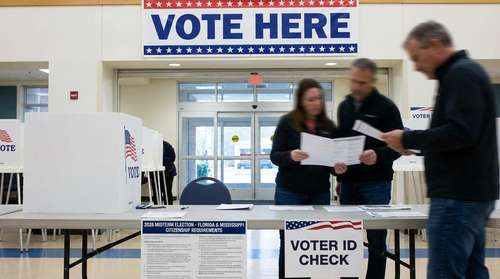
Florida's iteration, HB 991, introduces sweeping changes to ballot access. The Florida voter ID update not only demands citizenship documentation but also drastically narrows the list of acceptable identification. Beginning January 1, 2027, college student IDs, retirement center IDs, and neighborhood association cards will no longer be permitted at polling places. Furthermore, the state will retroactively audit its 13.3 million registered voters, initiating removal proceedings for anyone deemed potentially ineligible.
The swift passage of the law was met with immediate legal resistance. Within hours of the signing ceremony, heavy-hitting civil rights organizations—including the ACLU, the League of Women Voters, and the Elias Law Group—filed multiple federal lawsuits. The plaintiffs claim the mandate violates the First and Fourteenth Amendments, framing it as an unconstitutional "show your papers" scheme. Data from a recent state security report undermines the narrative of widespread fraud, identifying just 198 likely noncitizens who may have illegally registered or voted in 2025—a fraction of a percent of the electorate.
Governor Ron DeSantis anticipated the legal blowback, dismissing the emergency filings during a press conference in The Villages as a predictable tactic. He confidently predicted that while a lower-level judge might initially block the measure, conservative appellate courts would ultimately uphold the restrictions. This combative stance highlights how election administration has transformed into a premier theater for partisan warfare.
Combating Voter Disenfranchisement News
The rapid proliferation of these mandates has dominated recent voter disenfranchisement news. Voting advocates are raising alarms that proof of citizenship laws disproportionately burden marginalized communities. Older Americans born in the segregated South without formal birth certificates, married women who have legally changed their names, and low-income voters who cannot afford the steep processing fees for new passports are among the most vulnerable.
Furthermore, these sweeping audits are incredibly resource-intensive. Directing election officials to cross-reference voter rolls against motor vehicle and homeland security records—systems never originally designed to verify voting eligibility—invites immense administrative bottlenecks. A naturalized citizen who obtained their driver's license prior to taking the oath of citizenship might automatically be flagged for removal, placing the burden of proof squarely on the voter to avoid being purged.
Navigating the 2026 Midterm Voting Rules
As the legal battles unfold in federal trial courts, the logistical reality for voters is rapidly changing. Whether navigating the immediate scrubs of voter registries in Mississippi or preparing for the retroactive documentation demands in Florida, residents must now manage a labyrinth of red tape to secure their fundamental rights.
For political campaigns and civic organizations, the focus has abruptly shifted from traditional neighborhood canvassing to intensive legal aid and document recovery. Understanding these evolving 2026 midterm voting rules will be critical for anyone hoping to participate in the upcoming election cycle. Voters are strongly advised to check their registration status early, secure their essential documents, and stay closely informed on how federal court rulings might further alter the electoral map.