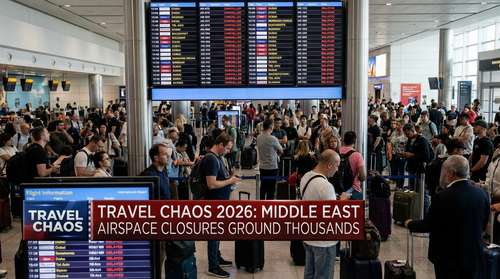
A catastrophic wave of flight cancellations today has grounded global aviation, stranding hundreds of thousands of passengers just days before the peak spring travel season. In an unprecedented double blow to the airline industry, a sudden escalation in regional conflict has forced a total Middle East airspace closure, while simultaneously, a political standoff in Washington has triggered severe TSA pay cut delays, leading to massive staffing shortages at major U.S. airports. As of Tuesday morning, aviation analytics firms report over 12,000 international flights cancelled and nearly 3,000 domestic disruptions, marking the start of what experts are calling Travel Chaos 2026.
The Perfect Storm: Middle East Hubs Go Dark
The primary driver of today's disruption is the immediate suspension of operations at critical global super-hubs. Following security directives issued late last night, airspace across key sectors of the Middle East was closed to civilian traffic. This has effectively severed the primary air corridor connecting Europe and Asia.
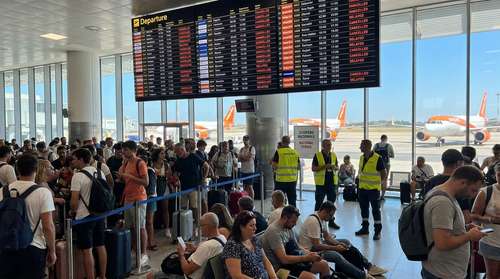
For travelers checking the Dubai airport flight status 2026, the news is grim. Both Dubai International (DXB) and Hamad International (DOH) in Doha—two of the world's busiest transit points—have halted all takeoffs and landings. Major carriers like Emirates, Qatar Airways, and Etihad have grounded their fleets, leaving transit passengers stuck in terminals with little clarity on when operations might resume. This blockade forces long-haul flights to take expensive, lengthy detours around the region, but with fuel logistics already strained, many airlines have opted to simply cancel services entirely.
TSA Pay Cut Delays Cripple U.S. Airports
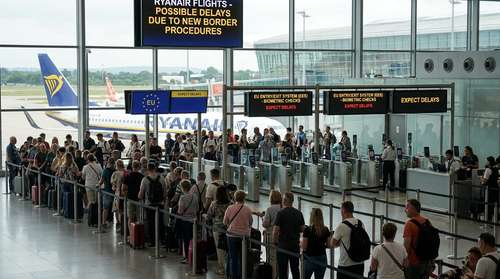
While international skies are empty, the situation on the ground in the United States is equally chaotic. A lapse in Department of Homeland Security funding has resulted in immediate pay cuts for TSA agents, sparking a widespread "Blue Flu" sick-out. Security checkpoints at major hubs like Atlanta (ATL), New York (JFK), and Los Angeles (LAX) are seeing wait times exceed four hours, causing passengers to miss even the flights that are actually taking off.
The TSA pay cut delays mean that thousands of security officers are working without guaranteed on-time paychecks, leading to staffing levels dropping by nearly 40% in some terminals. "We simply cannot process the volume of passengers safely with this skeletal staff," stated a union representative at O'Hare International Airport. The ripple effect has caused airlines to delay departures to wait for passengers stuck in security, creating a domino effect of gate congestion and crew timeouts.
Spring Break Travel Warnings Issued
The timing could not be worse. With only 11 days remaining until the peak of the season, urgent Spring Break travel warnings are being issued by the State Department and travel advocacy groups. Families planning vacations to Europe, Asia, or even domestic destinations are facing a nightmare scenario.
Travel analysts warn that these international flight disruptions will likely take more than a week to resolve, even if the airspace reopens tomorrow. "The displacement of crews and aircraft is massive," explains aviation analyst Sarah Jenks. "We are looking at a backlog that will bleed directly into the Spring Break rush. If you don't have a confirmed seat on a flight that is currently airborne, you should assume your itinerary is at risk."
What Passengers Should Do Now
If you are scheduled to fly in the next 72 hours, airlines are advising passengers to check their status before leaving for the airport. Do not rely on email notifications alone; check the airline's app directly. For those caught in the Middle East airspace closure, rerouting through African or Northern routes may be possible, but seats are scarce. Domestic travelers facing TSA shortages should arrive at airports at least four to five hours early, though even that may not guarantee passage through security in time.