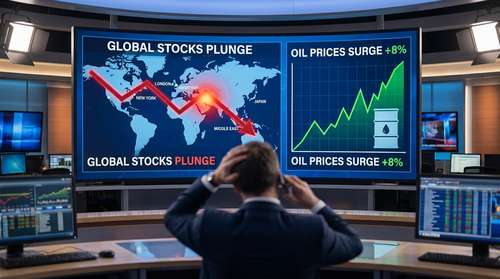
NEW YORK — Global financial markets are in freefall this Tuesday, March 3, 2026, following a dramatic escalation in the conflict between the United States and Iran. Wall Street witnessed a massive stock market crash today, with the Dow Jones Industrial Average plunging over 900 points in early trading. The sell-off was triggered by breaking news of Iranian drone strikes on the U.S. Embassy in Riyadh, Saudi Arabia, and the critical Ras Tanura oil refinery, sending oil prices soaring and reigniting fears of a global economic crisis.
Wall Street Sell-Off: Panic Grips Global Exchanges
Investors are fleeing risk assets at a pace not seen since the 2020 volatility. The S&P 500 and Nasdaq Composite both shed nearly 4% as the Wall Street sell-off intensified throughout the morning. The uncertainty stems from the widening scope of the conflict; what began as targeted U.S. and Israeli airstrikes on Iranian military command centers on February 28 has now spiraled into a regional war threatening global energy supplies.
"The market is pricing in a worst-case scenario," said Elena Rostova, Chief Market Strategist at Apex Capital. "With the U.S. Embassy in Saudi Arabia hit and the Strait of Hormuz effectively a war zone, the risk premium on every asset class has just skyrocketed. This isn't just a correction; it's a repricing of global geopolitical stability."
Safe-Haven Assets Surge
As equities crumble, capital is flooding into traditional safe havens. Gold prices jumped 3.5% to a new record high, while the U.S. 10-year Treasury yield dropped sharply as investors bought government bonds. The frantic flight to safety underscores the severity of the U.S. Iran war business impact, with traders bracing for a prolonged period of uncertainty.
Oil Price Surge 2026: Energy Markets in Chaos
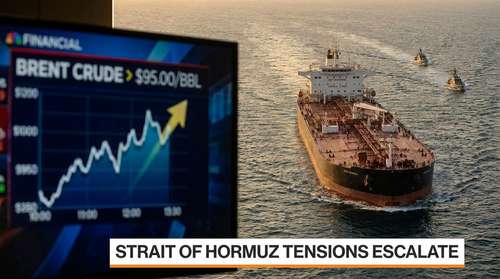
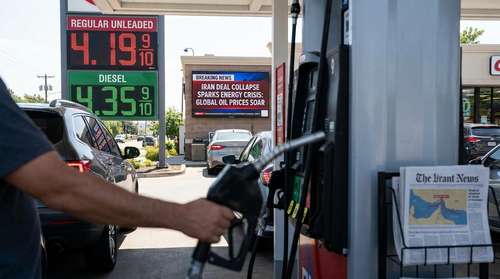
The most immediate and dangerous economic shockwave is being felt in the energy sector. Oil prices exploded overnight, with Brent crude surging over 8% to breach the $82 per barrel mark, threatening to climb toward triple digits if tensions persist. The catalyst was the confirmed drone attack on Saudi Aramco's Ras Tanura facility—one of the world's largest oil export hubs—and Tehran's subsequent threat to close the Strait of Hormuz.
Energy analysts warn that energy market volatility is just beginning. "If the Strait of Hormuz is blocked even partially, we are looking at 20 million barrels of oil per day being removed from the market," noted James Thorne, a senior energy analyst. "That scenario would send crude past $150, creating an inflationary shock that the global economy is ill-equipped to handle right now."
Inflation Fears March 2026: The Stagflation Nightmare
Just as the Federal Reserve appeared poised to declare victory over inflation, this conflict has thrown a wrench into the central bank's plans. Inflation fears March 2026 have resurfaced with a vengeance. Higher energy costs act as a tax on consumers and businesses alike, driving up the cost of shipping, manufacturing, and travel.
Economists are now warning of "stagflation"—a toxic combination of stagnant economic growth and high inflation. The Federal Reserve, which was widely expected to cut interest rates at its next meeting, may now be forced to hold steady or even tighten policy to prevent an inflationary spiral. This realization helped fuel the global economic crisis news cycle, as higher-for-longer rates would put further pressure on corporate earnings and consumer spending.
Geopolitical Context: A Rapid Escalation
The current chaos follows a weekend of unprecedented military action. On February 28, joint U.S. and Israeli strikes targeted Iran's leadership structure, reportedly killing Supreme Leader Ali Khamenei. Tehran's retaliation has been swift and multi-pronged, targeting U.S. assets in Saudi Arabia and attempting to disable Gulf energy infrastructure. The drone strikes on the U.S. Embassy in Riyadh mark a direct challenge to American diplomatic presence, widening the conflict beyond military targets.
As the situation develops, volatility remains the only certainty. Investors and policymakers alike are watching the Persian Gulf with bated breath, knowing that the events of the next few days could define the global economic trajectory for years to come.