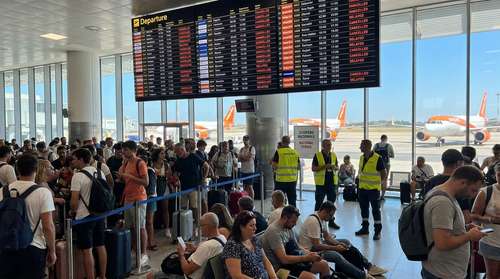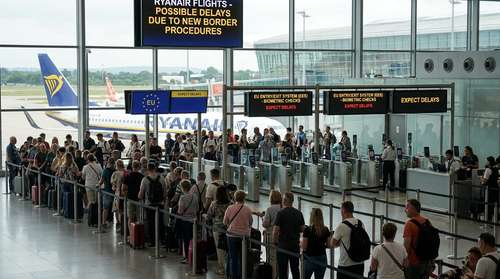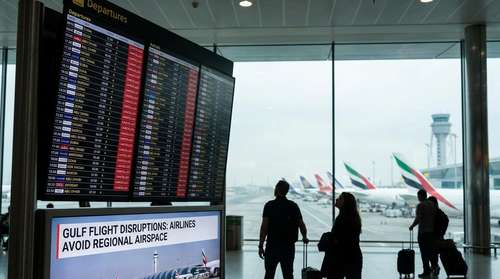
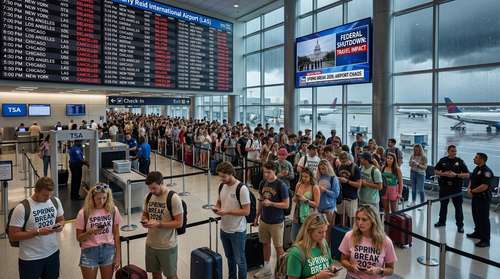
A relentless collision of nationwide crises has brought unprecedented gridlock to the nation's premier leisure gateway. As of mid-April, spring break travel 2026 is clashing with massive weather events and a protracted federal shutdown travel impact, creating unparalleled Las Vegas airport chaos. Thousands of passengers attempting to depart Nevada are finding themselves caught in a sprawling aviation meltdown characterized by unpredictable gridlock and cascading Harry Reid Airport delays.
The Anatomy of a System-Wide Meltdown
The ripple effect of flight cancellations today can be traced to a complex web of logistical failures. On April 11 alone, flight-tracking data recorded a staggering 251 delayed flights and multiple outright cancellations at Harry Reid International Airport, marking it as one of the most disruptive operational days the hub has seen outside of a direct weather emergency. The disruptions hit major carriers like Delta Air Lines, United Airlines, American Airlines, and Southwest particularly hard, devastating popular routes connecting Las Vegas to Los Angeles, Chicago, Denver, New York, and Toronto.
While local operations in Nevada remain mostly free of severe weather, sweeping blizzard conditions and violent storms across Eastern and Midwestern hubs have left essential crews and aircraft stranded. Because commercial carriers utilize Las Vegas as a central leisure spoke, these nationwide weather woes quickly translate into mounting gate holds and missed connections on the Strip. Compounding the problem is the reality of modern aviation economics: airlines are currently operating with near-full aircraft loads, leaving virtually no spare capacity to redistribute stranded passengers when disruptions occur.
Unpaid Screeners and TSA Staffing Shortages
Meteorological disasters are only half the story. Acute TSA staffing shortages stemming from the partial federal government shutdown that began in mid-February 2026 have severely degraded checkpoint efficiency. Thousands of transportation security officers are working without pay while trying to manage one of the most compressed leisure travel windows of the year.
This prolonged financial strain has inevitably led to rising absenteeism as officers seek secondary income or depart the agency altogether to cover rising living costs. The resulting bottlenecks at security checkpoints have been severe. Travelers arriving for early-morning departure banks face wildly unpredictable wait times, turning routine check-ins into exhausting endurance tests and exacerbating the overall operational strain on terminal infrastructure.
Broader Economic Pressures in Nevada
The facility's ability to handle these compressed peaks without prolonged disruption is closely watched by local stakeholders. Convention organizers and hospitality businesses rely heavily on predictable arrivals. When terminal traffic stalls, the downstream effects hit the Las Vegas service economy hard, turning eager vacationers into exhausted, stranded travelers.
Airline Stock Market News Turns Bearish
The ongoing operational disasters have not gone unnoticed on Wall Street, generating grim airline stock market news ahead of upcoming earnings calls. Investors are increasingly jittery as carriers absorb the massive costs of rebooking passengers, paying overtime, and navigating geopolitical uncertainties that recently pushed oil prices near $100 per barrel.
Major carriers are feeling the pressure. American Airlines (AAL) has seen its stock plunge nearly 30% year-to-date in 2026 as structural challenges and operational disruptions squeeze thin margins. United Airlines (UAL) also experienced significant pullbacks earlier in the spring, dropping roughly 12% as fuel price anxieties combined with broader industry weakness. United's upcoming April 21 earnings report is expected to be closely scrutinized by analysts looking for clues on pricing power and operational resilience. Even though consumer travel demand remains surprisingly robust, the structural cost of maintaining operations through this rolling crisis is eating away at profitability.
Navigating the 2026 Spring Disruption
With no immediate end to the federal funding dispute in sight and massive crowds still flowing through the terminals, travelers must radically adjust their strategies. Industry experts and local aviation authorities advise arriving at least two hours early for domestic flights and three hours early for international departures.
Proactive planning is your best defense against the current turbulence. Monitor airline applications obsessively for sudden schedule shifts, pack strategically to minimize security screening delays, and ensure your identification complies with the latest guidelines to avoid secondary processing. Families traveling with children should also confirm specific carrier policies regarding unaccompanied minors or extra baggage, as ticket agents are stretched too thin to process complex issues on the spot. As the national airspace operates on a razor's edge, building flexibility into your itinerary is no longer optional—it is essential for surviving the turbulence of the season.