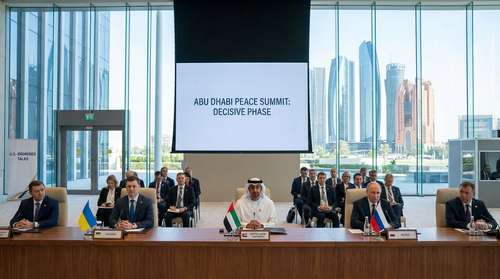
Negotiators from Ukraine, Russia, and the United States are convening in Abu Dhabi today, February 1, 2026, for a critical second round of peace talks brokered by the Trump administration. The high-stakes summit follows a flurry of last-minute diplomacy, including a surprise meeting in Florida between U.S. Special Envoy Steve Witkoff and Russian representatives just hours before the delegations were set to gather in the UAE. As the Ukraine Russia peace talks 2026 enter this decisive phase, the world watches to see if a compromise can be reached before a temporary pause in Russian strikes on Kyiv expires.
The Florida Prelude: Witkoff and Dmitriev Set the Stage
In a significant development leading up to today's summit, U.S. Special Envoy Steve Witkoff held what he termed "productive and constructive" meetings with Russian Special Envoy Kirill Dmitriev in Florida on Saturday, January 31. This pre-summit dialogue, which also included U.S. Treasury Secretary Scott Bessent and Jared Kushner, signals an intensification of the Trump Ukraine peace plan efforts.
"We are encouraged by this meeting that Russia is working toward securing peace in Ukraine," Witkoff stated on social media platform X. The Florida discussions appear to have laid the groundwork for the Abu Dhabi summit negotiations, aiming to bridge the widening gap between Moscow's demands and Kyiv's red lines. However, details of the specific concessions discussed remain tightly under wraps, with both sides understanding that the success of the Abu Dhabi round hinges on discrete diplomacy.
The "Anchorage Formula" and Territorial Deadlocks
At the heart of the deadlock is a controversial framework referred to by Kremlin officials as the "Anchorage Formula." Reportedly discussed during preliminary contacts, this proposal would require Ukraine to cede the entire Donbas region to Russia while freezing the conflict along current front lines in the Kherson and Zaporizhzhia regions. This demand remains the primary obstacle to a Ukraine war settlement.
Ukrainian President Volodymyr Zelenskyy has largely rejected these terms, emphasizing that any territorial settlements must guarantee Ukraine's long-term sovereignty and security. "Ukraine is ready to work in all working formats," Zelenskyy said in his evening address, while stressing that tangible results—not just meetings—are required. The Ukrainian delegation arrives in Abu Dhabi under immense pressure to find a formula that stops the fighting without capitulating to what they view as unacceptable territorial losses.
Ticking Clock: Russia Strike Pause and Kyiv's Winter Crisis
The urgency of the talks is underscored by a rapidly approaching deadline. A temporary Russia strike pause on Kyiv, personally requested by President Trump to create "favorable conditions" for negotiations, is set to expire today, February 1. The pause has offered a brief respite for the Ukrainian capital, which is currently gripping with extreme weather conditions.
Temperatures in Kyiv have plunged to minus-26 degrees Celsius, compounding the misery for civilians facing power outages from previous infrastructure attacks. If the Abu Dhabi summit negotiations fail to produce an extension of this ceasefire or a broader agreement, fears are mounting that Moscow may resume its bombardment of Ukraine's energy grid with renewed intensity. This humanitarian crisis adds a visceral layer of pressure to the diplomats meeting in the comfort of the UAE capital.
U.S. Mediation and Future Security Guarantees
Beyond the immediate ceasefire, the U.S. mediation Ukraine effort is focused on long-term security architecture. The presence of high-level U.S. officials like Jared Kushner and Josh Gruenbaum suggests that economic incentives and reconstruction packages are being leveraged alongside security guarantees to sweeten the deal for both sides. The U.S. strategy appears to be moving towards a "land for peace" model, but finding a version of this that is politically palatable to Kyiv remains a monumental diplomatic challenge.
As the delegations take their seats in Abu Dhabi, the outcome remains uncertain. While the "constructive" tone of the Florida meetings offers a glimmer of hope, the entrenched positions on the "Anchorage Formula" and the freezing winter war in Ukraine serve as stark reminders of the difficulties ahead. The next 24 hours will likely determine whether this initiative becomes a breakthrough or another stalled chapter in the four-year conflict.