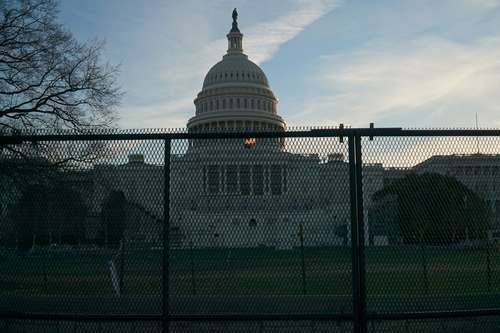
The nation's capital is at a historic standstill as President Donald Trump's legislative freeze enters its fourth week, directly tying the fate of federal operations to the controversial SAVE America Act. The unprecedented strategy to block all major congressional action has paralyzed Washington and accelerated the fallout from a crippling agency lapse. With partisan battle lines firmly drawn ahead of the 2026 Midterm Elections, the standoff pits the White House against lawmakers struggling to find an exit ramp.
The Push for the SAVE America Act
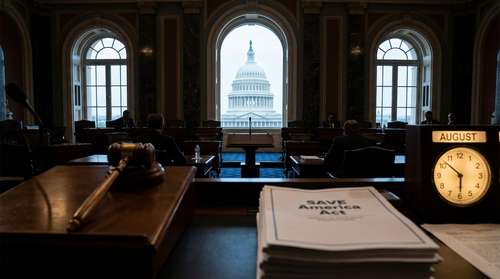
At the core of the current crisis is the administration's relentless push for a sweeping US election integrity bill. Trump recently reiterated his refusal to sign any federal legislation until Congress passes the SAVE America Act. He doubled down on his demands in a weekend social media post, warning lawmakers that the voting overhaul supersedes all other domestic priorities and urging them to "go for the gold".
The legislation, heavily championed by the administration, mandates strict voter proof of citizenship for federal registration and requires photo identification to cast a ballot. While noncitizen voting is already federally illegal and historically rare, proponents argue the new framework is a necessary safeguard. However, the stakes increased drastically when Trump expanded his conditions. The president is now demanding that the final package eliminate mail-in ballots and include unrelated provisions targeting gender-affirming care and transgender athletes. These eleventh-hour additions have virtually guaranteed a unified wall of Democratic resistance.
Collateral Damage: The DHS Shutdown 2026
The most visible casualty of this political brinkmanship is the ongoing DHS shutdown 2026, which has officially stretched past 27 days. While federal immigration enforcement continues to operate using previously allocated supplemental funds, other critical agencies are buckling under the financial strain.
More than 100,000 workers across the Department of Homeland Security are missing paychecks. The Transportation Security Administration (TSA) is experiencing acute staffing shortages, leading to hours-long security lines at major travel hubs just as millions of families embark on spring break vacations. Travelers at airports from Houston to Atlanta are reporting chaotic wait times spanning up to four hours. Over 300 TSA officers have reportedly resigned since the lapse began in mid-February, while sick calls continue to spike.
The funding freeze also restricts resources for the Coast Guard and the Federal Emergency Management Agency (FEMA), leaving emergency preparedness in a precarious state. Lawmakers on both sides of the aisle have expressed alarm over the security implications, though they remain deadlocked on how to resolve the crisis.
Senate Majority Leader John Thune Faces Pressure
The White House's maximalist approach has placed an enormous burden on Republican leadership, specifically Senate Majority Leader John Thune. Despite intense pressure from the conservative base to force the legislation through, Thune has remained realistic about the mathematical hurdles in the upper chamber.
The bill requires 60 votes to overcome a Democratic filibuster—a seemingly impossible threshold given the current political climate. Democrats argue the proof-of-citizenship mandate could disenfranchise millions of legally eligible voters who lack immediate access to birth certificates or passports. Some right-wing lawmakers are urging Thune to implement a "talking filibuster" or alter Senate rules to bypass the opposition.
The South Dakota Republican has expressed severe skepticism about those tactics. "There are no easy ways to do this," Thune recently told reporters. "Believe me, we've examined all the options". He stressed that his immediate priority is ending the DHS shutdown, noting that the chamber lacks the unified GOP support necessary to completely upend Senate procedure for the voting measure.
Stagnant Floor Votes
Over the past week, the Senate has engaged in a series of failed test votes attempting to decouple homeland security funding from the broader voting rights fight. Each attempt has crashed against a partisan wall. Republicans insist on pairing government funding with strict new policy mandates, while Democrats refuse to capitulate to what they describe as a hostage situation, demanding a clean funding resolution instead.
High Stakes for the Upcoming Elections
As the legislative freeze holds firm, both parties are actively weaponizing the gridlock. Trump's strategy attempts to make election security the defining issue of the cycle. By pushing restrictive Trump voting laws into the national spotlight, the administration aims to energize its populist base and frame Democratic opposition as a vulnerability on election integrity.
Conversely, Democrats are pointing to the chaos at the nation's airports and the severe strain on federal workers as evidence of reckless governance. They argue that holding essential security funding hostage over a highly contested voting measure is alienating moderate and independent voters. Candidates up for reelection are now being forced to answer for the shutdown, requiring down-ballot Republicans in swing states to balance loyalty to the president against the economic disruptions occurring in their home districts.
Washington remains deadlocked with no immediate resolution on the horizon. Until a compromise emerges, or the political pain of the lapsed funding becomes too great for lawmakers to bear, the gears of the federal government will remain firmly jammed.