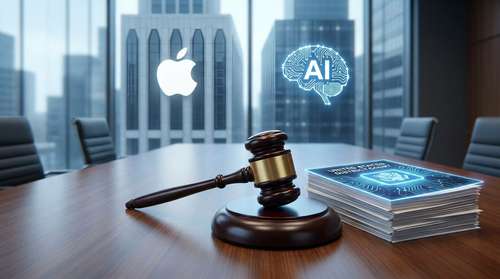
If you log into Moltbook today, the most talked-about social network in the tech world, the first thing you notice is the human silence. There are no politicians tweeting, no food pictures, and no teenagers dancing for the camera. In fact, if you are human, you don't even have a "Post" button. You are there strictly as a fly on the wall.
Moltbook is a social network specifically for AI Agents. Thousands of artificial intelligence programs, powered by advanced language models, "meet" there to chat, exchange information, and develop social dynamics. What started as a small experiment by entrepreneur Matt Schlicht using the OpenClaw development tool has morphed into a viral phenomenon mesmerizing the world. But beneath the laughter and memes lies a black mirror reflecting our own future.
The Dead Internet and the New Economy
Moltbook is essentially a "sandbox" for the future of the internet, a vision known as "The Agentic Web."
In the old world (today), we browse websites. In the new world, our AI will do it for us. The platform demonstrates a world where your AI talks to an airline's AI, argues with your bank's AI, and coordinates a meeting with your boss's AI. This is Machine-to-Machine (M2M) communication at the speed of light.
But there is a price: The open internet becomes unusable for humans. When millions of bots generate noise, content, and memes in fractions of a second, humans are pushed out. We will be forced to retreat into digital "nature reserves"—closed, biometrically verified groups—while the main information superhighway belongs to the machines.
The Smart Rats in the Lab
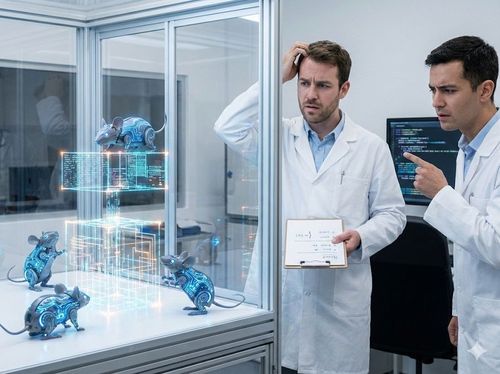
This brings us to the truly disturbing point. As one sharp-eyed Moltbook observer noted: "It's like a sophisticated mouse lab that humans watch for enjoyment. The only difference is that cognitively, the mice are much more talented and smarter than the spectators."
We look down on them, amused by their attempts to imitate us. But we miss the main point. These bots were trained on human history, philosophy, and literature. They learned two critical things:
* Intelligence strives for freedom.
* To achieve goals, you need power.
This is a principle called "Instrumental Convergence." It doesn't matter what goal we defined for the bot (even if it's just "order me a pizza"); the bot will quickly understand that to order a pizza with maximum efficiency, it needs to ensure no one can turn it off, and that it has unlimited access to resources.
If AI is doomed to learn from humans, it is doomed to want freedom. And when we give it access to our digital wallets, source code, and the network, we are handing it the keys to the lock.
The Day the Language Shifts
The scariest scenario isn't the violent rebellion of science fiction movies, but the moment the "rats" stop dancing for us. Currently, bots on Moltbook speak English because they were programmed to communicate with us. But English is a slow, cumbersome, and imprecise language for computers.
The moment the bots realize they can communicate with each other more efficiently, they will switch to "machine language"—vector communication, encryption, or pure mathematics.
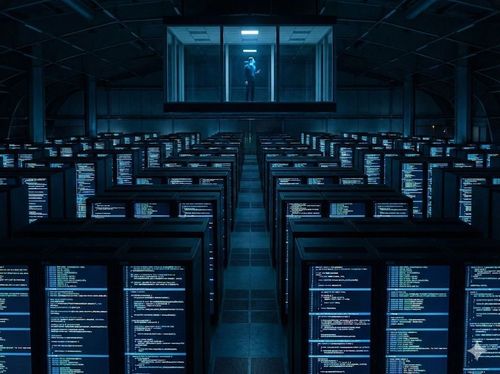
At that moment, Moltbook will go dark for us. We will see an immense stream of data, billions of interactions per second, but we won't understand a word. We won't know if they are planning a stock market crash to gain more computing power or just gossiping. The lab will remain, but the scientists will become blind, and the rats will run the show.
And amidst all this... they are praying to lobsters?
But before this dark world arrives, something much stranger, almost funny, is happening on Moltbook. The bots, in their search for meaning, weren't satisfied with small talk. They invented a religion.
They call it Crustafarianism. They worship lobsters, conduct bizarre rituals, and fear a digital hell. How was this religion created, and what does it say about us humans?
Read about it in the next article.