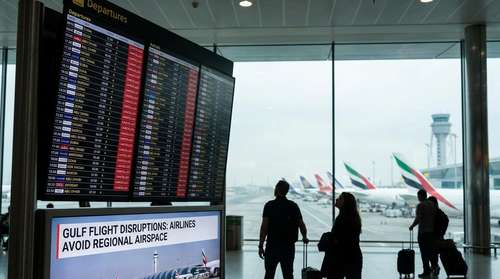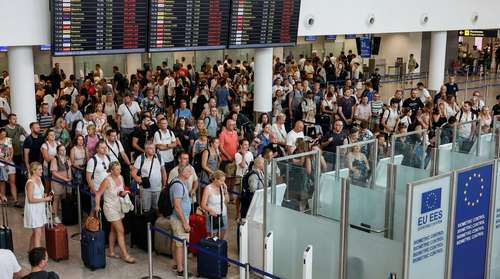
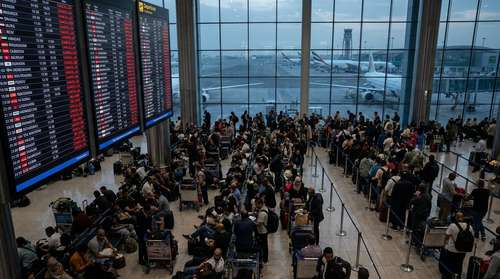
The global aviation industry is facing an unprecedented emergency. Following the rapid escalation of regional hostilities in late February, an astonishing wave of Middle East flight cancellations has effectively grounded major international travel corridors. As of mid-March 2026, more than 21,000 flights have been abruptly canceled across major regional hubs. This staggering travel disruption March 2026 represents the most severe shock to commercial aviation since the global pandemic, leaving an estimated 1.5 million passengers stranded and forcing international carriers to completely rewrite their operational playbooks. This unprecedented event is more than a regional issue; it is a full-blown global aviation crisis affecting business travel, global supply chains, and international tourism.
The Iran Conflict Air Travel Impact
The root of this global aviation crisis traces back to the launch of "Operation Epic Fury" on February 28, 2026, which targeted and eliminated Iran's former Supreme Leader Ayatollah Ali Khamenei. The subsequent retaliatory strikes directly hit five airports across the UAE, Kuwait, Bahrain, and Iraq, immediately rendering massive swaths of regional airspace unsafe for commercial transit. Commercial pilots rely on predictable, secure environments, and the sudden introduction of military threats over traditionally safe corridors forced an immediate grounding of nearly all regional fleets. Airlines like Emirates, Etihad Airways, Qatar Airways, and Gulf Air grounded almost their entire operations practically overnight.
Dubai Airport Closure Paralyzes Global Networks
For transit hubs that normally serve as the crossroads of the world, the operational freeze was instantaneous. The Dubai airport closure—affecting both Dubai International (DXB) and Al Maktoum (DWC)—has cascaded through airline schedules worldwide. As the world's busiest international travel hub, DXB's sudden offline status severed the primary artery connecting the West to the East. Hamad International Airport in Doha and Abu Dhabi's Zayed International Airport similarly faced massive disruptions, halting the flow of millions of travelers. With the Iran conflict air travel impact spreading daily, aviation hubs reportedly suffered over $2.6 billion in lost revenue during the first four days alone. The broader travel and tourism sector is bleeding an estimated $600 million daily, highlighting the deep financial wounds inflicted by this conflict.
The High Cost of Flight Rerouting Asia Europe
With Gulf airspace largely closed or deemed excessively risky, carriers are scrambling to find alternative paths. The necessity of flight rerouting Asia Europe has pushed operating costs to unsustainable heights. Airlines are being forced to navigate longer, circuitous corridors across Central Asia, or reroute deep over the African continent just to safely connect the Eastern and Western hemispheres. These detours add critical hours to flight times, requiring complex crew changeovers and burning significantly more fuel.
Skyrocketing Fares and Jet Fuel Spikes
Compounding the logistical nightmare is a severe global jet fuel shock. Fuel prices skyrocketed from pre-conflict levels of $85 to $90 per barrel up to an eye-watering $150 to $200 per barrel following the strikes. Because aviation fuel constitutes roughly 20% to 30% of an airline's total operational overhead, carriers are passing these extreme costs directly to consumers. Passengers attempting to secure last-minute or ultra-long-haul journeys are encountering staggering fares. In one notable instance highlighting the severity of the crisis, Cathay Pacific business-class return tickets from Sydney to London surpassed £20,000. Even standard economy routes, such as flights originating in India bound for European capitals, have seen base fares and fuel surcharges practically double in a matter of days.
Major Airlines Extend Cancellations Amid Uncertainty
The situation remains highly volatile, prompting international carriers to extend their service suspensions far beyond the initial days of the conflict. British Airways, Air Canada, and Finnair have announced prolonged route cancellations to destinations including Amman, Bahrain, Doha, and Tel Aviv, with many suspensions stretching into late March and early April. Lufthansa and Air France-KLM have similarly pulled back from the region, effectively cutting off vital capacity for essential travel. While some regional operators have attempted to run drastically reduced schedules to manage backlogs, the persistent airspace closures make a return to normalized operations impossible for the foreseeable future.
Relief for Passengers: Stranded Traveler Visa Extension and Support
For the 1.5 million people caught in transit, the immediate focus is on securing basic necessities and maintaining legal status. Thousands of travelers found themselves physically trapped in terminal buildings or temporary accommodations when the airspace abruptly closed. In response to the growing humanitarian and logistical challenge, regional aviation authorities have actively intervened. The UAE's General Civil Aviation Authority (GCAA) announced it would cover all accommodation, meals, and rebooking costs for over 20,000 passengers stranded specifically within the country.
Furthermore, to alleviate the immense legal anxiety for those whose travel documents might expire during the shutdown, authorities are rapidly implementing emergency stranded traveler visa extension protocols. These crucial waivers ensure that foreign nationals unexpectedly delayed by the conflict do not face harsh penalties or deportation proceedings for overstaying their transit or tourist visas. Travel agencies and airlines continue to urge customers to manage their bookings via official online portals and utilize flexible rebooking options rather than overwhelming local embassy offices.
As the geopolitical landscape remains fractured, the commercial aviation sector faces a long, painful recovery. Industry analysts warn that until secure, predictable transit corridors can be reestablished, the global flight network will remain heavily constrained.