In the aftermath of a catastrophic New York airport emergency that claimed the lives of two pilots, a stunning story of survival is capturing global attention. During the deadly LaGuardia airport crash 2026 late Sunday night, an Air Canada flight attendant survived being thrown from the mangled wreckage of a commercial jetliner. The devastating collision between an arriving passenger plane and a Port Authority fire rescue vehicle has left the aviation community mourning, yet marveling at what experts and family members are calling an impossible escape.
An Astonishing Air Canada Miracle Survival
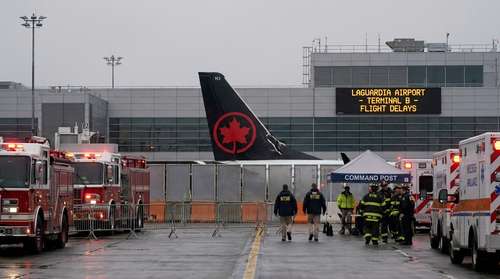
When Air Canada Express Flight 8646 collided with a massive fire truck on the tarmac, the sheer force of the 100-mph impact sheared off the nose of the CRJ-900 aircraft. In the chaotic moments that followed, first responders made a discovery that defied logic. A flight attendant ejected from plane was found alive more than 100 meters away on the runway, still securely strapped into her crew jumpseat.
Solange Tremblay, a 26-year veteran of Jazz Aviation—which operates the regional flight for Air Canada—suffered multiple bone fractures, including a broken leg, but survived the ordeal. Her daughter, Sarah Lépine, described the incredible outcome to Canadian news outlets on Monday.
"It's a complete miracle," Lépine said. "At the moment of impact, her seat was ejected... They found her and she was still strapped into her seat. She definitely has a guardian angel watching over her."
Former federal crash investigator Jeff Guzzetti noted that crew jumpseats are bolted directly to the aircraft's reinforced bulkhead. Equipped with heavy-duty, four-point safety harnesses, these seats are designed to withstand significantly higher crash loads than standard passenger cabin seats. This structural integrity is ultimately what saved Tremblay's life.
How the Aviation Safety Collision Unfolded
The tragedy struck just as the Montreal-based flight, carrying 72 passengers and four crew members, was touching down at LaGuardia. At the same time, a Port Authority fire truck was maneuvering across the airfield, responding to an unrelated aircraft issue. The resulting aviation safety collision compressed the cockpit and severely damaged the front section of the regional jet.
Tragically, both the captain and the first officer were killed instantly. The Air Line Pilots Association expressed profound grief, later identifying one of the deceased pilots as 30-year-old Antoine Forest, a dedicated aviator who joined the regional carrier in 2022. Port Authority Executive Director Kathryn Garcia confirmed that over 40 people, including passengers, crew members, and two Port Authority firefighters inside the rescue truck, were transported to local hospitals. While a majority were treated for broken bones and bruises and quickly released, a few victims sustained serious injuries, including one reported brain bleed.
Air Traffic Control Audio Reveals a Fatal Error
As investigators piece together the timeline, harrowing air traffic control recordings have shed light on the moments immediately preceding the disaster. Audio captures an air traffic controller clearing the emergency vehicle to cross the active runway before desperately attempting to reverse the command.
"Stop, Truck 1. Stop," the controller can be heard transmitting, frantically trying to divert the incoming jet from landing. The warning came too late for the aircraft traveling at roughly 100 mph. In a separate recording captured in the immediate aftermath, a Frontier Airlines pilot who witnessed the carnage remarked, "That wasn't good to watch." A deeply shaken controller responded over the radio, "Yeah, I know I was here. I tried to reach out... we were dealing with an emergency earlier. I messed up."
The NTSB LaGuardia Investigation and Airport Impact
By Monday morning, a specialized rapid-response "go team" had arrived on the scene to spearhead the NTSB LaGuardia investigation, working alongside the Federal Aviation Administration (FAA) and international counterparts from the Transportation Safety Board of Canada. These multi-disciplinary teams are tasked with analyzing everything from human factors and air traffic control protocols to the mechanical integrity of the vehicles involved. Law enforcement officials have already secured the aircraft's flight data and cockpit voice recorders, which will provide crucial telemetry data to reconstruct the final seconds of the flight.
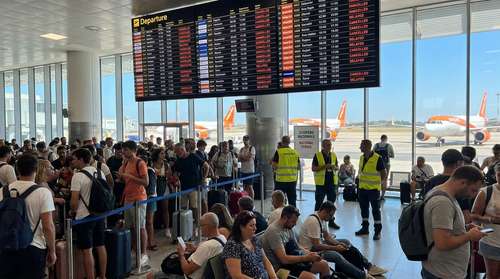
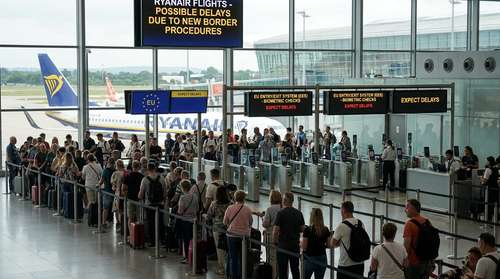
The severity of the crash and the sprawling debris field forced a massive operational halt at the busy transit hub. The FAA issued an immediate, comprehensive ground stop, causing cascading LaGuardia flight delays today that rippled across the national airspace system. All commercial operations were suspended until 2:00 p.m. Monday, leaving thousands of travelers scrambling to rebook flights as crews worked tirelessly to secure the tarmac and remove the severely damaged CRJ-900 fuselage.
A Sobering Reminder of Tarmac Dangers
Runway incursions—situations where an aircraft, vehicle, or person is incorrectly positioned on the protected area of a surface designated for landing and take-off—have become a critical focal point for aviation regulators. While advanced surface movement radar and warning systems are standard at major hubs, the chaotic environment of an active airport emergency can clearly still lead to devastating miscommunications.
As federal agencies continue their exhaustive inquiry into the incident, the contrasting realities of Sunday night remain difficult to process. The commercial aviation sector has lost two talented pilots in a horrific, seemingly preventable tragedy. Yet, amidst the twisted metal, a robust four-point harness and a reinforced bulkhead delivered an unbelievable second chance at life, cementing this as one of the most remarkable survival stories in modern aviation history.