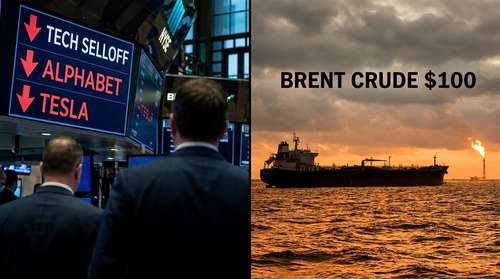
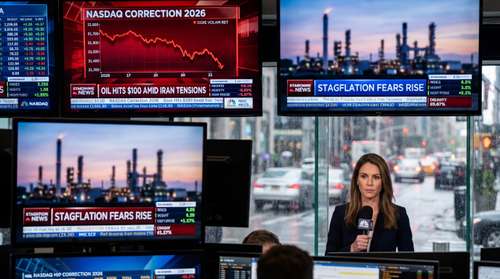
Wall Street was battered by another severe wave of selling this week, officially pushing the tech-heavy index into the red zone. The US market sell-off today culminated in the confirmation of a Nasdaq correction 2026, with the index shedding over 10.5% from its late-January peak. Driving this dramatic equity slump is the intensifying Middle East conflict, which has shattered early hopes for a diplomatic ceasefire and sent energy markets into overdrive. As the turmoil escalates, American investors are being forced to quickly recalibrate their portfolios to navigate an increasingly volatile macroeconomic landscape. The combination of soaring commodity costs and tumbling tech valuations is sending shockwaves through global exchanges, signaling a brutal end to the first quarter.
Geopolitical Turmoil and Energy Crisis Business News
The root cause of the current financial turbulence stems directly from the ongoing US-Israel conflict with Iran, now entering its fourth chaotic week. What began as targeted regional skirmishes has quickly morphed into headline-dominating energy crisis business news, fundamentally threatening the stability of international commerce. Market psychology has rapidly shifted from mild complacency to outright fear as military developments outpace diplomatic efforts.
Iran War Economic Impact on Global Trade
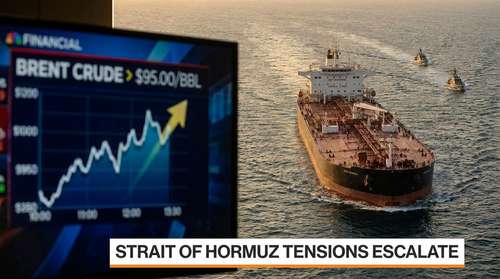
President Donald Trump recently proposed a 15-point ceasefire plan to Tehran, momentarily injecting a dose of optimism into the markets. However, Iranian authorities quickly dismissed the framework, submitting a counter-proposal that effectively demands sovereign control over the Strait of Hormuz. According to maritime intelligence reports, a "de facto toll booth" has emerged in this critical waterway, with some vessels reportedly paying transit fees in Chinese yuan to secure passage.
The immediate Iran war economic impact is triggering severe supply chain bottlenecks worldwide. The Pentagon is reportedly mapping out drastic military options should diplomacy fail entirely, including massive bombing campaigns. Despite this escalating rhetoric, the White House did announce a temporary 10-day pause on planned strikes targeting Iranian energy infrastructure, holding off until April 6 at Tehran's request to allow for continued talks. Yet, the profound uncertainty surrounding these negotiations has left traders deeply unsettled.
Oil Prices $100 Barrel: A Catalyst for Inflation
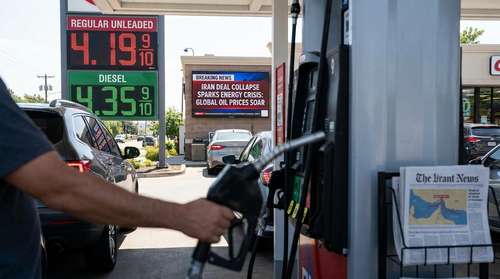
This geopolitical gridlock has fundamentally altered the global commodity outlook. Crude benchmarks are surging, with Brent crude firmly breaching the $105 mark and WTI crude pushing aggressively past $92. The reality of oil prices $100 barrel is no longer a distant threat but a materialized crisis squeezing corporate margins and consumer wallets alike.
Energy disruptions are actively removing millions of barrels per day from the global supply chain, with reports indicating that the conflict is severely hampering regional exports. While emergency stockpile releases from the IEA have attempted to artificially cool the market, the sheer volume of sidelined production in the Gulf is overpowering these temporary fixes. Higher energy costs are simultaneously lifting the U.S. Dollar Index and pushing the 10-year Treasury yield up toward 4.42%, creating a toxic environment for risk assets and highly valued technology equities.
Stagflation Risks 2026: How the Fed Might Respond
Perhaps the most alarming development for institutional investors is the rapid revival of stagflation risks 2026. Central bankers are currently staring down a nightmare scenario: surging, energy-driven inflation combined with the potential for stifled economic growth. Over the past two years, the Federal Reserve has fought aggressively to stabilize prices, but foreign energy shocks operate outside the realm of domestic monetary policy.
Interestingly, the underlying U.S. economy still shows pockets of remarkable strength. Recent jobless claims indicate the American labor market remains surprisingly resilient, with continuing claims dropping to a 1.75-year low of 1.819 million. Yet, the persistent rise in input costs threatens to fracture this stability. If headline inflation continues to climb due to oil shocks while high interest rates choke off corporate borrowing, the Federal Reserve will face an impossible dilemma. Cutting rates to spur growth could pour gasoline on the inflation fire, but holding them higher for longer risks triggering a deep recession.
Wall Street News March 2026: Looking Ahead
The overarching theme dominating Wall Street news March 2026 is strict capital preservation. With the Nasdaq now officially in a correction and both the S&P 500 and Dow Jones Industrial Average posting their steepest single-day losses since late January, the buy-the-dip mentality that defined the previous year has evaporated.
Moving forward, the durability of this downturn will largely depend on the duration of the Middle East conflict. A prolonged disruption in the Strait of Hormuz will undoubtedly reinforce a higher-for-longer interest rate environment. Retail and institutional investors alike must brace for continued volatility. Keeping a close eye on global energy benchmarks and upcoming Federal Reserve commentary will be vital to gauging whether this localized market correction will cascade into a broader economic downturn.