DAVOS, Switzerland – The transatlantic alliance faces its most precarious moment in decades this morning as President Donald Trump doubles down on his ultimatum to purchase Greenland. Speaking to reporters on the first anniversary of his second inauguration, Trump declared there is "no going back" on the acquisition, explicitly linking the territorial dispute to a looming trade war. The President's comments have sent shockwaves through the World Economic Forum in Davos, where European leaders are scrambling to assemble a unified response to what they term an "existential threat" to sovereign integrity.
Trump’s Greenland Annexation Plan Escalates
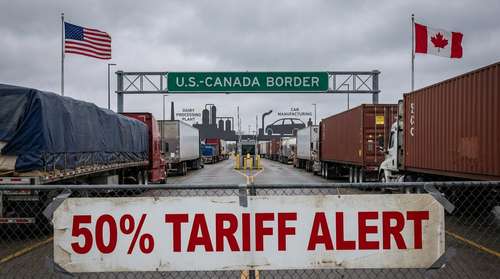
The diplomatic standoff intensified late Tuesday when the White House confirmed plans to impose punitive tariffs on European allies if the transfer of Greenland is not negotiated by February 1. In a move that has stunned geopolitical analysts, President Trump stated that the United States would levy a 10% tariff on goods from eight opposing nations, escalating to 25% by June 1 if a deal is not reached. "The World is not secure unless we have Complete and Total Control of Greenland," Trump wrote in a message that also aired personal grievances regarding the Nobel Peace Prize.
This renewed push for the Trump Greenland annexation is no longer being dismissed as rhetoric. Unlike his 2019 overtures, the administration has now tied the acquisition directly to U.S. national security strategy in the Arctic, citing competition with China and Russia. "We need it for security purposes," Trump told press at the White House before his departure for Davos. "Denmark cannot protect that land... it’s strategic land."
NATO Crisis 2026: Alliance at a Breaking Point
The NATO crisis 2026 has overshadowed every other agenda item at the World Economic Forum. NATO Secretary-General Mark Rutte, who took office in late 2024, faces the daunting task of mediating between Washington and Copenhagen. On Monday, Rutte held an emergency bilateral meeting with Greenland’s Foreign Minister Vivian Motzfeldt at NATO headquarters in Brussels. While Rutte publicly emphasized alliance unity, insiders suggest the mood was grim.
European officials are privately expressing fears that Trump’s transactional view of the alliance—treating Article 5 security guarantees as leverage for real estate acquisition—could permanently fracture the bloc. "If NATO doesn't have us, NATO is not very strong," Trump warned, implying that U.S. commitment to European defense could hinge on the Danish territory's status. This brinkmanship has left Nordic members questioning the reliability of the U.S. security umbrella.
Denmark and EU Stand Firm
Danish Prime Minister Mette Frederiksen has remained resolute, characterizing the annexation proposal as "absurd" and reaffirming that Greenland is not for sale. "Greenland belongs to Greenland," Frederiksen stated, supported by a chorus of EU leaders. In a show of solidarity, the Denmark Greenland dispute has become a rallying cry for European sovereignty. Officials in Brussels are reportedly finalizing a retaliation package worth approximately $107.7 billion, targeting U.S. industries if the threatened tariffs go into effect next month.
Davos 2026 Political News: Atmosphere of Uncertainty
The atmosphere at Davos 2026 is markedly tense. While tech titans like Satya Nadella and Jensen Huang discuss the future of AI, political leaders are consumed by the unfolding US Europe trade war. The juxtaposition of the Forum's theme of "cooperation in a contested world" against the reality of a fracturing Atlantic alliance is stark. Attendees fear that a trade war of this magnitude, coupled with the geopolitical instability of a U.S.-initiated territorial dispute, could trigger a global recession.
Market reaction has been swift, with Wall Street seeing significant sell-offs as investors digest the reality of the EU response to U.S. tariffs. The Dow Jones Industrial Average dipped sharply following Trump's press briefing, reflecting anxiety over the February 1 deadline.
The Nobel Grievance
Adding a layer of personal volatility to the crisis, reports have surfaced linking Trump's aggressive posture to a perceived snub by the Norwegian Nobel Committee. In a leaked message to Norwegian Prime Minister Jonas Gahr Støre, Trump allegedly cited his failure to win the Peace Prize as a reason he no longer felt obligated to "think purely of Peace." This conflation of personal validation with high-stakes geopolitical strategy has further complicated diplomatic channels, leaving allies unsure how to de-escalate the situation before the Trump second term anniversary week concludes.