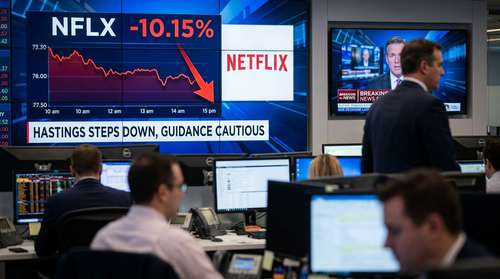
The Netflix stock price today took a sudden, massive hit, cratering by roughly 10% in early trading on April 17, 2026. A dramatic combination of a historic executive departure and cautious second-quarter forecasts triggered the severe market reaction. While the streaming titan actually delivered robust top-line numbers, investors aggressively hit the sell button after discovering the core details buried within the Netflix Q1 2026 earnings report. The resulting NFLX share plunge marks one of the most volatile trading sessions the company has experienced in recent memory.
The End of an Era: The Reed Hastings Exit
At the center of today's market earthquake is the formal announcement of the Reed Hastings exit. After dedicating 29 years to building a fledgling DVD-by-mail operation into an undisputed global entertainment superpower, the 65-year-old co-founder and current Chairman revealed he will step down from the board at the upcoming June 2026 annual meeting.
Hastings officially stated he plans to pivot his attention toward philanthropy and personal pursuits. The timing of his departure strikes a nostalgic chord, reminding investors of his pivotal role in upending Hollywood's traditional business models. In his farewell statement, Hastings emphasized that his true legacy is not a single business decision, but rather the creation of an adaptable corporate culture focused on "member joy".
While co-CEOs Ted Sarandos and Greg Peters have effectively managed daily operations over recent years, losing the ultimate architect of the platform is sending shockwaves through the broader landscape of tech leadership changes. Hastings expressed immense confidence in the current executive team, noting their commitment allows him the freedom to finally move on to new things.
Decoding the Netflix Q1 2026 Earnings Windfall
On the surface, the initial financial print looked flawless. The company posted a staggering $1.23 per share in adjusted profit, obliterating Wall Street consensus estimates that hovered around $0.79. Overall revenue climbed an impressive 16% year-over-year to hit $12.25 billion. So why the sudden investor panic?
The massive earnings beat carries a heavy asterisk. A significant portion of the profitability stemmed from an unusual, one-time $2.8 billion breakup fee. This massive capital injection arrived after Netflix officially walked away from its $72 billion pursuit of Warner Bros. Discovery assets, ultimately ceding the studio acquisition to rival Paramount Skydance. Excluding this termination payout, the underlying operational growth painted a decidedly different picture for institutional shareholders.
Still, the windfall dramatically bolstered the firm's balance sheet. Free cash flow swelled to $5.1 billion for the quarter, leaving the company with ample dry powder to fund future content acquisitions and technology upgrades.
Cautious Netflix Revenue Guidance Spooks the Market
The primary catalyst for the dramatic sell-off lies in the company's forward-looking projections. Wall Street demands perpetual, aggressive growth, and the latest Netflix revenue guidance failed to clear that exceptionally high bar.
Executives projected second-quarter revenue to land near $12.57 billion, noticeably missing the $12.64 billion consensus estimate from analysts. The anticipated earnings per share of $0.78 for Q2 also fell short of the $0.84 expectation. Furthermore, the company maintained a somewhat muted full-year revenue outlook of $50.7 billion to $51.7 billion, alongside an expected operating margin of 31.5%.
Subscriber Retention and Pricing Pressures
Investors are increasingly questioning whether aggressive subscription price hikes are finally starting to erode subscriber retention. Following the recent $2 bump to the $20 ad-free standard tier, analysts are searching for signs of consumer pushback. The fear of an impending growth ceiling is the underlying engine driving the ongoing sell-off, overriding the otherwise solid historical subscriber additions that pushed the user base over the 300 million mark globally.
Broader Implications for Streaming Industry News
The fallout from this financial report extends far beyond Los Gatos. For anyone following the latest streaming industry news, Netflix's turbulence serves as a critical bellwether for the entire entertainment sector. If the undisputed market leader is forecasting decelerated growth, smaller rival platforms may face even harsher realities in the coming quarters.
To combat potential subscriber fatigue, leadership is aggressively pivoting toward alternative revenue streams. The company confidently projected that advertising revenue is on pace to double, aiming for the $3 billion mark by the close of 2026. Additionally, heavy investments in live entertainment—such as its upcoming broadcasts of the World Baseball Classic in Japan—and expansive video podcasts highlight a strategic need to find fresh engagement hooks.
Whether this sharp stock correction is a temporary overreaction or the beginning of a prolonged stagnation period remains the dominant question across trading desks today. As the market digests the permanent departure of its founding visionary alongside sobering financial forecasts, the narrative surrounding the king of streaming has fundamentally shifted.