In a landmark announcement that is sending shockwaves through the tech and financial sectors, the long-awaited Nvidia H200 China export is officially back on track. Speaking directly to attendees and reporters at this week's developer conference, CEO Jensen Huang confirmed that the Silicon Valley tech giant has secured the necessary U.S. export licenses and acquired multiple purchase orders to resume shipping its highly sought-after artificial intelligence processors to Chinese customers.
The resumption of shipments comes with an unprecedented caveat: a 25% revenue share that will go directly to the U.S. government. This unorthodox arrangement highlights the mounting complexities tech giants face as they attempt to balance booming global demand against strict national security protocols. With the first deliveries expected within weeks, the tech world is watching closely to see how this delicate compromise will impact both the global AI race and regional technological dominance.
Jensen Huang GTC 2026: Supply Chains Fired Up
The confirmation arrived during a highly anticipated press briefing on Tuesday. The much-anticipated Jensen Huang GTC 2026 keynote address mapped out a future where AI processing reaches unprecedented scales. Following months of halted production stemming from evolving trade regulations, the CEO offered a decidedly optimistic outlook on the company's Eastern operations. "We have received purchase orders from many customers, and we're in the process of restarting our manufacturing," Huang noted to reporters. "Our supply chain is getting fired up."
The H200 chip, built on Nvidia's highly capable Hopper technology, is currently the most advanced graphics processing unit legally permitted for export to the Chinese market. It features a massive 141GB of HBM3e memory, positioning it as a powerhouse for training localized AI models. Beyond the immediate news, Huang projected a colossal $1 trillion in cumulative orders through 2027. Much of this staggering revenue forecast will be driven by the adoption of the Blackwell AI architecture and the newly unveiled Vera Rubin chips, which promise to execute inference tasks exponentially faster than their predecessors. Because these next-generation processors are strictly prohibited from Chinese distribution under current export controls, the Nvidia H200 China export remains the critical bridge maintaining the company's foothold in the world's second-largest economy.
The 25% Cut: Decoding the Nvidia AI Chip Trade Deal
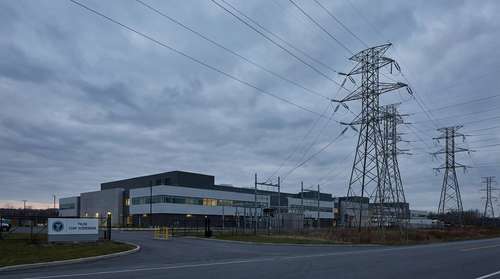
The path to resuming shipments was paved by a groundbreaking policy adjustment finalized in December 2025. Under the terms of this unique Nvidia AI chip trade deal brokered by the Trump administration, the company is allowed to fulfill orders for the H200 to approved Chinese entities, provided that a 25% cut of the sales revenue is remitted to the U.S. Commerce Department. The mechanics of this arrangement are as intricate as the processors themselves. Supply chain analysts note that the silicon manufactured in Taiwanese foundries must first be routed to secure U.S. laboratories for rigorous national security testing before proceeding to Asia.
For Nvidia, this compromise offers a crucial financial lifeline. The company absorbed a severe $5.5 billion financial blow last year due to abrupt export restrictions and canceled orders. For analysts tracking US-China chip war updates, this revenue-sharing model represents a novel approach by Washington: capitalizing financially on the technological demands of a foreign rival while simultaneously capping their upper-tier computing capabilities.
Navigating Huawei AI Chip Competition
Despite securing the green light from Washington, Nvidia's re-entry into the Eastern market faces domestic friction. The prolonged absence of top-tier American silicon created a vacuum that local manufacturers eagerly attempted to fill, accelerating Huawei AI chip competition. Over the last year, domestic tech champions heavily invested in expanding their 7-nanometer chip production capacities to reduce reliance on Western hardware.
Chinese authorities have actively manipulated the demand side as well. Following anti-monopoly accusations against Nvidia in September 2025, Beijing enacted a mandate banning foreign-made AI chips from state-funded data centers, urging cloud providers like Alibaba, Tencent, and ByteDance to utilize homegrown alternatives. While these tech giants have now been cleared to purchase the H200, it remains to be seen whether the overarching Nvidia H200 China export strategy can reclaim its former market dominance or if localized alternatives have permanently eroded its customer base.
The Future of AI Semiconductor Geopolitics
As the first pallets of H200 processors prepare to cross the Pacific, the broader implications for AI semiconductor geopolitics are coming into sharp focus. The global appetite for compute power is soaring, but the supply chain is increasingly dictated by borders and tariffs rather than pure market economics.
Nvidia's ability to successfully execute this revenue-sharing model could set a powerful precedent for other American tech conglomerates attempting to sell sensitive technology abroad. If the Nvidia H200 China export proves financially viable despite the hefty tariff and rigorous bureaucratic oversight, it may establish a new blueprint for international trade in the artificial intelligence era. For now, all eyes are on the supply chain as Nvidia races to fulfill its backlog of Chinese orders.