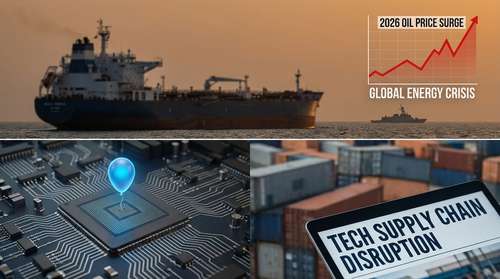
The global economy is entering uncharted territory this week as the escalating conflict in the Persian Gulf triggers a historic oil price surge 2026. Following the launch of military operations in late February, an unprecedented blockade of the Strait of Hormuz has sent shockwaves across global markets. What began as an isolated geopolitical flare-up has rapidly morphed into a multifaceted catastrophe, simultaneously driving up the cost of everyday transportation and severing the critical materials needed for advanced semiconductor manufacturing.
Strait of Hormuz Shipping Halts Amid Global Energy Crisis
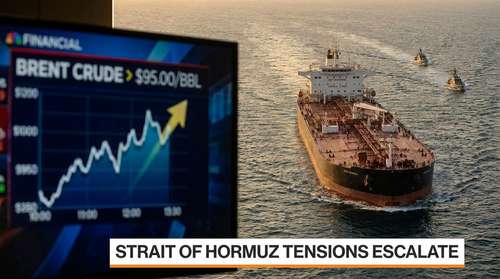
The immediate catalyst for the current market panic is the effective closure of the Strait of Hormuz shipping lanes. With approximately 20% of the world's daily oil supply and massive volumes of liquefied natural gas (LNG) abruptly blocked from Western commercial vessels, energy markets have reacted violently. Brent crude skyrocketed past $125 per barrel in early March, creating a global energy crisis that analysts are already comparing to the oil shocks of the 1970s.
The ripple effects are hitting consumers directly as transportation and logistics companies scramble to manage skyrocketing operating costs. This week, the industry saw significant United Airlines flight cuts, as the major carrier reduced its schedule by 5%. Corporate executives cited the unsustainable cost of jet fuel, forcing travelers to grapple with widespread cancellations, consolidated routes, and surging ticket prices. If tanker traffic does not resume soon, industry analysts warn that crude could test the $150 mark, prompting more drastic capacity reductions across the aviation sector and forcing some carriers to plan for $175 oil into 2027.
Qatar Drone Strikes and the Silent Tech Supply Chain Disruption
While crude oil captures the mainstream headlines, a quieter but equally devastating crisis is unfolding in the technology sector. On March 2, drone strikes severely damaged Qatar's Ras Laffan Industrial City. Beyond being a massive LNG hub, Ras Laffan is the world's largest helium production complex. The facility's sudden shutdown has instantly taken an estimated 30% to 38% of the global helium supply offline, with no confirmed restart date in sight.
Why Helium is Irreplaceable for Semiconductors
Helium is a finite, non-substitutable resource critical to the modern digital economy. In semiconductor fabrication, the ultra-cold gas is required for thermal management and creating stable vacuum environments during high-temperature etching processes. Without a steady supply of this highly specialized gas, advanced chip manufacturing faces an existential bottleneck.
This massive tech supply chain disruption strikes at the worst possible moment for the technology industry. The ongoing artificial intelligence boom requires vast quantities of high-bandwidth memory and advanced compute processors. Asian tech giants and major foundries, including South Korean manufacturers Samsung and SK Hynix, reportedly have less than six months of helium inventory remaining. As these reserves deplete, defect rates will rise and output will plummet. An estimated $650 billion in planned AI data center investments globally is now at risk of indefinite delays.
Iran Conflict Economic Impact: A Grim Inflation Forecast 2026
The convergence of energy shortages and tech manufacturing bottlenecks is painting a dark picture for the months ahead. The sweeping Iran conflict economic impact is forcing financial institutions to rapidly revise their expectations. With vital shipping lanes paralyzed and critical industrial gases unavailable, the cost of producing almost everything—from electric vehicles to consumer electronics and agricultural fertilizers—is climbing.
Recent economic models from the Dallas Fed indicate that a prolonged supply disruption in the Middle East will severely depress global output. Their analysis suggests that losing 20% of global oil supplies could lower global real GDP growth by nearly 3 percentage points in the coming months. Consequently, the inflation forecast 2026 now reflects a grim reality: consumers are facing multi-front price hikes. Gasoline is approaching $7 a gallon in several states, while electronics prices are quietly ticking upward as hardware manufacturers pass on their ballooning fabrication costs.
Ultimately, there are no quick workarounds for these structural bottlenecks. Re-routing international shipping around the conflict zone adds weeks to transit times and millions in insurance premiums. Furthermore, the specialized infrastructure required to extract and refine semiconductor-grade helium takes years to build. Until diplomatic or military resolutions can safely reopen the Persian Gulf, the world's highly optimized, interconnected supply chains will remain fundamentally fractured, leaving consumers and corporations alike bracing for further financial strain.