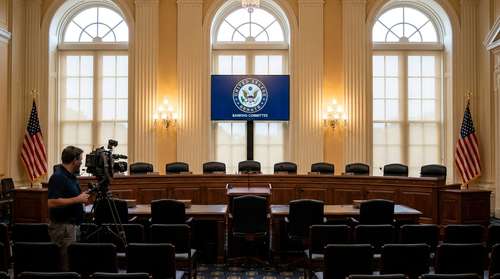
The financial world is officially on notice. On April 29, 2026, the Senate Banking Committee advanced the Federal Reserve Chair nomination of Kevin Warsh in a tight 13-11 vote, setting the stage for a dramatic overhaul in U.S. central banking. With Jerome Powell's term expiring on May 15, markets are already pricing in the turbulence of this leadership transition. The prospect of a Kevin Warsh Fed—defined by aggressive restructuring and a stark departure from the current playbook—has unleashed immediate stock market volatility. Investors are scrambling to adjust their portfolios as the era of predictable monetary guidance comes to an abrupt end.
A Drastic Monetary Policy Shift
For the better part of a decade, Wall Street has relied on the Federal Reserve to heavily broadcast its next moves. That luxury is rapidly disappearing. Warsh has made it abundantly clear that he intends to pull the plug on forward guidance, stripping markets of the telegraphing they have grown accustomed to. This proposed monetary policy shift is designed to give the central bank maximum flexibility, but it essentially forces institutional and retail investors alike to navigate blind.
The centerpiece of his strategic overhaul involves aggressive Fed balance sheet reduction. During his confirmation hearing, Warsh argued that shrinking the central bank's massive portfolio is vital to restoring long-term economic stability and curbing lingering inflationary pressures. While he firmly pledged to act as a "strictly independent" chairman—pushing back against the Trump administration's vocal demands for immediate interest rate cuts—his hawkish stance on the balance sheet is sending aggressive ripples through bond and equity markets.
The Return of the Battle-Tested Governor
Warsh is no stranger to economic turbulence. Serving as a Federal Reserve governor from 2006 to 2011, he acted as the central bank's primary Wall Street liaison during the darkest days of the 2008 financial crisis. Proponents, including Senate Banking Committee Chairman Tim Scott, point to this experience, noting that Warsh is "battle-tested and ready to lead". However, skeptics worry that his inclination toward a leaner, less communicative Fed could trigger unnecessary panic in an already fragile global economy.
Global Crises Complicate the Transition
The incoming chairman will not have the luxury of a quiet honeymoon period. The global economic landscape is tightening rapidly, exacerbated by a sudden and severe spike in energy costs. Following the unprecedented Hormuz oil crisis and the UAE's reported maneuvers regarding OPEC, crude prices have surged significantly over the past few weeks.
This commodity shock throws a massive wrench into the interest rate forecast 2026. Central bankers are suddenly trapped between the dual mandate of taming supply-driven inflation and preventing a broader economic contraction. Without the safety net of forward guidance, every upcoming inflation report, jobs number, and geopolitical headline will likely trigger outsized market reactions as traders guess the Fed's next move.
Jerome Powell Retirement: The End of an Era
The path to confirmation for Warsh wasn't without intense political theater. The transition from the Powell era became officially unblocked when U.S. Attorney Jeanine Pirro ended a Department of Justice inquiry into the outgoing chair on April 24. That decision prompted Republican Senator Thom Tillis to drop his hold on the nomination, allowing Wednesday's party-line committee vote to proceed.
The Jerome Powell retirement marks the conclusion of a highly scrutinized and historically significant tenure. Powell steered the U.S. economy through the pandemic's unprecedented stimulus measures and the subsequent fight against crushing inflation, all while weathering relentless political pressure from both sides of the aisle. As he prepares to exit the stage in mid-May, his departure creates a noticeable vacuum of institutional continuity.
Navigating the Imminent Stock Market Volatility
What does this leadership upheaval mean for everyday portfolios? The current stock market volatility is not merely a temporary reaction to a Washington headline; it reflects a fundamental repricing of risk across all asset classes.
When a central bank pivots toward aggressive portfolio offloading while simultaneously withdrawing communication about its future rate path, risk premiums inevitably rise. Equities, particularly growth stocks that rely heavily on predictable and cheap borrowing costs, are feeling the brunt of the pressure. Investors must now adapt to a regime that prioritizes real-time data over central bank commentary.
Key strategies for the coming months include:
- Monitoring commodity markets: The ongoing Middle East energy crisis will directly dictate the inflation narrative, forcing the Fed's hand regardless of domestic pressures.
- Preparing for sudden rate recalibrations: The interest rate forecast 2026 remains highly fluid. Markets will aggressively price in cuts or hikes based on single data points rather than gradual Fed signaling.
- Building defensive buffers: With an unpredictable, data-dependent leader at the helm, holding companies with robust cash flows, strong pricing power, and low debt will become paramount.
The changing of the guard in Washington is never a minor event. But with a complex geopolitical backdrop, soaring oil prices, and an incoming chairman eager to rip up the traditional central banking playbook, the financial sector is bracing for a notoriously unpredictable second half of 2026.