
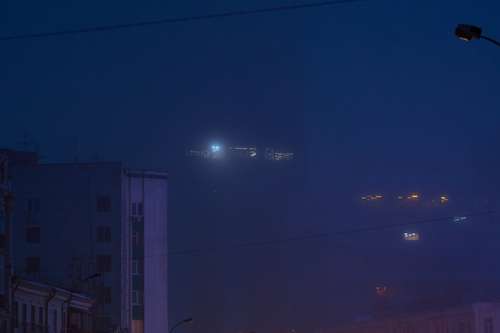
KYIV, January 9, 2026 – In one of the most severe escalations of the winter, Russia launched a massive combined air assault on Ukraine early Friday, targeting residential areas in Kyiv and critical gas infrastructure in Lviv. The attack, which Ukrainian officials say involved the fearsome "Oreshnik" hypersonic missile, comes just hours after President Volodymyr Zelenskyy warned that Moscow has chosen a "winter of conflict" over diplomatic engagement with the new U.S. administration.
Hypersonic Terror: The Oreshnik Strike on Lviv
The strike on Lviv, a city in western Ukraine that has often served as a rear haven, marks a dangerous shift in Russian tactics. According to the Ukrainian Air Force, a ballistic object traveling at approximately 13,000 kilometers per hour—a speed consistent with the Oreshnik intermediate-range ballistic missile—struck a critical infrastructure facility in the region late Thursday night.
Military analysts and local officials, including Lviv Mayor Andriy Sadovyi, suspect the target was the strategic underground gas storage facilities that serve both Ukraine and European partners. While the missile reportedly carried a kinetic or inert warhead rather than a nuclear one, the sheer velocity and precision of the strike were intended as a psychological blow. "This was not just an attack on pipes and tanks; it was a message to the West and the new leadership in Washington," a Ukrainian defense source told reporters. The use of the Oreshnik, a system capable of carrying multiple independently targetable reentry vehicles (MIRVs), underscores the fragility of Ukraine's air defenses against next-generation hypersonic threats.
Kyiv Under Fire: Residential Damage and Blackouts
While Lviv faced the hypersonic threat, the capital city of Kyiv was subjected to a brutal wave of drone and cruise missile attacks. Kyiv missile strike today reports confirm that at least four people were killed and over 20 injured when debris from intercepted missiles crashed into residential buildings in the Dniprovskyi and Desnianskyi districts.
The barrage has also reignited the energy crisis. DTEK, Ukraine's largest private energy investor, reported that emergency shutdowns were implemented across the capital and the surrounding region after strikes damaged key substations. As temperatures in Kyiv plummeted to -5°C (23°F), over 600,000 households were left without electricity. "They are weaponizing the frost," said Kyiv City Military Administration head Tymur Tkachenko, echoing fears of a renewed winter offensive Ukraine has braced for since December.
Diplomacy Frozen: Zelenskyy's Warning
The attacks unfolded shortly after a somber televised address by President Zelenskyy, where he delivered a stark assessment of the war's trajectory entering 2026. Addressing the recent diplomatic stasis, Zelenskyy stated that Vladimir Putin had decisively rejected "real" negotiations in favor of battlefield escalation.
"Russia is choosing a winter of conflict over diplomatic engagement," Zelenskyy said, referencing stalled back-channel talks that many hoped would gain traction following his recent meeting with U.S. President Donald Trump in Florida. The Zelenskyy announcement highlighted that Moscow is trying to force concessions by freezing Ukrainian civilians rather than engaging with the peace frameworks proposed by the new U.S. administration. "They believe that darkness will make us surrender. They forget that we see clearly in the dark," he added.
Russian Retaliation and Future Risks
The Kremlin has framed the January 9 strikes as direct retaliation. Russian officials claimed the barrage was a response to an alleged Ukrainian drone attack on President Putin's residence in the Novgorod region earlier this week—a claim Kyiv has dismissed as a "false flag" operation designed to justify terror bombing. The Russian Ministry of Defense stated that the missile attacks Lviv and Kyiv achieved all their objectives, claiming to have hit "foreign mercenary bases" and energy sites.
For international observers, the deployment of the Oreshnik missile is the most alarming development. It signals that despite Russia Ukraine conflict updates suggesting a stalemate on the ground, Moscow retains the ability to escalate vertically with advanced weaponry that challenges Western air defense systems. As rescue crews continue to dig through the rubble in Kyiv, the window for a diplomatic breakthrough this winter appears to be closing fast.