WASHINGTON — In a significant bipartisan rebuke of the administration’s expanding military footprint in South America, the U.S. Senate voted 52-47 late Thursday to advance a resolution that would require congressional approval for further military action in Venezuela. The move comes less than a week after U.S. special forces executed a surprise nighttime raid in Caracas, resulting in the historic seizure of Venezuelan President Nicolás Maduro and his transfer to federal custody in New York.
Senate Moves to Reassert Authority Over Foreign Conflict
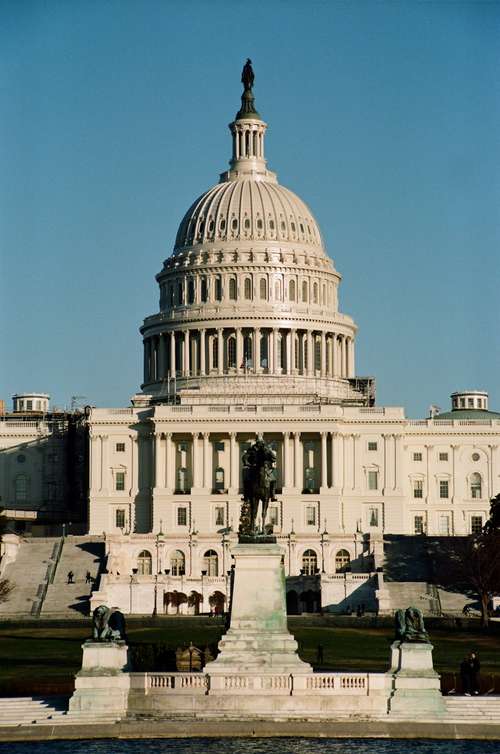
The resolution, spearheaded by Sen. Tim Kaine (D-Va.) and Sen. Rand Paul (R-Ky.), marks the most serious congressional challenge to President Donald Trump’s foreign policy since his inauguration last year. While the measure faces a steep uphill battle in the Republican-controlled House and would likely meet a presidential veto, the vote signals deep unease on Capitol Hill regarding the sudden escalation of US military Venezuela operations.
Five Republicans crossed party lines to join all Democrats in supporting the procedural vote: Sens. Rand Paul, Lisa Murkowski, Susan Collins, Todd Young, and Josh Hawley. The defectors cited constitutional concerns over the executive branch’s unilateral authority to launch what effectively amounts to a regime change operation without legislative oversight. "The question is not whether Maduro is a tyrant—he is," Sen. Paul told reporters after the vote. "The question is whether the President has the sole power to plunge this nation into a potentially open-ended occupation of a sovereign country."
Operation Absolute Resolve: The Seizure of Nicolas Maduro
The legislative pushback follows the stunning events of January 3, 2026, when U.S. forces launched "Operation Absolute Resolve." In a precise, high-risk operation, elite commandos breached the presidential palace in Caracas, seizing Maduro and his wife, Cilia Flores. The Nicolas Maduro seizure was described by the Pentagon as a law enforcement operation to execute longstanding narco-terrorism indictments, but lawmakers argue it has crossed the threshold into war.
Casualty reports from the raid remain conflicting. While the Pentagon confirmed no American fatalities, Venezuelan officials allege that over 100 military personnel and civilians were killed during the extraction. Maduro, now detained at the Metropolitan Detention Center in Brooklyn, pleaded not guilty to drug trafficking charges earlier this week, setting the stage for a high-stakes legal battle that could drag on for years.
Control of Venezuelan Oil Resources Sparks Controversy
Adding fuel to the congressional fire are President Trump’s recent comments regarding Venezuelan oil resources. In a series of statements following the raid, the President declared that the U.S. would "run" Venezuela temporarily and intends to utilize the nation's vast petroleum reserves to reimburse American taxpayers for the military operation. "We’re going to be using oil, and we’re going to be taking oil," Trump told press at Mar-a-Lago, suggesting a plan to drive global oil prices down to $50 a barrel.
Critics warn that explicitly linking military intervention to resource extraction could destabilize the region further and violate international law. "This rhetoric transforms a purported law enforcement mission into a war for resources," said Sen. Kaine during floor debate. The administration, however, maintains that controlling the oil revenue is necessary to prevent it from funding "narco-terrorist" remnants of the Maduro regime.
What This Means for US Foreign Policy in 2026
The advancement of the Senate resolution 2026 highlights a growing fracture within the Republican party regarding interventionist foreign policy. While staunch Trump allies have praised the operation as a decisive victory against socialism and drug trafficking, the libertarian and moderate wings of the GOP are increasingly wary of open-ended commitments.
As the resolution heads toward a final passage vote next week, the White House has dismissed the effort as "political theater." Yet, with American troops now on the ground in Caracas and the administration asserting direct oversight of Venezuela's governance, the debate over Trump Venezuela war powers is likely just beginning. The world is now watching to see if Congress can successfully assert its constitutional war powers or if the executive branch has firmly established a new precedent for unilateral intervention.