
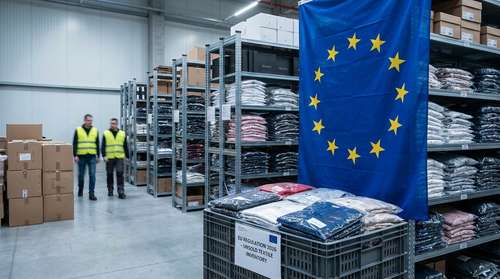
For decades, the fashion industry has harbored a tightly kept, highly profitable secret: burning perfectly good, unworn clothes is often cheaper than storing or discounting them. Starting this weekend, July 19, 2026, that practice is officially illegal in Europe. The highly anticipated EU unsold clothing ban 2026 has entered into application, sending shockwaves through the global supply chains of the world's most powerful apparel conglomerates.
Mandated under the sweeping Ecodesign for Sustainable Products Regulation (ESPR), the new framework explicitly prohibits large enterprises from destroying unsold apparel, clothing accessories, and footwear. The European Commission estimates that between 4% and 9% of all unsold textiles in Europe are incinerated or shredded before ever reaching a consumer—a staggering waste generating roughly 5.6 million tons of carbon emissions annually, nearly equivalent to the net emissions of a small European country. By eliminating this disposal loophole, regulators are forcing industry titans to confront their systemic overproduction.
The Luxury Brand Inventory Squeeze: Exclusivity vs. Compliance
For high-end heritage houses, the EU fashion destruction ban poses a unique existential threat to brand equity. Scarcity is the bedrock of luxury. Historically, disposing of end-of-season leather goods or ready-to-wear collections prevented those items from flooding discount markets, which executives fear dilutes brand prestige. Now, these labels face a severe luxury brand inventory squeeze.
Instead of sending surplus merchandise to the incinerator, luxury houses are legally obligated to pivot toward alternative strategies like controlled resale, highly regulated donations, or material recovery. We are already seeing aggressive strategic shifts in LVMH Chanel Inditex sustainability initiatives to address this new reality. LVMH, for instance, has expanded Nona Source, a platform that redistributes surplus fabrics and deadstock materials to emerging designers.
Yet, breaking down finished garments to recycle raw materials remains notoriously complex. Companies face immense difficulty when attempting to remove hardware and proprietary logos protected by intellectual property laws without irreparably damaging the underlying fabric. The regulation does include narrow exemptions—called derogations—allowing destruction if removing trademarked logos for recycling is technically unfeasible, but the burden of proof now rests entirely on the brand.
Fast Fashion Faces a Logistical Nightmare
While luxury grapples with protecting its high-end image, volume-driven retailers are facing a pure logistical crisis. The business model of fast fashion relies heavily on rapid turnarounds, constant trend cycling, and razor-thin margins. Strict fast fashion waste regulations mean that storing mountains of returned or unsold synthetic garments is no longer financially viable, and destroying them is now a finable offense heavily monitored by national authorities.
Navigating the Avalanche of Consumer Returns
E-commerce returns constitute a massive portion of the newly regulated "unsold goods". When a shopper returns a heavily discounted fast-fashion dress, processing, cleaning, and restocking that item frequently costs the retailer more than the garment's original retail value. Under the ESPR guidelines, companies must prioritize keeping products in circulation.
This mandate requires massive investments in reverse logistics infrastructure. Retailers must route returns through specialized repair centers, partner with secondary marketplaces to offload stock at a markdown, or navigate complex donation networks. If a charity rejects a donation—which is increasingly common due to the overwhelming volume of low-quality garments—brands must find secondary recycling avenues before they can legally classify the item as waste.
The Blueprint and the Digital Future
The European Union did not draft these rules in a vacuum. France served as the primary benchmark, becoming the first country to fully implement a national ban on destroying unsold non-food products at the end of 2023. European policymakers observed the French rollout closely, refining the ESPR to ensure it would scale across all member states without creating unmanageable bottlenecks.
Looking ahead, the ESPR's ban on destruction is just the opening salvo. Regulators are actively preparing for the rollout of the Digital Product Passport (DPP), expected to take wider effect in the coming years. The DPP will assign a digital identity to every piece of clothing sold in the EU, storing traceable data on material origin, recyclability, and chemical usage. This will make dodging the destruction ban virtually impossible, as the entire lifecycle of a garment will be tracked via a simple QR code scan.
Forcing a Circular Economy: What Happens Next?
The penalties for non-compliance are severe, though the exact fine structures are determined by individual national authorities, such as Ireland's Department of Enterprise or Germany's environmental agencies. Authorities will audit large companies—defined as those exceeding 250 employees, €50 million in annual revenue, or €25 million in total assets—requiring them to report exactly how they handle excess goods using standardized customs and logistics codes.
Currently, the mandate applies exclusively to these major corporate players. Medium-sized enterprises have been granted a grace period until July 2030 to adapt their supply chains, while micro-businesses remain permanently exempt to avoid stifling small-scale entrepreneurship.
The ultimate success of the unsold stock recycling EU mandate relies heavily on the industry's ability to innovate quickly. Startups specializing in textile-to-textile recycling and business-to-business deadstock management are experiencing a surge in venture capital funding as major brands scramble for compliant solutions. By closing the incinerator doors today, the European Union has effectively forced the fashion industry to value the resources they consume, paving the way for a drastically different and significantly more resilient retail landscape.