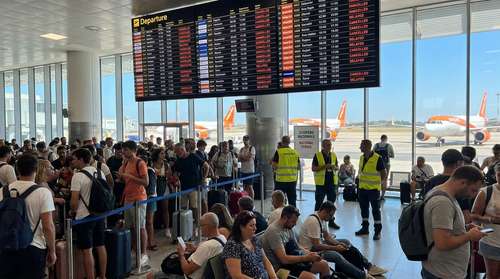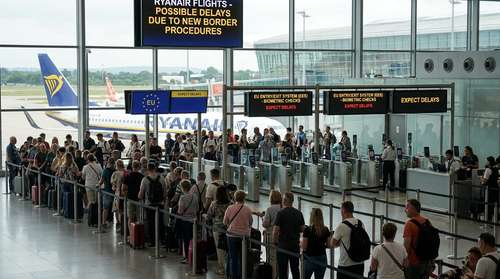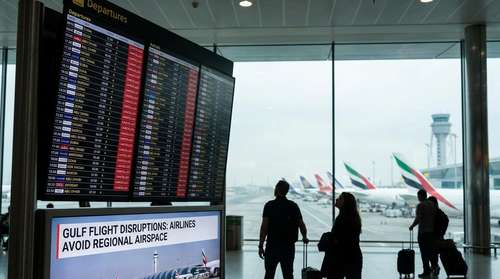
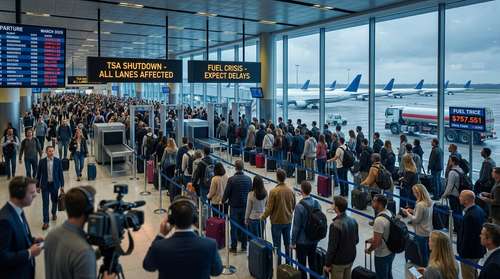
Millions of American travelers are currently navigating an unprecedented crisis in the skies. If you are flying this week, you are likely walking into a historic wave of spring break 2026 travel delays. A brutal collision of political stalemate in Washington and geopolitical conflict abroad has created a nightmare scenario for the 171 million passengers expected to fly this season. With a partial government shutdown leaving federal screeners without pay, and a sudden global energy shock rippling through the aviation industry, the travel infrastructure is visibly buckling. Over 2,500 flights have been delayed and hundreds canceled just today at major hubs like Atlanta and Orlando.
The Perfect Storm: TSA Shutdown Wait Times Erupt
Since February 14, the Department of Homeland Security (DHS) has operated under a funding lapse following a congressional standoff over immigration enforcement reforms. Because the Transportation Security Administration (TSA) falls under DHS, over 50,000 essential screening personnel are currently mandated to work without compensation. The breaking point arrived recently when these officers missed their first full paychecks on March 14. Consequently, TSA shutdown wait times have skyrocketed across the nation.
The operational strain is severe. Over 300 federal officers have already resigned, and unscheduled absences have climbed to roughly 6% nationwide. This acute staffing crunch means that Atlanta airport security lines, along with checkpoints in Houston, Austin, and New Orleans, have consistently stretched past the three-hour mark. Weary travelers are finding queues wrapping out of terminal doors and down into parking garages. At Houston's Hobby Airport, recent wait times averaged three and a half hours, prompting local officials to issue emergency advisories.
Adding to the institutional chaos is a sudden leadership transition at the DHS. With the recent departure of Secretary Kristi Noem and the incoming appointment of Markwayne Mullin on March 31, the agency is navigating immense structural uncertainty right at the peak of the travel season. While TSA PreCheck remains functional, the sheer volume of passengers—projected at a record 2.8 million per day—means even expedited lanes are heavily congested.
Airline Cancellations March 2026: The Global Fuel Crisis
Simultaneously, the commercial aviation sector is grappling with devastating financial pressures. Following recent military escalations in the Middle East and the retaliatory closure of the Strait of Hormuz—a crucial chokepoint for global oil—Brent crude prices have doubled, surging past $100 per barrel. For domestic and international carriers, the jet fuel price spike impact is catastrophic, with aviation fuel premiums jumping by 50 to 100 percent in mere weeks.
Major U.S. airlines are reportedly bleeding up to $280 million weekly in added fuel expenses, as jet fuel costs have risen more than $1.50 per gallon since late February. To mitigate these staggering operational losses, airlines are being forced to trim schedules and consolidate routes. This has triggered a massive wave of airline cancellations March 2026. FlightAware data indicates that disruption levels have remained historically high throughout the month, with thousands of daily delays becoming the new normal.
The fuel shortage has become so dire globally that international carriers like SAS and Air New Zealand are preemptively canceling thousands of flights through April. Domestically, airlines are selectively grounding flights on less profitable routes and rerouting planes to tanker fuel from alternative locations, creating cascading delays across the entire U.S. network.
Navigating Severe US Travel Disruptions
The compounding effects of understaffed security checkpoints and financially driven flight reductions have resulted in some of the most severe US travel disruptions seen in years. The forecasted 4% increase in passenger volume compared to the same period in 2025 is only exacerbating the gridlock. Terminals are packed with stranded passengers attempting to rebook, overwhelming customer service desks that simply do not have the available seat capacity to accommodate everyone.
Industry analysts warn that the situation requires a fundamental shift in how passengers approach air travel this spring. Arriving the standard two hours early is no longer a viable strategy; authorities now recommend a minimum three-to-four-hour buffer for domestic flights out of major hubs.
Essential Strategies for the Airport
To survive the current turbulence, proactive preparation is your best defense. Checking your flight status updates today before leaving for the airport is absolutely critical, as rolling cancellations are occurring with very little advance notice. Do not rely solely on email notifications; actively monitor your airline's digital portals.
- Utilize Airline Apps: Download your carrier's mobile application. If your flight is grounded, app-based rebooking allows you to secure a seat on the next available flight instantly, bypassing massive customer service lines in the terminal.
- Prepare for Security: With Global Entry recently reinstated after a controversial 17-day pause, international arrivals have a slight reprieve. However, standard screening will be grueling. Pack simply, ensure all liquids meet the 3-1-1 rule, and have documents readily accessible to help speed up the diminished TSA workforce.
- Know Your Rights: Familiarize yourself with the Department of Transportation's refund policies. If an airline cancels your flight due to operational or fuel issues, you are entitled to a full cash refund, not just travel credits.
Ultimately, patience and flexibility are essential. The combination of unpaid federal workers and soaring global energy costs shows no immediate signs of resolution. Until lawmakers reach a funding agreement to pay homeland security personnel, and global oil markets stabilize, the flying public will continue to bear the brunt of these compounding crises.