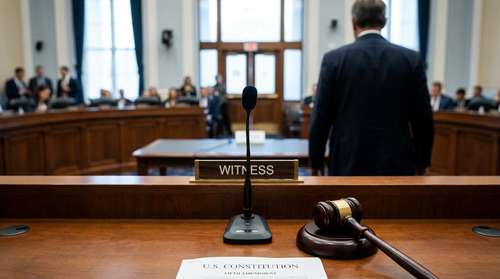
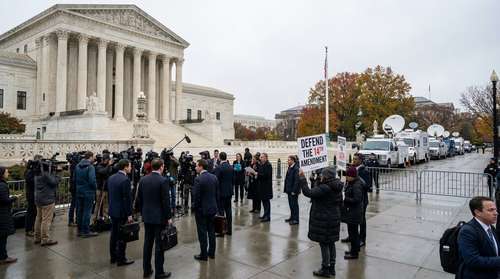
Washington — The highest court in the nation faces one of the most consequential constitutional questions in modern American history today. On April 1, 2026, the justices are hearing historic US citizenship oral arguments 2026 to determine whether the president can unilaterally rewrite a foundational pillar of American identity. At the center of this Supreme Court birthright citizenship showdown is Trump v. Barbara, a blockbuster case testing whether the administration can lawfully end automatic citizenship for children born on American soil to undocumented immigrants and temporary visa holders.
The Core of the Birthright Citizenship Legal Battle
On his first day back in the Oval Office in January 2025, President Donald Trump signed Executive Order No. 14,160, officially titled 'Protecting the Meaning and Value of American Citizenship'. This Trump 14th Amendment executive order directed federal agencies to stop issuing citizenship documents to newborns unless at least one parent is a U.S. citizen or permanent legal resident.
Since its signing, the mandate has faced fierce resistance in the judicial system. A coalition of civil rights groups immediately sued to block the measure. A U.S. District Court judge in New Hampshire ultimately issued a preliminary injunction, halting the order and certifying a class of babies born after February 2025, to protect their legal status. The administration appealed these universal injunctions, elevating this birthright citizenship legal battle directly to the Supreme Court.
Decoding the 14th Amendment Citizenship Clause
The legal foundation of this dispute rests entirely on just a few words within the 14th Amendment citizenship clause. Drafted in the aftermath of the Civil War to reverse the infamous Dred Scott decision and guarantee citizenship for freed slaves, the text states that all persons born in the U.S. 'and subject to the jurisdiction thereof' are American citizens.
Solicitor General D. John Sauer is arguing today that the phrase 'subject to the jurisdiction thereof' inherently excludes the children of undocumented migrants and foreign nationals on temporary tourist, work, or student visas. According to the government's filings, these parents owe their political allegiance to foreign nations, meaning their children do not automatically fall under complete U.S. jurisdiction. To support this, the administration leans on the 1884 decision Elk v. Wilkins, asserting that physical presence alone does not equate to full political jurisdiction.
Challengers counter that this interpretation shatters more than a century of established precedent. They point heavily to the landmark 1898 case United States v. Wong Kim Ark, where Justice Horace Gray wrote for the majority that children born in the U.S. to resident foreign citizens are indeed automatically Americans. Furthermore, civil rights groups argue the government is building its case on a foundation of historical xenophobia, warning that a reversal would upend the lives of millions.
Real-World Impact of Trump Immigration Policy 2026
Beyond the high-minded constitutional theory, the practical ramifications of this ruling will be staggering. Researchers estimate that hundreds of thousands of babies born in the United States each year would be directly impacted if the court sides with the administration.
This Trump immigration policy 2026 centerpiece would effectively create a new underclass of stateless children residing within American borders. Critics note that the policy does not just target those who crossed the border unlawfully; it equally impacts international students, tech workers, and temporary agricultural laborers who reside legally in the country but lack green cards.
Proponents of the order, however, argue that the longstanding interpretation has been actively exploited. Several conservative lawmakers filed amicus briefs backing the president, arguing that the current application of the amendment creates a warped incentive for 'birth tourism' and illegal border crossings. They maintain that returning to what they view as the original constitutional text is a necessary step to regain control of the nation's immigration system.
SCOTUS Immigration Case Live Updates and Political Fallout
As we monitor the SCOTUS immigration case live updates from inside the chamber today, legal analysts are paying close attention to the court's conservative bloc. The high court has shown a willingness to push back against the executive branch in recent months. Following an inauspicious set of rulings on the shadow docket, the justices struck down the administration's sweeping global tariffs in February.
That recent defeat triggered intense frustration from the Oval Office. Just last month on Truth Social, the president attacked the conservative justices he appointed, predicting they would 'find a way to come to the wrong conclusion' regarding his birthright order.
A final decision in Trump v. Barbara is expected by late June or early July 2026. If the court sides with the plaintiffs, the centuries-old understanding of American birthright remains intact. If the administration prevails, the very definition of what it takes to become an American will fundamentally transform overnight.