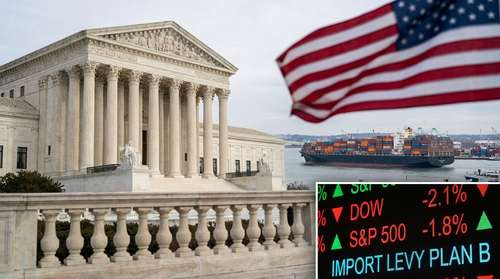
In a landmark decision that has sent shockwaves through the global economy, the Supreme Court struck down Trump's global tariffs on Friday, ruling 6-3 that the President exceeded his authority under the International Emergency Economic Powers Act (IEEPA). The decision, delivered in the consolidated cases of Trump v. V.O.S. Selections and Learning Resources v. Trump, potentially triggers a massive US import duty refund process estimated at over $133 billion. However, the victory for free trade advocates was short-lived. In a defiant response just hours later, the White House invoked the Section 122 Trade Act to impose a new, temporary 10% surcharge on all imports, ensuring the administration's protectionist agenda continues unabated.
Supreme Court Rules Emergency Powers Unconstitutional for Tariffs
The Court’s majority opinion, authored by the Chief Justice, delivered a stinging rebuke to the administration's expansive use of executive power. The justices held that while IEEPA grants broad authority to regulate economic transactions during national emergencies, it does not explicitly delegate the power to impose taxes or duties—a power the Constitution reserves exclusively for Congress. "The authority to 'regulate' importation is not a blank check to rewrite the tariff code," the opinion stated.
This Supreme Court tariff ruling fundamentally alters the landscape of Trump economic policy news. For years, the administration has relied on emergency declarations to levy sweeping duties on allies and adversaries alike. By declaring these emergency powers unconstitutional for the purpose of revenue generation, the Court has reasserted legislative supremacy over trade policy. Legal experts note this is the most significant curb on presidential trade authority since the 1930s.
The $133 Billion Refund Nightmare
The immediate aftermath of the ruling has created unprecedented administrative chaos. With the IEEPA-based tariffs declared unlawful, U.S. Customs and Border Protection (CBP) faces the daunting prospect of processing refunds for duties collected over the past two years. Industry estimates suggest the government could be on the hook for more than $133 billion, a figure that has corporate treasurers scrambling to file claims.
Justice Brett Kavanaugh, in his dissent, warned of the "practical mess" this decision would create, predicting years of litigation over the mechanics of repayment. "The Court says nothing today about whether, and if so how, the Government should go about returning the billions of dollars," he wrote. For businesses that have already absorbed these costs or passed them on to consumers, the path to recovering US import duty refunds remains murky, with fears that the administration may drag out the process in the Court of International Trade.
Trump's Countermove: Section 122 and the 'Plan B' Levy
Refusing to concede defeat, President Trump wasted no time in pivoting to a different legal mechanism. In a hastily arranged press conference, he announced the immediate imposition of a 10% global import surcharge under Section 122 of the Trade Act of 1974. This obscure provision allows the President to impose temporary surcharges of up to 15% for a maximum of 150 days to address "large and serious" balance-of-payments deficits.
Why Section 122?
Unlike IEEPA, Section 122 is explicitly designed for tariff adjustments, making it a safer legal harbor, albeit a temporary one. By setting the rate at 10%—below the statutory cap of 15%—and citing the nation's chronic trade deficit, the administration aims to bypass the constitutional hurdles that doomed the IEEPA tariffs. However, the 150-day strict time limit means this is merely a stopgap measure, buying the White House five months to negotiate a more permanent solution with Congress or trading partners.
Corporate Trade Uncertainty in 2026
For American businesses, the "Plan B" levy means the relief from the Supreme Court's decision was purely theoretical. Supply chain managers who celebrated the ruling in the morning were back in crisis meetings by the afternoon. The switch from IEEPA to Section 122 swaps one form of volatility for another, cementing a climate of corporate trade uncertainty in 2026.
"We are being whipsawed by legal technicalities," said the CEO of a major electronics retailer. "The legal basis changes, but the tax remains." Analysts predict that while the new 10% levy is lower than some of the previous rates, its universal application ensures that inflationary pressures will persist. As the 150-day clock begins ticking, the business community must now prepare for a new showdown when the temporary authority expires in July, raising the specter of yet another tariff cliff later this year.