WASHINGTON — President Donald Trump has officially rejected any diplomatic off-ramp for the ongoing conflict in the Middle East, declaring on Friday that only an "unconditional surrender" will end the U.S.-Israeli military offensive against Iran. The dramatic ultimatum comes as classified intelligence reports reveal a dangerous new dimension to the war: Russia is now providing Tehran with real-time satellite data on American troop movements, significantly raising the stakes of a potential global confrontation.
‘No Deal’ Without Capitulation
In a blistering statement released on Truth Social, President Trump shattered hopes for a ceasefire mediated by international partners. "There will be no deal with Iran except UNCONDITIONAL SURRENDER!" Trump wrote, capitalizing the phrase for emphasis. "After that, and the selection of a GREAT & ACCEPTABLE Leader(s), we will work tirelessly to bring Iran back from the brink."
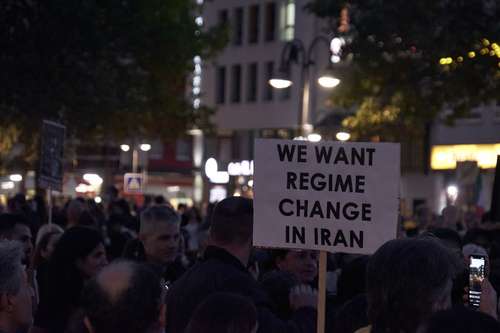
The President’s comments mark a pivotal shift in foreign policy, moving explicitly toward regime change—a goal administration officials had previously hesitated to confirm publicly. The demand follows a week of relentless airstrikes under Operation Epic Fury, a massive coordinated campaign that has already struck over 3,000 targets across the Islamic Republic, including nuclear infrastructure and missile production facilities.
White House Press Secretary Karoline Leavitt reinforced the President’s stance during a briefing on Friday. "The era of containment is over," she told reporters. "The President has made it clear that the United States will not negotiate with a regime that is actively hunting Americans while its own leadership structure collapses."
Russia Enters the Fray: A Global Escalation
The conflict took a darker turn this weekend with the revelation of direct Russian involvement. Defense officials, speaking on condition of anonymity, confirmed that Moscow has begun feeding high-resolution satellite telemetry to the Islamic Revolutionary Guard Corps (IRGC). This US Russia Iran conflict dynamic threatens to widen the war well beyond the Middle East.
The intelligence sharing has reportedly allowed Iranian missile batteries to adjust their targeting algorithms against U.S. naval assets in the Persian Gulf with alarming speed. "We are seeing a level of precision in Iranian counter-fire that suggests external technical assistance," stated a senior Pentagon analyst. "This is no longer just a regional spat; it is a proxy war with direct superpower entanglement."
Tehran Air Strikes and the Leadership Vacuum
On the ground in Tehran, the situation remains chaotic. Following the confirmed death of Supreme Leader Ayatollah Ali Khamenei in the opening salvo of the war on February 28, the Iranian command structure has fractured. Tehran air strikes news reports indicate that U.S. B-2 stealth bombers and Israeli F-35s have continued to pound underground bunkers believed to house the surviving leadership.
Despite the decapitation strike, pockets of resistance remain fierce. The IRGC has launched waves of retaliatory ballistic missiles at Tel Aviv and U.S. bases in the Gulf, though interception rates remain high thanks to integrated regional defense systems. However, the introduction of Russian intelligence could degrade these defenses in the coming days.
The Economic Fallout of a Middle East War 2026
The geopolitical shockwaves are already hitting the global economy. With the Strait of Hormuz effectively closed by the hostilities, oil futures surged to their highest levels since 2023. Energy markets are bracing for a prolonged Middle East war 2026 scenario that could trigger a global recession if supply chains remain severed.
European allies have expressed alarm at Trump’s "unconditional surrender" rhetoric, fearing it leaves Tehran with no choice but to fight to the death, potentially utilizing any remaining non-conventional weapons. "Cornering a wounded animal is dangerous," warned a French diplomatic source. "Cornering a nation with nothing left to lose is catastrophic."
What Comes Next?
As Operation Epic Fury enters its second week, the Pentagon is preparing for a protracted campaign. Secretary of War Pete Hegseth indicated that while there is no set timeline, the objectives are "laser-focused" on the total demilitarization of the Iranian regime. "We will not stop until the threat is eliminated," Hegseth affirmed.
For now, the world watches as two nuclear-armed superpowers inch closer to a direct standoff, with the fate of the Middle East hanging in the balance. President Trump’s gamble is high: a total victory that reshapes the region, or a spiraling conflict that drags the world into the abyss.