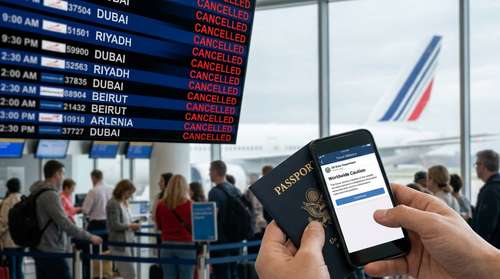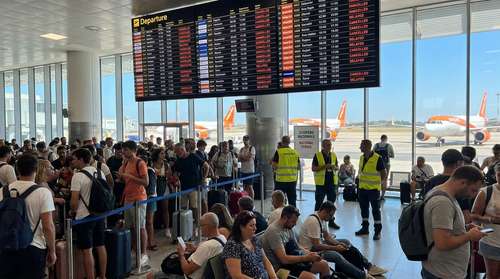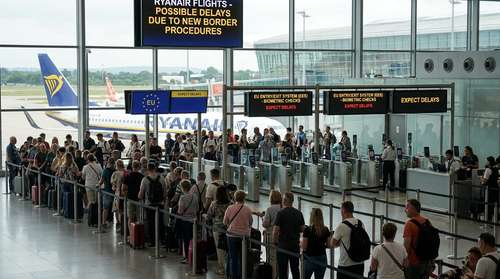
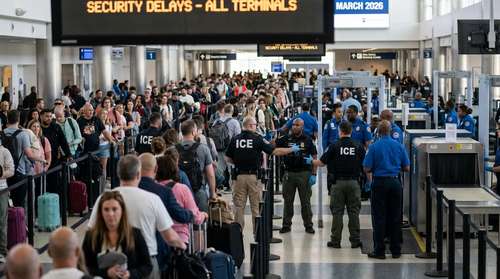
The bustling terminals of major U.S. travel hubs are seeing a highly unusual uniform this week. Driven by the worsening TSA staffing crisis 2026, the Trump administration has officially deployed U.S. Immigration and Customs Enforcement (ICE) officers to major airports across the country, including John F. Kennedy International, Newark Liberty, and Hartsfield-Jackson Atlanta. The unprecedented directive, which took effect Monday, March 23, aims to stabilize buckling airport security infrastructure during a grueling partial government shutdown. As record numbers of travelers hit the skies, the intersection of federal funding disputes and surging passenger volume has created a perfect storm for vacationers.
Unprecedented Measures for Airport Security Delays Today
With over 50,000 Transportation Security Administration employees forced to work without pay for over five weeks, the aviation system is buckling. Union officials report that more than 300 TSA officers have resigned entirely to find paying jobs, while the national callout rate spiked to 11.76% on Sunday. In hard-hit hubs, those numbers are even more severe, directly fueling severe airport security delays today.
"We are seeing absent rates surpass 40% in cities like Atlanta and New Orleans," notes the Department of Homeland Security. Unsurprisingly, JFK airport wait times have skyrocketed as the absentee rate there hovers around 37%. In response to the growing chaos, the White House has moved quickly, sending ICE personnel to at least 14 major airports to alleviate the pressure on remaining TSA personnel.
The Role of ICE Agents at Airports
The sight of armed ICE agents at airports taking up positions near screening checkpoints has immediately shifted the travel landscape. White House Border Czar Tom Homan clarified the operational strategy over the weekend, noting that ICE officers will not be operating X-ray machines or magnetometers. Instead, these federal agents are stepping into critical support roles.
Agents will largely focus on crowd control, managing exit lanes, and monitoring non-screening perimeters. By absorbing these logistical duties, ICE allows the remaining highly trained TSA personnel to focus exclusively on passenger and baggage screening. However, the deployment carries a dual mandate. Officials have openly confirmed that ICE personnel will simultaneously continue their standard immigration enforcement duties, a move that has drawn fierce backlash from civil liberties groups and lawmakers concerned about widespread profiling. The American Civil Liberties Union quickly condemned the strategy, arguing that the presence of immigration enforcement creates an intimidating environment for domestic travelers.
Government Shutdown Travel Impact Worsens
At the core of this logistical nightmare is a prolonged political standoff. The government shutdown travel impact is now hitting a breaking point. Triggered by a fierce dispute over Homeland Security funding—specifically following controversy surrounding recent enforcement operations in Minnesota—the funding gap has financially devastated the very workers tasked with keeping American skies safe. Congress remains deadlocked, with the administration demanding full funding while opposition leaders push to isolate non-immigration DHS funding to get TSA paid.
The American Federation of Government Employees (AFGE), which represents nearly 50,000 screening officers, highlights that many workers simply cannot afford to commute to the airport anymore. According to local union presidents, eviction notices and utility shutoffs are becoming common realities for frontline workers. Some officers have been forced to take on second jobs just to afford groceries, making it impossible to maintain their rigorous early-morning checkpoint shifts.
Navigating Travel Disruptions March 2026
For passengers planning getaways, the outlook requires immediate adjustment. If you are flying this week, checking your specific airline and airport dashboard is no longer optional—it is a necessity. The travel disruptions March 2026 brings are fluid, with security checkpoints frequently opening and closing based on hourly staffing availability. At Atlanta's Hartsfield-Jackson, one of the main checkpoints had to close entirely due to a lack of personnel. Meanwhile, at Philadelphia International Airport, three of the eight security checkpoints remained closed through the weekend, pushing standard wait times into the multi-hour territory.
Urgent Spring Break 2026 Travel Alerts
To avoid missing flights during this volatile period, consider these essential Spring Break 2026 travel alerts:
- Arrive Exceptionally Early: The standard two-hour domestic window is currently insufficient. Experts recommend arriving three to four hours before departure, especially at heavy-impact hubs like Chicago O'Hare and Newark.
- Monitor Checkpoint Closures: Use official airport apps to track live wait times. A terminal might suddenly shutter its primary screening lane if an insufficient number of officers arrive for a shift.
- Pack Minimally: With limited agents operating X-ray belts, bag checks are causing the most significant bottlenecks. Traveling with only a personal item can occasionally allow you to bypass the worst congestion.
The administration's drastic pivot to deploy ICE personnel is an emergency patch on a bleeding system. While it may keep lines moving marginally faster during the spring rush, the core issue remains unresolved. Until a federal budget agreement restores paychecks to thousands of screening officers, travelers must pack a massive dose of patience alongside their boarding passes.