As millions of Americans pack their bags for vacation, a perfect storm of political gridlock and soaring passenger volumes has triggered the unprecedented TSA staffing crisis 2026. With a partial government shutdown now entering its sixth week, unpaid airport security screeners are resigning or calling out sick in record numbers. To combat the crippling TSA security wait times, President Donald Trump has announced an extraordinary measure: deploying U.S. Immigration and Customs Enforcement personnel, placing ICE agents at airports nationwide starting this Monday.
The Breaking Point: Inside the TSA Staffing Crisis 2026
The root of this massive logistical failure traces back to February 14, when funding for the Department of Homeland Security (DHS) expired amid a fierce congressional standoff. Since then, roughly 50,000 Transportation Security Administration employees have been classified as essential, forcing them to report to work without pay.
The financial strain has pushed the workforce to its absolute limit. The DHS reports that over 400 TSA officers have formally resigned since the shutdown began, while daily absentee rates have skyrocketed. Over the weekend, Houston's William P. Hobby Airport saw absence rates peak above 50%, while major hubs in Atlanta and New Orleans reported call-out rates exceeding 30%. With one in ten TSA officers nationwide missing from their posts on Sunday, the system simply lacks the manpower to process the seasonal rush. The frustration among the workforce is palpable. Without their regular paychecks, many screeners are struggling to cover basic living expenses, forcing them to find alternative employment or simply stay home.
Trump Deploys ICE Agents at Airports to Ease Bottlenecks
Faced with a collapse in transportation infrastructure, President Trump took to Truth Social over the weekend to declare that he would dispatch federal immigration officers to stabilize the situation. The mandate to place ICE agents at airports is aimed at relieving exhausted TSA personnel and restoring order to chaotic terminals.
What Will ICE Officers Actually Do?
White House Border Czar Tom Homan confirmed on Sunday that the administration is actively finalizing the logistical blueprint for Monday's deployment. Homan clarified that ICE personnel will not be operating X-ray machines or conducting specialized bag screenings, as they lack the specific training required for those roles.
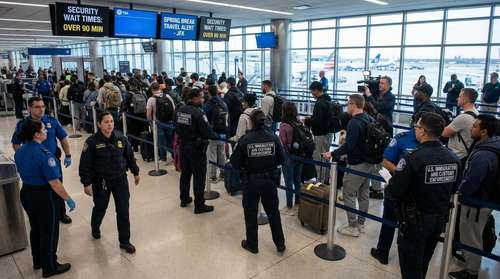
Instead, these armed federal agents will secure exits, manage perimeter checkpoints, and control the sprawling crowds. By handling these perimeter tasks, fully trained TSA screeners can be redeployed directly to the metal detectors and scanning belts. However, the move has drawn sharp criticism from Democratic lawmakers, especially after Trump noted that the agents would simultaneously focus on arresting undocumented immigrants.
Government Shutdown Travel Impact on Spring Break Travel 2026
The timing of this political stalemate could not be worse for the travel industry. The government shutdown travel impact is colliding head-on with spring break travel 2026, a period that historically sees some of the highest passenger volumes of the year. Transportation Secretary Sean Duffy recently warned that if the funding lapse continues, some smaller regional airports may be forced to temporarily close their security checkpoints altogether.
The economic ripple effects are already being felt. Major airline executives are pleading with Congress to find a resolution, noting that the delays are leading to massive missed flight numbers and operational disruptions. In an unexpected twist, billionaire Elon Musk offered via social media to personally fund the salaries of unpaid TSA personnel to keep the aviation system functioning.
Unprecedented Airport Delays JFK, Atlanta, and Beyond
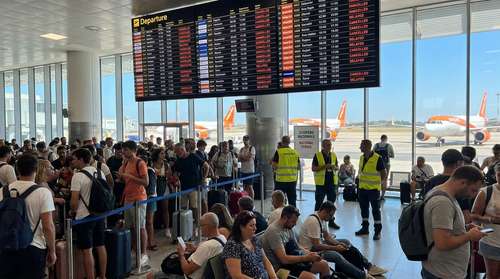
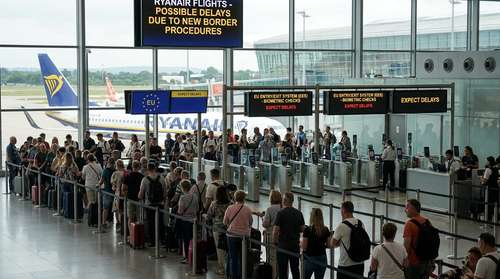
For passengers on the ground, the reality is a test of sheer endurance. Travelers are encountering lines that stretch past ticketing counters and out into parking garages. Over the weekend, airport delays JFK saw wait times climb past 75 minutes early Sunday morning, severely bottlenecking New York's primary international gateway.
The situation is even more dire in the South. At Hartsfield-Jackson Atlanta International Airport, passengers documented staggering wait times exceeding 153 minutes. In New Orleans, security queues spilled directly into the airport's parking facilities. The unpredictability means travelers might breeze through in 20 minutes one morning, only to face a three-hour standstill the next.
Navigating the Chaos: How to Survive the Security Squeeze
If you are flying during this turbulent period, standard travel advice no longer applies. Travel professionals urge passengers to rethink their departure strategies completely to mitigate the severe TSA security wait times.
- Arrive Exceptionally Early: Airlines are now advising domestic travelers to arrive at least three to four hours before their scheduled departure.
- Monitor Local Dashboards: Because the official TSA app is currently unmanaged due to the funding lapse, rely on your specific airline's app and local airport social media accounts for real-time updates.
- Pack Smart: Minimize carry-on luggage to speed up the physical screening process. Ensure your liquids and electronics are easily accessible to prevent secondary bag checks.
As Washington remains deadlocked, the burden falls squarely on the American traveler. While airport delays JFK and Atlanta dominate the headlines, the long-term government shutdown travel impact threatens the broader economy. Until lawmakers strike a deal to restore DHS funding, navigating the skies will require unprecedented patience and meticulous preparation.