The stakes of the US Iran war 2026 have reached a fever pitch. President Donald Trump has delivered a chilling Trump Iran ultimatum, declaring a strict 48-hour deadline for Tehran to lift its crippling Strait of Hormuz blockade. The aggressive diplomatic maneuver comes at a highly volatile moment, as U.S. forces conduct a massive, frantic search deep inside Iranian territory for a missing American pilot. Back in Washington, the escalating conflict has sparked a vicious partisan clash over the administration’s sweeping 2027 defense budget request and a fiercely debated war powers resolution.
Trump 48 Hour Deadline: "All Hell Will Reign Down"
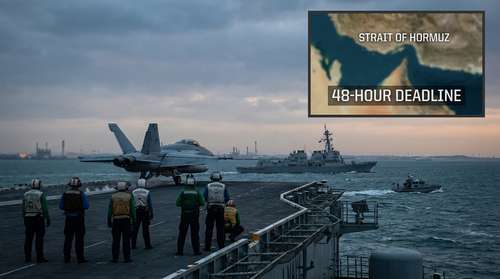
On Saturday, President Trump took to Truth Social to issue the Trump 48 hour deadline, signaling that Washington's patience has officially run out. "Remember when I gave Iran ten days to MAKE A DEAL or OPEN UP THE HORMUZ STRAIT," the president posted. "Time is running out - 48 hours before all Hell will reign down on them. Glory be to GOD!".
The ultimatum follows weeks of global economic anxiety triggered by the Strait of Hormuz blockade, a vital maritime artery that typically carries one-fifth of the world’s oil supply. Iran's closure of the waterway has severely spiked energy prices worldwide, prompting Trump to previously extend negotiations after Tehran released 10 Pakistani-flagged oil tankers as a goodwill gesture. However, that brief diplomatic window has now closed. If Tehran fails to comply by Monday evening, the administration has threatened devastating strikes on Iranian infrastructure, including key petrochemical plants and power grids.
Iranian military leaders have swiftly rebuffed the threat. Gen. Ali Abdollahi Aliabadi, commander of Iran’s Khatam al-Anbiya Central Headquarters, dismissed the Trump Iran ultimatum as "foolish" and warned that any further aggression means "the gates of hell will be opened to you".
The High-Stakes Hunt for a Missing American Pilot
The diplomatic standoff is dangerously complicated by a rapidly unfolding military crisis on the ground. A U.S. F-15E Strike Eagle was shot down by a newly deployed Iranian air defense system over southwestern Iran on Friday. While one crew member was successfully rescued, the other remains unaccounted for, initiating a frantic race against time. Two U.S. Black Hawk helicopters engaged in the rescue mission also sustained enemy fire but managed to escape Iranian airspace.
The missing American pilot is currently the target of a massive, competing search operation. U.S. extraction teams are scouring the rugged terrain, while Iran's Islamic Revolutionary Guard Corps mobilizes its own forces. Iranian state television has broadcasted statements urging local residents to capture the "enemy pilot" and hand him over for a significant reward. The prospect of a U.S. service member being captured and paraded as leverage has sent shockwaves through the Pentagon.
Adding to the administration's military woes, a second aircraft—an A-10 Warthog—was lost over the Kuwaiti border region, though its pilot successfully ejected and was rescued. The downing of two jets shatters recent assertions by Defense Secretary Pete Hegseth that U.S. forces maintained total air superiority over Iranian skies. Israeli forces, who have been conducting joint operations since the conflict began on February 28, have reportedly paused their localized strikes to share intelligence and assist in the U.S. rescue mission.
Congress Clashes Over War Powers Resolution and Defense Funding
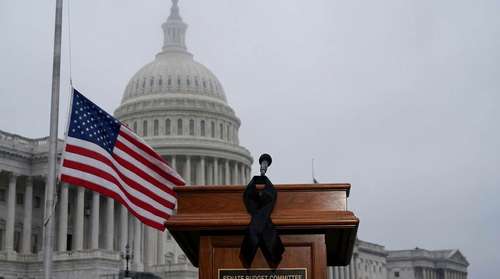
As the US Iran war 2026 intensifies abroad, the political fallout in Washington is reaching a boiling point. Since the war commenced, thousands have died across the region, including 13 U.S. service members prior to the recent aircraft downings. Now, the administration is demanding a historic $1.5 trillion 2027 defense budget request to finance "Operation Epic Fury." This astronomical funding request has shocked fiscally conservative lawmakers and infuriated anti-war Democrats who see no clear exit strategy.
The budget fight coincides with an intense legislative battle to curtail the president's military authority. Recently, the House of Representatives narrowly rejected a Democratic-backed war powers resolution by a vote of 212-219, which would have forced a U.S. withdrawal from hostilities without formal Congressional authorization. A similar measure championed by critics failed in the Senate by a 53-47 margin, with voting falling largely along party lines.
Opponents argue the administration launched the conflict as an unauthorized war of choice, citing the staggering financial cost and the tragic loss of American lives. Yet, Republican leaders, including House Speaker Mike Johnson, firmly assert that passing a war powers resolution would "kneecap our own forces" during a critical mission, strip the Commander-in-Chief of vital leverage, and embolden Iranian leadership at the worst possible time.
The Next 48 Hours Will Define the US Iran War 2026
With the Trump 48 hour deadline rapidly ticking down, the international community is bracing for what comes next. If the Strait of Hormuz blockade is not fully dismantled, the anticipated American retaliation could ignite an even wider regional war. Meanwhile, the agonizing search for the missing American pilot serves as a stark, sobering reminder of the immense human toll at the center of the US Iran war 2026. As policymakers fiercely debate the 2027 defense budget request in the halls of Congress, the upcoming days will likely determine whether the Middle East spirals into irreversible chaos or finally finds a desperate off-ramp to peace.