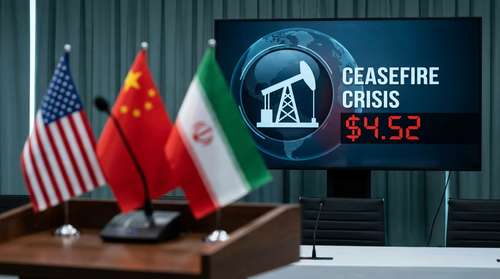
The fragile pause in hostilities between Washington and Tehran is on the verge of total collapse. In a critical Iran ceasefire update 2026, President Donald Trump has decisively rejected a highly anticipated peace framework from Iranian negotiators, warning that the temporary truce is currently on "massive life support". As the administration hastily prepares for a pivotal Trump Xi Jinping Beijing summit to address the global economic fallout, the two-month-old conflict is already hitting American wallets with devastating force. In response, the White House is aggressively pursuing a federal gas tax suspension to combat surging fuel costs that threaten to disrupt the domestic economy.
Trump Rejects 'Unbelievably Weak' Peace Proposal
Speaking from the White House on Monday, the President did not mince words regarding the latest diplomatic outreach from Tehran. He dismissed the Trump Iran peace proposal terms entirely, stating that the ceasefire now has barely a "1% chance of living" following weeks of stalled negotiations and sporadic exchanges of fire.
"I would call it the weakest right now after reading that piece of garbage they sent us," Trump told reporters during a press briefing. Expressing his sheer frustration with the adversary's demands, he added, "I didn't even finish reading it. How stupid. Are they stupid people?"
The rejected Iranian proposal reportedly included sweeping, non-starter demands: financial compensation for war damages, the complete lifting of crippling economic sanctions, a definitive end to the U.S. naval blockade, and, most controversially, international recognition of Iranian sovereignty over the Strait of Hormuz. Legal experts and international allies have noted that yielding control of the international waterway to Tehran would fundamentally violate maritime law. For international observers following the latest US Iran war news, these hardline stipulations indicate that a permanent diplomatic resolution remains alarmingly out of reach.
The Strait of Hormuz Crisis Escalates
The collapse of these high-stakes negotiations is intrinsically tied to the ongoing Strait of Hormuz crisis. Iran has maintained a near-total blockade of the critical geographic chokepoint, a waterway that typically handles roughly 20% of the world's seaborne crude oil. Every time Tehran has signaled a willingness to reopen the strait, the decision has been abruptly reversed, leaving dozens of commercial tankers stranded.
This bottleneck has forced global producers to drastically slash their exports, subsequently sending OPEC oil output plunging to its lowest levels in more than two decades. The worldwide energy crisis sparked by the blockade has rippled across the globe, severely impacting supply chains and manufacturing sectors.
Soaring Middle East Conflict Gas Prices
For everyday American consumers, the Middle East conflict gas prices have transitioned from a looming threat to a painful daily reality. The national retail average for a gallon of regular gasoline surged to $4.52 on Monday, according to recent AAA data.
This represents a staggering 50% increase from the $2.98 national average recorded in late February, just before U.S. and Israeli forces initiated strategic strikes against Iranian targets. Energy Secretary Chris Wright noted that while it is impossible to predict the unpredictable nature of war, prices will likely only normalize "when we start to get free flow of traffic through the Strait of Hormuz".
Bipartisan Push for Federal Relief
To provide immediate, tangible relief at the pump, President Trump is throwing his full political weight behind a temporary federal gas tax suspension. Pausing the 18.4 cents per gallon tax on gasoline and the 24.4 cents per gallon tax on diesel requires direct congressional approval, as the President cannot unilaterally alter the tax code.
"Yup, we're going to take off the gas tax for a period of time, and when gas goes down, we'll let it phase back in," Trump confirmed in a phone interview, stating the suspension would remain in place "till it's appropriate".
The initiative is rapidly gaining bipartisan traction on Capitol Hill. Republican Senator Josh Hawley announced plans to introduce legislation for a 90-day suspension, while Democratic Senators Richard Blumenthal and Mark Kelly have sponsored a parallel bill to suspend the tax through October 1. Several states, including Georgia and Indiana, have already suspended their local gas taxes to alleviate the financial burden on working families.
High-Stakes Diplomatic Mission to Beijing
The looming expiration of the ceasefire sets a remarkably tense backdrop for the highly anticipated Trump Xi Jinping Beijing summit. The President's strategic diplomatic trip to China is expected to focus primarily on navigating the Middle East crisis and stabilizing global energy security.
On Monday, the U.S. preemptively escalated geopolitical pressure by imposing stringent new sanctions on individuals and corporations accused of helping Iran illicitly ship crude oil to Chinese buyers. Cutting off Tehran's remaining economic lifelines while securing strategic cooperation from Beijing is a top priority for the White House. Securing a unified front with President Xi could be the ultimate key to breaking the Iranian blockade and restoring the free flow of international trade.
As diplomatic channels stall and military posturing resumes, the global community watches anxiously. Whether the administration can salvage the dying ceasefire, successfully implement domestic economic relief, or leverage Chinese influence remains the defining question of the year. The coming days in Beijing will undoubtedly dictate the trajectory of this historic and increasingly costly conflict.