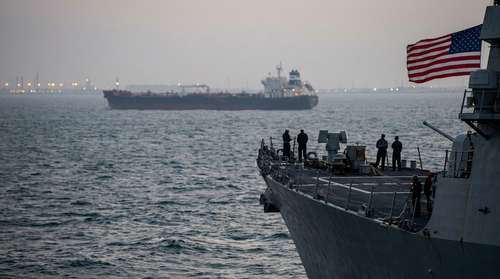
The political and military fallout from the Trump Iran War 2026 has reached a fever pitch in Washington this week. As the U.S. military maintains a tight grip on the Persian Gulf, the White House is facing a historic constitutional standoff after deliberately bypassing the 60-day War Powers Act deadline. While President Donald Trump informed congressional leaders that hostilities have officially terminated due to a fragile April 7 ceasefire, the reality on the water tells a different story. The ongoing blockade of Iranian ports and the recent seizure of vessels have left lawmakers fiercely questioning the legal boundaries of executive authority.
The Paused Clock Argument and Executive War Powers 2026
Under the 1973 statute, a president must secure authorization from Congress or end military action within 60 days of initiating hostilities. That critical War Powers Act deadline expired on Friday, May 1. However, the Trump administration engineered a novel legal defense to justify the ongoing troop deployments and naval operations. Defense Secretary Pete Hegseth floated the administration's primary rationale to Congress, asserting that the weeks-long ceasefire effectively pauses the countdown clock.
Aligning with this defense, President Trump submitted nearly identical letters to House Speaker Mike Johnson and Senate President Pro Tempore Chuck Grassley. In the documents, he argued that since no fire has been exchanged between American and Iranian forces since early April, the statutory obligations for congressional authorization no longer apply.
This bold interpretation of executive war powers 2026 is drawing intense scrutiny from legal experts and lawmakers across the aisle. Counsel from the Brennan Center's Liberty and National Security Program, Katherine Yon Ebright, highlighted that historical interpretations of the resolution do not easily accommodate a start-stop approach to military engagement. Several prominent Republicans agree. Senator Susan Collins publicly stated that the 60-day limitation is mandatory, not optional, while Representative Thomas Massie has been vocal in his opposition to the administration's handling of the prolonged conflict.
Iran Naval Blockade News Exposes Active Conflict
Despite the administration's insistence that the shooting has stopped, the reality of the Persian Gulf geopolitical crisis contradicts claims of peace. A central pillar of the U.S. strategy remains intact: a comprehensive maritime stranglehold on Tehran. Recent Iran naval blockade news reveals a highly volatile environment where military engagements continue just below the threshold of all-out war.
On April 20, U.S. Central Command forces intercepted and seized the M/V Touska, an Iranian-flagged cargo vessel operating in the Gulf of Oman. The vessel was attempting to breach the blockade, prompting American forces to fire upon and board the ship. While the Iranian Red Crescent Society condemned the move, claiming the ship carried medical supplies, the seizure undeniably demonstrates active U.S. military enforcement in the region.
The economic and strategic pressure is immense. Tehran has responded by threatening to keep the vital Strait of Hormuz closed to commercial shipping as long as the U.S. chokes off Iranian ports. This high-stakes leverage game keeps global energy markets on edge and leaves thousands of military personnel continuously engaged in hostile territory.
Fresh Proposals and US Iran Conflict Updates
Diplomatic channels remain open, though heavily strained. Over the weekend, while traveling to Miami, President Trump reviewed a new diplomatic proposal sent by Tehran aimed at ending the naval standoff and opening the Strait of Hormuz. However, the president expressed skepticism toward the offer, warning reporters that military strikes could easily resume if they misbehave.
These latest US Iran conflict updates arrive at a moment of collapsing public support. The conflict, originally dubbed Operation Epic Fury, began on February 28 with a massive coordinated strike alongside Israeli forces. Since then, it has evolved into a grinding war of attrition. Recent polling data indicates that 61 percent of Americans now view the conflict as a mistake, a rapid decline in approval for an operation that began less than three months ago. Even within the Republican base, support has fractured, with non-MAGA Republicans showing deep uncertainty about the administration's broader strategy. Voters are increasingly weary of rising gas prices and the continuous deployment of military assets without a clear, legislatively approved endgame.
Pushing for a Congressional War Powers Resolution
With the administration dug in on its legal theory and the blockade showing no signs of lifting, Congress finds itself at a constitutional crossroads. Lawmakers are currently debating a formal Congressional war powers resolution designed to definitively challenge the legality of the extended operation. The stakes of this standoff extend far beyond the immediate Middle East theater. It fundamentally tests the strength of the 1973 law, a post-Vietnam statute designed to prevent unchecked presidential warfare.
If passed, such a resolution would force the administration to either secure a formal authorization for the use of military force or begin a total withdrawal of naval and air assets from the Gulf. Until then, the definition of hostilities remains caught in a dangerous tug-of-war between the Oval Office and Capitol Hill. As the ceasefire teeters on the edge of collapse and vessels continue to be intercepted at sea, the legislative branch must decide whether to reclaim its constitutional authority or allow the executive branch to rewrite the rules of modern warfare.