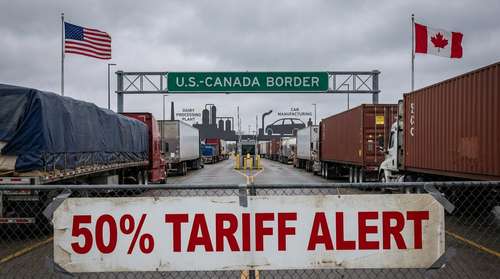
President Donald Trump has threatened to block the opening of the nearly completed Gordie Howe International Bridge, demanding the United States receive "full compensation" and partial ownership of the crossing before it can begin operations. In a late-night post on Truth Social Monday, the President declared he would "not allow" the vital trade link between Detroit and Windsor to open until Canada addresses what he termed "unfair" trade practices, specifically citing Ontario's restrictions on American alcohol and federal dairy tariffs.
President Demands 50% Ownership of Canadian-Funded Bridge
The ultimatum marks a significant escalation in the ongoing trade dispute between Washington and Ottawa. President Trump explicitly demanded that the United States be granted ownership of "at least one half" of the $6.4 billion (CAD) infrastructure project, despite the fact that the Canadian government funded the bridge's construction entirely. The President argued that because the bridge connects to the U.S. market, American interests are entitled to a share of its future revenue.
"I will not allow this bridge to open until the United States is fully compensated for everything we have given them," Trump wrote, criticizing the Obama administration for previously granting waivers that allowed the project to proceed without using exclusively American steel. He further insisted that the bridge would remain closed until "Canada treats the United States with the Fairness and Respect that we deserve."
Alcohol and Dairy Disputes Fuel Tensions
The President's demands extend beyond the bridge itself to specific trade grievances. Trump singled out Ontario's recent decision to remove U.S. spirits and beverages from provincial store shelves—a retaliatory measure taken by Premier Doug Ford's government in response to earlier U.S. tariffs. "Ontario won't even put U.S. spirits, beverages, and other alcoholic products on their shelves, they are absolutely prohibited from doing so," Trump stated.
Additionally, the President renewed his attacks on Canada's supply management system for dairy, claiming tariffs on American milk and cheese products put U.S. farmers at "great financial risk." These grievances come as the two nations prepare for a scheduled review of the USMCA trade agreement later this year.
Canadian Officials Call Threats "Prepositioning"
In Ottawa, Prime Minister Mark Carney urged calm, characterizing the President's statements as negotiation tactics rather than imminent policy changes. Speaking to reporters on Tuesday, Carney suggested that Trump's rhetoric should be viewed as "prepositioning" ahead of formal trade talks. "The President is a strong negotiator, and some of these comments... should be viewed in the broader context of that," Carney said, emphasizing that Canada intends to proceed with the bridge's opening as planned in early 2026.
However, the Prime Minister stood firm on Canada's sovereignty, reiterating that the bridge is a Canadian asset built to facilitate mutual prosperity. "We have paid for this critical infrastructure, and it will serve the economies of both our nations," a spokesperson for the Prime Minister's office added.
Michigan Leaders Warn of Economic Fallout
The threat to block the bridge has drawn sharp criticism from Michigan officials who view the crossing as essential for the state's economy. The bridge is expected to handle up to 25% of truck trade between the two countries, significantly relieving congestion at the aging Ambassador Bridge.
Senator Elissa Slotkin (D-Mich.) warned that blocking the bridge would have "serious repercussions" for American businesses and workers. "Canceling this project will... [mean] higher costs for Michigan businesses, less secure supply chains and, ultimately, fewer jobs," Slotkin said in a statement. She accused the President of "punishing Michiganders" for a trade war that risks disrupting the seamless flow of automotive parts and goods across the border.
Project Status and Future Outlook
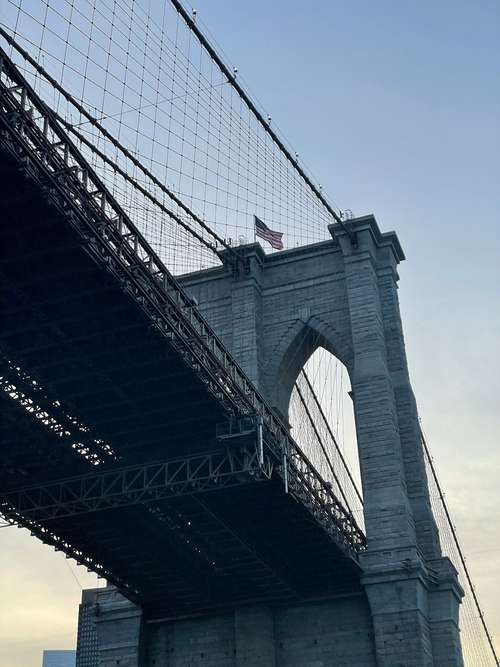
The Gordie Howe International Bridge, a cable-stayed marvel spanning the Detroit River, is physically complete, with the deck having been connected in June 2024. Final testing of customs plazas and safety systems is currently underway, with the official opening slated for the coming months. If the President follows through on his threat to withhold federal permits or block access on the U.S. side, it could leave the multi-billion dollar asset stranded, costing the economies of both nations billions in lost efficiency and trade volume.
As the anticipated opening date approaches, logistics companies and manufacturers on both sides of the border remain in a state of uncertainty, waiting to see if the President's latest social media salvo translates into concrete executive action.