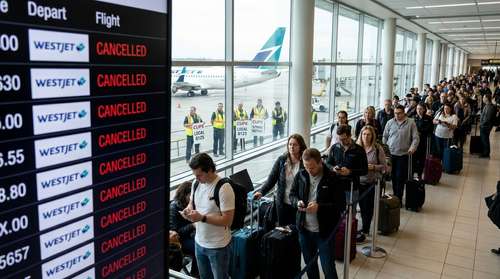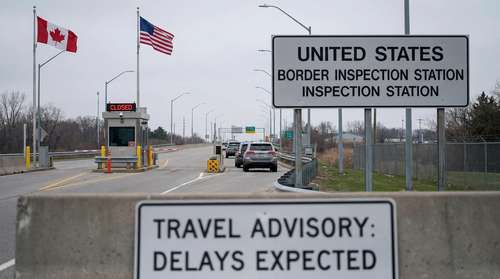
February 21, 2026 – The U.S. aviation system is facing a catastrophic breaking point this Saturday as a partial Department of Homeland Security (DHS) shutdown enters its critical phase. With over 61,000 Transportation Security Administration (TSA) agents forced to work without pay, a massive wave of "sick-outs" has crippled operations at major hubs. As of noon today, airlines have reported nearly 4,000 flight delays and cancellations nationwide, leaving tens of thousands of passengers stranded during the peak of the early spring break travel surge.
TSA Security Wait Times Skyrocket as Workforce Crumbles
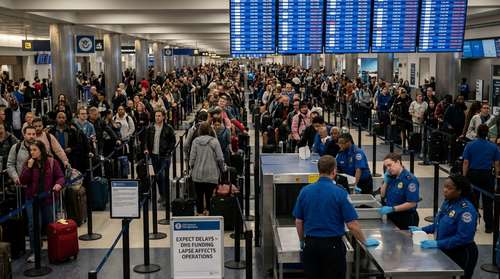
The immediate impact of the DHS funding lapse is visible at every major checkpoint in the country. Unpaid security officers, struggling to cover childcare and mortgage payments, are calling in sick at unprecedented rates—a phenomenon known as the "Blue Flu." At Hartsfield-Jackson Atlanta International Airport (ATL), the world's busiest passenger hub, security lines snaked through the baggage claim area this morning, with wait times exceeding three hours.
"We are seeing unscheduled absence rates nearly triple the normal average," said a union representative for TSA workers, speaking on condition of anonymity. "These officers remain professional, but they cannot work indefinitely for free. The system is breaking."
Key Airport Impacts
While the disruption is nationwide, three specific hubs are bearing the brunt of the staffing shortages today:
- Chicago O'Hare (ORD): Two security checkpoints in Terminal 1 were closed due to a lack of screening personnel, causing missed connections for thousands of United Airlines passengers.
- Newark Liberty (EWR): Wait times for standard screening hit 180 minutes by 9:00 AM, forcing airport officials to advise travelers to arrive four hours before domestic flights.
- Atlanta (ATL): Terminal closures have pushed crowds into bottlenecked zones, creating safety concerns and forcing airport police to manage crowd control.
Government Shutdown Travel Impact 2026: A Perfect Storm
The timing of this DHS shutdown could not be worse. February 21 marks the transition from President's Day week into the early spring break 2026 travel disruptions. Families returning from ski trips and students heading to warmer climates are colliding with a security infrastructure operating at less than 60% capacity.
Historically, shutdowns like the 35-day lapse in 2019 have resulted in terminal closures and slowed commerce, but the sheer volume of travelers in 2026 has amplified the chaos. Industry analysts estimate the economic loss from today's disruptions alone could top $150 million, as flight cancellations today ripple through the economy, affecting hotels, tourism, and business logistics.
Airline Delays February 2026: What Passengers Must Know
Airlines are scrambling to rebook passengers, but seat availability is scarce. Major carriers including Delta, American, and United have issued travel waivers, allowing passengers to change their flights without penalties. However, with airline delays February 2026 reaching historic highs, getting a confirmed seat on a new flight may take days.
If you must travel this weekend, experts recommend the following survival strategies:
- Monitor TSA App: Check airport security lines remotely, though real-time data may be lagging due to staffing cuts.
- Arrive Early: The standard "two hours before" rule is obsolete. Aim for 3-4 hours for domestic flights.
- Carry-On Only: Checking bags adds another layer of potential delay; travel light to bypass ticket counter lines.
- Have a Backup Plan: With 4,000 flights already impacted, assume your itinerary will change.
Political Deadlock Threatens Further Chaos
The standoff in Congress over the DHS budget shows no signs of immediate resolution. As the shutdown drags on, the strain on TSA security wait times is expected to worsen. Air traffic controllers, also working without pay, have so far maintained normal staffing levels, but union leaders warn that fatigue and stress could soon lead to slowdowns in the tower as well, compounding the misery for travelers.
For now, the burden falls squarely on the shoulders of unpaid federal workers and the frustrated traveling public. As lines grow and tempers flare, the aviation sector holds its breath, waiting for a legislative breakthrough that seems miles away.