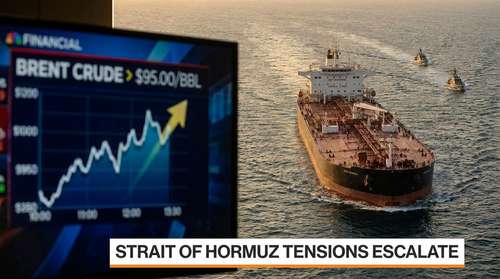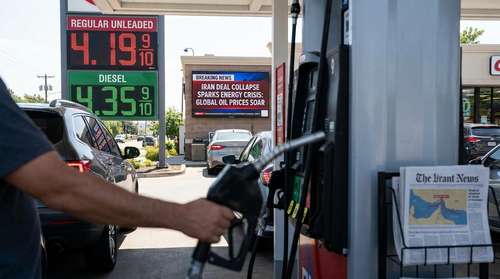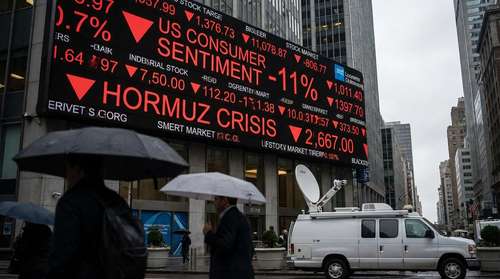
The highly anticipated preliminary report from the University of Michigan has confirmed Wall Street's worst fears. Driven by a global energy supply shock and escalating geopolitical tensions, the US consumer sentiment April 2026 reading has plunged nearly 11% to a historic low of 47.6. Released on Friday, April 10, the data underscores a rapid and severe deterioration in the American economic psyche. With the collapse of recent US-Iran peace talks, the subsequent Hormuz blockade economic impact is reverberating across domestic markets, signaling an abrupt end to the "soft landing" optimism that characterized the previous year.
The 2026 Energy Price Crisis and Household Squeeze
The sudden descent into this record low was largely precipitated by the outbreak of regional military conflict in late February 2026, which ultimately triggered a strategic blockade of the Strait of Hormuz. Because this vital maritime chokepoint handles roughly one-fifth of the world's oil supply, domestic energy markets experienced an immediate and violent reaction. Gasoline prices surged nearly 40% in just six weeks, crossing the $4.16 per gallon mark nationwide.
This energy price crisis 2026 has aggressively hit households already grappling with the lagging effects of recent tariff policies and elevated borrowing costs. The resulting consumer confidence drop—falling well below the previous all-time low of 50.0 set in June 2022—reflects a broad-based retreat from discretionary spending. Retailers and financial institutions are now bracing for a significant consumer pullback, as middle- and high-income shoppers alike express unprecedented pessimism about their financial futures.
Inflation Expectations Surge as Confidence Collapses
Perhaps the most alarming metric buried within the University of Michigan's data is the rapid re-anchoring of price concerns. Year-ahead inflation expectations spiked from 3.8% in March to a staggering 4.8% in early April. This represents the largest one-month inflation expectations surge recorded by the survey since April 2025. Long-run inflation predictions also ticked up, reaching 3.4%, the highest level observed since late 2025.
At the same time, the US business outlook has darkened considerably. Joanne Hsu, the director of the Surveys of Consumers, noted that one-year expected business conditions plunged approximately 20% from the prior month. Consumers explicitly cited shrinking asset values, skyrocketing fuel costs, and widespread geopolitical instability as primary reasons for their gloomy assessments.
A Widespread Demographic Retreat
The 10.7% month-over-month decline was not isolated to any specific cohort. Demographic groups across all ages, income brackets, and political affiliations posted severe setbacks in sentiment. Furthermore, assessments of personal finances declined by roughly 11%, with buying conditions for large durables and vehicles deteriorating rapidly due to the war-related price spikes, further dampening the overall US business outlook for retail sectors.
Historical Context of the Sentiment Crash
To fully grasp the severity of the US consumer sentiment April 2026 reading, economists are looking back at decades of historical data. The 47.6 reading shatters the previous post-pandemic low of 50.0 recorded in June 2022, a period defined by runaway inflation and aggressive Federal Reserve rate hikes. More strikingly, it dips significantly below the historic 51.7 benchmark established during the grueling 1980 energy crisis.
Such a precipitous drop signals that the psychological floor for American consumers has essentially collapsed. Unlike previous cyclical downturns, which were often driven by internal financial imbalances or housing market contractions, the current malaise is entirely exogenous. American households feel helpless against external forces dictating their financial stability, leading to an environment where economic paralysis sets in.
Bracing for Stagflation: The Fed's New Dilemma
The convergence of stagnant economic growth and rapidly rising prices has raised the specter of stagflation for the remainder of the year. While 98% of the survey interviews were completed prior to the April 7 announcement of a temporary ceasefire in the Middle East, economists remain highly cautious. Energy markets notoriously exhibit a "rockets and feathers" dynamic—prices spike instantly during a crisis but drift downward slowly even after supply constraints ease.
This dynamic guarantees that the Hormuz blockade economic impact will likely constrain household budgets through the crucial summer spending months. The Federal Reserve, which had been attempting to pivot toward rate cuts, now faces a massive dilemma: cut rates and risk fueling further inflation, or hold steady and crush an already fragile consumer base.
Market Volatility News: Navigating the Fallout
The capitulation in consumer mood has immediate implications for investors tracking market volatility news. Equities have already demonstrated erratic behavior as traders digest the dual threats of higher-for-longer interest rates and declining corporate earnings. The "twin shock" of geopolitical conflict and resurgent energy costs has fundamentally altered the investment landscape.
If American consumers alter their purchasing behavior and reduce spending to offset high living costs, the probability of a technical recession in late 2026 increases dramatically. This historic consumer confidence drop ensures that financial markets are recalibrating to a difficult new reality—one characterized by unpredictable global energy flows, stubborn domestic inflation, and a deeply rattled American consumer base forced to navigate historic economic headwinds.