
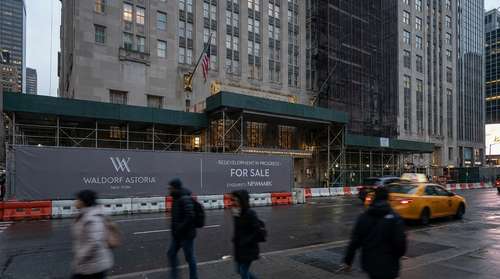
The Chinese government-controlled owners of the famed Waldorf Astoria New York are preparing to sell the Art Deco landmark just months after its grand reopening, marking a dramatic end to a decade-long saga of foreign investment and geopolitical tension. Dajia Insurance Group has reportedly tapped real estate investment bank Eastdil Secured to market the property, with industry insiders expecting a price tag of roughly $1 billion—a figure that represents a staggering loss on the nearly $4 billion sunk into the hotel's acquisition and renovation.
A Billion-Dollar "Fire Sale" on Park Avenue
The decision to sell the Waldorf Astoria New York comes as a shock to the NYC luxury real estate world, primarily because the property only recently welcomed back guests in late 2025 following a chaotic, eight-year closure. Dajia Insurance Group, the state-linked entity that took over the assets of the now-defunct Anbang Insurance Group, is reportedly under renewed pressure from Beijing to offload overseas assets and repatriate capital.
Financial experts characterize the potential sale as a strategic retreat. Anbang originally purchased the hotel in 2014 for a record-breaking $1.95 billion. They subsequently poured approximately $2 billion into a massive overhaul that converted the 1,400-room behemoth into a sleeker, ultra-luxury operation. If the hotel sells for the expected $1 billion, it would underscore the severe depreciation of Chinese investment in US real estate amid shifting market dynamics and cooling diplomatic relations.
Inside the Massive Waldorf Astoria Renovation
The Waldorf Astoria renovation 2026 status is finally complete, but the journey was fraught with budget overruns and delays. The extensive project, managed by architects Skidmore, Owings & Merrill, fundamentally reshaped the interior of the 47-story tower. The property now features:
- 375 Ultra-Luxury Hotel Rooms: A massive reduction from the original 1,400 keys, designed to offer some of the largest standard rooms in Manhattan.
- 372 High-End Condominiums: Known as The Towers of the Waldorf Astoria, these residences occupy the upper floors. Crucially, reports indicate the condo inventory will continue to be sold separately and may not be included in the bulk hotel sale.
- Restored Heritage Spaces: The Grand Ballroom, the lobby clock, and the Peacock Alley lounge have been meticulously restored to their 1931 Art Deco glory.
Despite the physical beauty of the finished product, the hotel re-entered a competitive Manhattan hotel market that has seen occupancy rates fluctuate. The buyer will acquire a turnkey trophy asset, but one that requires significant operational ramping to justify its valuation.
Chinese Investment Retreats from US Markets
The sale of the Waldorf is the most high-profile example yet of the broader trend of commercial real estate trends 2026, where Chinese institutional investors are divesting from American trophy assets. This exodus is driven by both domestic economic challenges in China and the complex political landscape involving the Trump administration's trade policies.
"This isn't just a real estate transaction; it's a geopolitical signal," notes a senior analyst at a major commercial brokerage. "The era of aggressive Chinese acquisition of US luxury hospitality assets is definitively over. Dajia is looking to clear its balance sheet, even if it means taking a multi-billion dollar haircut."
What This Means for the Buyer
For potential buyers—likely to be sovereign wealth funds from the Middle East or US-based private equity giants—the Waldorf Astoria sale represents a once-in-a-generation opportunity to acquire a global icon at a deep discount relative to replacement cost. Eastdil Secured is expected to formally launch the marketing process in March 2026.
Hilton Worldwide holds a 100-year management contract for the property, ensuring that regardless of who signs the check, the Waldorf Astoria brand and service standards will remain intact. For now, the hotel remains open and operational, serving guests who are largely unaware that the title deed to their room is about to change hands in one of the decade's most significant real estate deals.