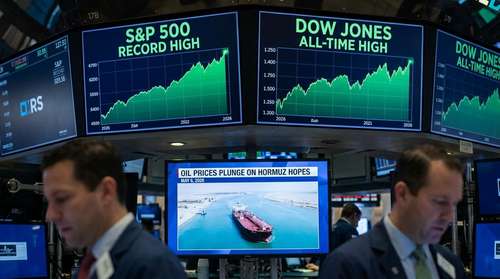
The financial world witnessed aggressive buying on Wednesday, as Wall Street record highs dominated the ticker tapes following a massive shift in geopolitical developments. On May 6, 2026, the S&P 500 and the Dow Jones Industrial Average shattered previous all-time ceilings, propelled by a dramatic oil prices plunge of nearly 10% over recent trading sessions. The primary catalyst behind this bullish momentum is the latest US-Iran de-escalation news, which has sparked immense hope for a permanent Strait of Hormuz reopening.
For months, the blockade of this critical maritime choke point has restricted roughly one-fifth of the world's daily oil consumption, acting as a chokehold on the global energy supply 2026. Now, with diplomatic channels seemingly bearing fruit and international mediators stepping in, markets are pricing in a rapid normalization of crude exports. The sudden easing of tension has triggered a wave of relief across global markets, sending equities soaring and commodity prices retreating to more sustainable levels.
Strait of Hormuz Reopening: Stabilizing the Global Energy Supply
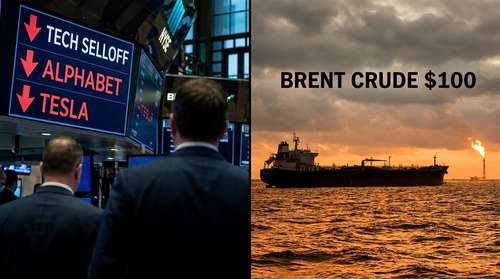
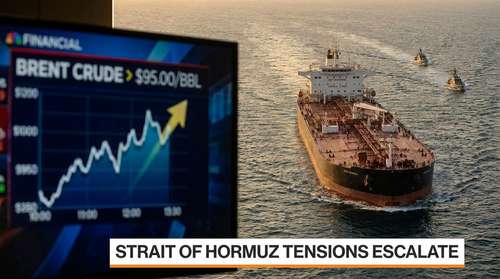
The prospect of a fully operational Persian Gulf shipping route has sent shockwaves through commodities markets. Brent crude, the international benchmark, tumbled dramatically, slipping toward the $103 mark after briefly threatening to hold above $115 earlier in the week. This sharp oil prices plunge reflects growing confidence that commercial tankers will soon traverse the waterway without the threat of military interception.
The U.S. administration recently signaled a pause on forceful naval operations, favoring a negotiated settlement to ensure vessels can safely pass. President Donald Trump indicated that the strait could soon be completely open if Iran accepts the terms of a reported diplomatic agreement. For nations heavily reliant on Middle Eastern crude exports, the potential Strait of Hormuz reopening is the most significant fundamental shift for the global energy supply 2026. By removing the war premium that has inflated barrel costs for months, energy markets are finally finding equilibrium.
Maritime logistics companies and major shipping insurers are already beginning to reassess their risk models. While some hesitation remains, the framework of the current agreement has given the industry the clearest signal yet that regular transit schedules could resume by the summer.
S&P 500 Performance May 2026 Surges on Inflation Relief News
The ripple effects of cheaper energy have heavily influenced the S&P 500 performance May 2026, with the index rocketing past the historic 7,100 threshold. The Dow Jones Industrial Average added nearly 500 points in early trading, while the Nasdaq Composite also logged solid gains exceeding 1%. Equities across the board benefited, but industries highly sensitive to fuel costs saw some of the most aggressive buying.
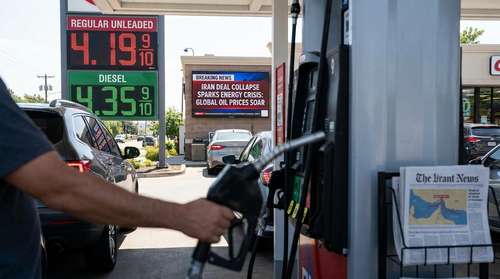
United Airlines jumped 4.4%, while cruise operators like Carnival and Royal Caribbean surged over 5% as traders priced in significantly lower fuel expenditures for the upcoming travel season. Beyond specific sectors, investors are primarily cheering the broader macroeconomic implications. Lower energy costs directly translate to highly anticipated inflation relief news. When fuel prices retreat, the cost of manufacturing, transporting, and storing goods drops, easing the pressure on consumers and potentially giving the Federal Reserve more flexibility regarding interest rates.
Bond Markets React to Cooling Pressures
The optimism on the trading floor quickly spilled over into the bond market. The yield on the 10-year Treasury dropped to 4.35% from 4.43% late Tuesday, a notable move that heavily supported growth-oriented tech equities. Because higher yields make borrowing more expensive for households and corporations, this sudden drop provides an additional tailwind for economic expansion. Stock markets abroad mirrored the optimism, with indexes leaping by 6.5% in Seoul, while London and Paris saw respective gains of 2.2% and 3%.
Navigating the Next Steps in US-Iran Diplomacy
Despite the euphoria, seasoned traders are keeping a close eye on the diplomatic ticker. The situation remains fluid, and the oil prices plunge could easily reverse if negotiations stall or if rogue incidents disrupt the fragile peace. The proposed "Project Freedom" and other international initiatives aim to secure the shipping lanes, but shipowners are still evaluating the physical safety of the region before committing full fleets back to the Gulf.
Corporate profitability continues to anchor the bull market, providing a safety net against geopolitical volatility. First-quarter earnings have consistently beaten expectations, showcasing resilient consumer demand. The blend of strong fundamental earnings and a sudden decrease in supply chain risk has created an exceptionally favorable environment for risk assets.
Market strategists emphasize that while the Wall Street record highs reflect impressive market resilience, the complexities of Middle Eastern diplomacy demand cautious optimism. Setbacks are always a possibility. Yet, the current momentum—driven by cooling inflation fears and stabilizing crude markets—suggests that the worst of the 2026 energy crisis may finally be in the rearview mirror.