
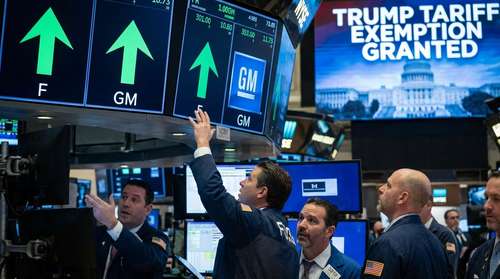
U.S. stocks staged a significant rebound on Wednesday as Wall Street rallied on breaking news that President Trump has granted a crucial one-month exemption to American automakers from sweeping new tariffs. The decision, which halts the immediate imposition of 25% levies on vehicles imported from Canada and Mexico, sparked a sharp recovery in investor sentiment and sent shares of Ford and General Motors climbing. As markets digest this latest development in US trade war news, the move provides a temporary lifeline for the "Big Three" manufacturers to adjust their complex supply chains before the new April deadline.
Trump Tariff Exemptions Spark Auto Sector Relief
The White House confirmed late Wednesday that President Trump authorized a 30-day pause on the contentious 25% tariffs for vehicles compliant with the United States-Mexico-Canada Agreement (USMCA). White House Press Secretary Karoline Leavitt announced the decision following high-stakes discussions between the President and top executives from Ford, General Motors, and Stellantis.
"We spoke with the Big Three automakers. We are going to give a one-month exemption on any autos coming through USMCA," Leavitt stated, noting that the reprieve is intended to prevent immediate economic disadvantage while companies accelerate plans to shift production domestically. The Trump tariff exemptions come just as the duties were set to take effect, threatening to spike consumer prices and disrupt North American manufacturing.
Ford and GM Stocks Surge on Exemption News
The immediate reaction on the trading floor was electric. Ford stock price today saw a robust surge, climbing over 5% in afternoon trading as investors cheered the delay of potential billion-dollar cost increases. Similarly, the General Motors share rally gained momentum, with the stock pushing higher as analysts recalculated the near-term financial impact on the Detroit giant. The reprieve allows these legacy automakers to avoid immediate margin compression, a fear that had triggered a sell-off earlier in the week.
Automakers Race to Shift Supply Chains
While the one-month delay offers breathing room, the administration made it clear that this is not a permanent rollback. President Trump reportedly issued a stern directive to the auto leaders during their call, urging them to "get on it" regarding relocating production to American soil. The ultimate goal of the Mexico Canada tariffs remains the repatriation of manufacturing jobs, with the President warning that companies must start investing in U.S. facilities to avoid future penalties.
Industry experts warn that unraveling decades of integrated North American supply chains in just 30 days is logistically impossible. However, the exemption signals a willingness from the administration to negotiate implementation timelines, provided automakers show concrete progress toward U.S. investment. Both Ford and GM released statements reaffirming their commitment to American manufacturing, highlighting billions in recent domestic investments.
Broader Market Impact and Trade War Context
The exemption catalyzed a broader stock market rebound, lifting the S&P 500 and Dow Jones Industrial Average out of the red. Investors viewed the move as a sign of pragmatism in the administration's aggressive trade strategy. By pausing the tariffs for the auto sector—a critical pillar of the U.S. economy—the White House alleviated fears of an immediate shock to consumer spending and inflation.
This development is the latest twist in the escalating US trade war news cycle. The tariffs on Canada and Mexico were initially positioned as leverage to address border security and trade deficits. However, the economic reality of the auto industry's cross-border reliance has forced a tactical adjustment. As business news March 5 headlines are dominated by this reprieve, all eyes turn to April 2, the new deadline when the full force of the tariffs could apply if further agreements aren't reached.
What Investors Should Watch Next
For traders and industry watchers, the next four weeks are critical. The stock market rebound could face volatility if rhetoric heats up again closer to the April deadline. Key indicators to watch include official announcements regarding retaliatory measures from Canada and Mexico, as well as any new investment pledges from the Big Three automakers.
While the immediate threat has been delayed, the uncertainty regarding long-term trade relations in North America persists. For now, Wall Street is celebrating the reprieve, but the clock is ticking for automakers to adapt to the new protectionist reality.