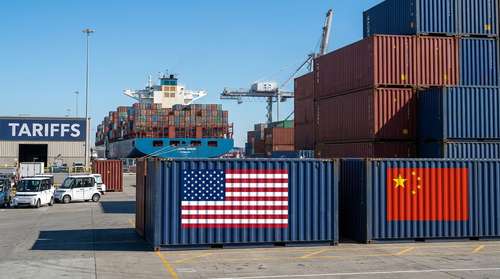
In a monumental shift for international commerce, the White House has announced sweeping new Biden China tariffs targeting $18 billion in strategic imported goods. In today's most significant breaking business news, the administration is taking an aggressive, highly targeted stance to shield American manufacturing from heavily subsidized foreign competition. The centerpiece of this historic trade policy shift involves massive new Chinese EV import duties, which will dramatically quadruple the tariff rate on electric vehicles from 25% to a staggering 100%.
The Massive Electric Vehicle Industry Impact
The immediate and most visible electric vehicle industry impact stems from the 100% tariff on Chinese-made EVs, set to take effect this year. According to the administration's findings, China's aggressive export strategy led to a 70% surge in electric vehicle exports globally between 2022 and 2023. These artificially low-priced imports pose a direct threat to the billions of dollars invested in the American EV supply chain through recent federal legislation. By raising the tariff barrier so drastically, the administration effectively closes the U.S. market to budget-priced Chinese automakers. The president has made it clear that the future of clean transportation must be manufactured domestically by union workers. The staggering 100% duty ensures that legacy American automakers and domestic EV startups won't be undercut by vehicles that benefit from extensive foreign government subsidies.
Combating China Industrial Overcapacity
At the core of this policy overhaul is a direct response to China industrial overcapacity. U.S. officials argue that Beijing's non-market policies—including massive state subsidies, forced technology transfers, and intellectual property theft—create an uneven playing field. This overproduction allows Chinese firms to flood global markets with artificially cheap products, undercutting manufacturers who operate without state financial backing. Beyond the headline-grabbing EV duties, the administration is heavily penalizing other green energy components to combat this overcapacity. Tariffs on solar cells, whether assembled into modules or not, will double from 25% to 50% in 2024. Furthermore, tariff rates on certain steel and aluminum products will more than triple to 25%, up from 7.5% or less. Because Chinese steel and aluminum production is highly carbon-intensive, these tariffs also serve an environmental purpose by protecting low-emissions domestic production from dirty, cheap alternatives.
Securing Batteries and Medical Supplies
The defensive measures extend deep into the supply chain. The tariff rate on lithium-ion EV batteries will jump from 7.5% to 25% this year, while non-EV lithium-ion batteries will face the same increase by 2026. The USTR is also hiking tariffs on critical minerals, natural graphite, and permanent magnets. In a nod to national security and pandemic preparedness, medical supplies are also targeted; tariffs on syringes and needles will surge from 0% to an eye-watering 50%.
A Hawkish Semiconductor Trade Policy
Another major pillar of today's announcement involves a rigid new semiconductor trade policy. The Biden administration will double tariffs on Chinese semiconductors from 25% to 50% by 2025. This delayed implementation gives American buyers a brief window to secure alternative suppliers while domestic production ramps up. The United States has poured billions of dollars into domestic chip manufacturing through the CHIPS and Science Act. Allowing cheap, subsidized legacy chips from overseas to dominate the market would severely jeopardize those foundational investments. The 50% tariff is designed to guarantee a viable market for the semiconductor fabrication plants currently under construction nationwide.
What This Means for US-China Trade War News
For those tracking the latest US-China trade war news, this development represents a significant escalation, albeit a highly strategic one. Unlike broad, across-the-board tariffs that act as a tax on everyday consumer goods, the White House is using a surgical approach. The focus is exclusively on the industries of the future: clean energy, critical minerals, and advanced semiconductors. This targeted framework aims to achieve de-risking rather than a complete economic decoupling from Beijing. By protecting the $860 billion in private business investments catalyzed by recent U.S. industrial policy, the administration hopes to foster a resilient domestic supply chain that can withstand geopolitical shocks.
The enforcement of these duties also sends a clear signal to international allies. The United States is actively encouraging partner nations to scrutinize the influx of subsidized Chinese exports in their own markets. As the global economy navigates this transition, the alignment of international trade policies could further isolate non-market practices. Ultimately, this aggressive defensive posture reshapes the blueprint for global commerce in the twenty-first century, prioritizing worker protections and environmental standards over cheap imports. As these historic tariffs take effect, global markets will be watching closely for Beijing's response. Retaliatory measures are likely, potentially sparking a new chapter in global trade friction. However, for American manufacturers and union workers, today's announcement offers a robust shield against foreign monopolies and a clear path forward for domestic industrial growth.