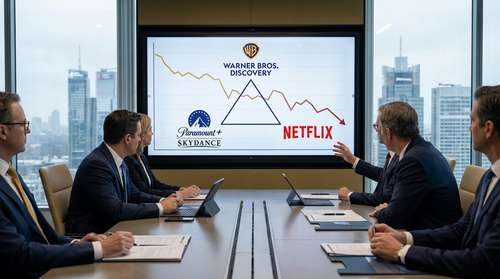
Warner Bros. Discovery (WBD) stands at a pivotal juncture in media history this Thursday, releasing mixed fourth-quarter earnings while navigating a high-stakes bidding war that could reshape the entertainment landscape. Following a reported $252 million net loss for the quarter, the media giant is now actively evaluating a sweetened $31-per-share all-cash offer from Paramount Skydance—a move that threatens to derail a previously agreed-upon deal with streaming titan Netflix.
Paramount Skydance Raises the Stakes
The acquisition battle for Warner Bros. Discovery has intensified significantly in the last 48 hours. On Tuesday, WBD’s board declared that Paramount Skydance’s revised bid "could reasonably be expected" to constitute a superior proposal to its existing agreement with Netflix. The new offer from the David Ellison-led conglomerate values WBD shares at $31, surpassing Netflix’s standing offer of $27.75 per share.
Unlike the Netflix deal, which proposed splitting WBD by acquiring only its studio and streaming assets while spinning off the linear networks, Paramount Skydance is bidding for the entire company. This holistic approach offers a simpler, albeit regulatory-heavy, exit for shareholders.
To sweeten the pot, Paramount has included a massive $7 billion reverse termination fee to address regulatory concerns and has agreed to cover the $2.8 billion breakup fee WBD would owe Netflix if it walks away. The clock is now ticking: Netflix has a four-day window, ending this weekend, to match or exceed Paramount's terms.
Q4 Earnings: Streaming Growth Meets Linear Decline
Against this backdrop of corporate intrigue, WBD’s latest financial report underscores the urgency of a sale. The company reported a net loss of $252 million for the fourth quarter of 2025. While this is a significant improvement over the $494 million loss in the same period last year, it highlights the continued financial pressure on the studio.
Revenue slipped nearly 6% to $9.46 billion, weighed down by a 12% drop in the global linear networks division. The traditional cable business, once a cash cow, continues to suffer from cord-cutting and soft advertising markets.
Streaming Remains a Bright Spot
However, the direct-to-consumer segment provided a bullish counter-narrative. WBD added 3.5 million streaming subscribers in the quarter, bringing its global total to 131.6 million—surpassing its own year-end targets. The streaming division, which includes HBO Max and Discovery+, posted a profit of $393 million for the quarter, validating the company's pivot to digital.
"Our streaming growth creates a compelling value proposition," a WBD spokesperson noted, though CEO David Zaslav declined to take questions regarding the merger during the earnings call.
The Strategic Divide: Netflix vs. Paramount
Shareholders are now presented with two distinct visions for the future of the iconic studio:
- The Netflix Model: A breakup of the company that integrates DC Studios, HBO, and the Warner Bros. film library into Netflix’s global platform. This deal faces intense antitrust scrutiny from the DOJ, which has flagged concerns about a potential streaming monopoly.
- The Paramount Vision: A consolidation of two legacy Hollywood studios. David Ellison’s Paramount Skydance aims to merge WBD’s assets with its own, creating a media super-major capable of competing with Disney and tech giants. This deal is backed by substantial financing from Larry Ellison and includes "ticking fees" to compensate shareholders if closing is delayed.
Market Reaction and What’s Next
Wall Street has reacted cautiously to the news. WBD stock price hovered around $28.92 in early trading Thursday, suggesting investors are waiting to see if Netflix will counter. Analysts predict that while Netflix has the balance sheet to engage in a bidding war, its reluctance to acquire declining linear TV assets may be a sticking point.
With the four-day matching period closing soon, the industry is bracing for a weekend of frantic negotiations. For Warner Bros. Discovery, the choice is now between becoming a content engine for the world's largest streamer or merging to form a new traditional media colossus. Whichever path is chosen, the era of standalone dominance for the studio behind Harry Potter and Game of Thrones appears to be drawing to a close.