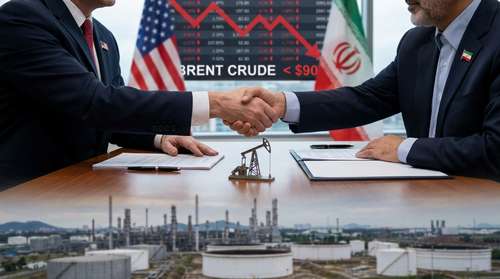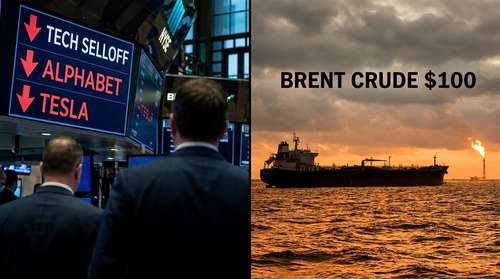
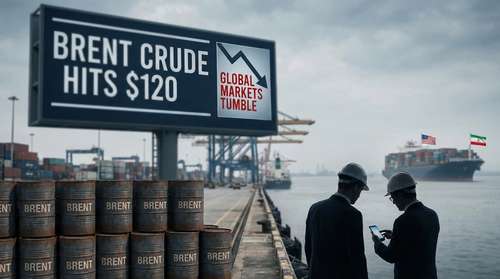
The global economy is facing a critical stress test this week as escalating hostilities in the Middle East trigger shockwaves across financial sectors. Brent crude oil prices have surged past $116 a barrel, briefly testing the $120 threshold, following startling new rhetoric from Washington regarding the US-Iran conflict 2026. With President Donald Trump openly floating the idea of seizing Iranian oil infrastructure, investors are hitting the panic button, sparking a massive stock market sell-off that has pushed major US indices into correction territory.
Trump's Iran Oil Policy Ignites Energy Market Volatility
The latest catalyst for the widespread panic emerged over the weekend when President Trump told the Financial Times that his administration is considering taking direct control of Iran's oil assets. Likening the proposed move to recent US maneuvers in Venezuela, the administration's Trump Iran oil policy would likely target Kharg Island—a vital export hub responsible for over 90% of Tehran's crude shipments.
“To be honest with you, my favorite thing is to take the oil in Iran,” Trump stated, suggesting that US forces could secure the island “very easily” due to what he perceives as limited local defenses. This rhetoric marks a stark departure from traditional containment strategies and introduces an unpredictable variable into international energy supply chains.
This unprecedented threat of physical asset seizure has unleashed historic energy market volatility. The Pentagon has already ordered the deployment of 10,000 ground troops to the region, with roughly 3,500 Marines and sailors arriving over the past few days aboard vessels like the USS Tripoli. Iranian officials have responded fiercely, with Parliament Speaker Mohammad Bagher Ghalibaf warning that local forces are “waiting” to rain fire upon any incoming troops. While the White House notes that indirect diplomatic talks via Pakistani intermediaries are making progress, the sheer scale of the military buildup suggests both sides are bracing for a protracted standoff.
Stock Market Sell-Off: Wall Street and Asian Markets Tumble
Financial markets have reacted with violent downward swings. The prospect of a prolonged disruption in the Strait of Hormuz—a crucial maritime choke point for 20% of the world's natural gas and oil shipments—has driven equities off a cliff. The S&P 500, Dow Jones Industrial Average, and Nasdaq Composite have all slid into correction territory, marking declines of more than 10% from their recent peaks. For the S&P 500, the recent plunge represents its worst two-day decline in a year.
The stock market sell-off isn't contained to North America. Asian markets took a severe beating on Monday morning, with equities in Japan and South Korea slumping over 4%. The broader MSCI Asia Pacific Index dropped 2.4% as fund managers rapidly cut their exposure to risk assets. The entry of Yemen's Houthi rebels into the broader conflict has further eroded market confidence, proving that the geographical scope of the war is expanding rather than contracting.
The Ripple Effect: A Looming Gas Price Surge
Main Street is already feeling the pinch of these institutional maneuvers. In the United States, the national average for a gallon of gasoline is rapidly approaching the $3.98 mark, jumping roughly a dollar in just one month. This gas price surge threatens to erode consumer confidence, which recently dropped to its lowest level since last December.
If motorists are forced to pay exorbitant prices at the pump through the busy spring and summer travel seasons, discretionary spending will inevitably crater. Retailers and logistics companies are already calculating the impact of higher diesel costs, which will likely be passed directly to the consumer at the checkout counter.
Global Inflation News: Recession Risks on the Horizon
Perhaps the most concerning aspect of the current crisis is the macroeconomic fallout. For the past year, central banks have battled to stabilize economies, but the latest global inflation news paints a grim picture. Economists at JPMorgan warn that if Brent crude remains elevated through the middle of the year, global economic growth could be slashed by 0.6%, while baseline consumer inflation could jump by a full percentage point.
Some analysts at Macquarie Group have offered an even darker scenario. If the Strait of Hormuz remains shut and the conflict drags into June, they estimate oil could reach a staggering $200 per barrel. At those levels, the global economy would face genuine stagflation—a toxic combination of high inflation, soaring unemployment, and stagnant consumer demand. This economic headwind could easily cancel out the domestic stimulus and tax policies the current administration has been banking on.
Even if diplomatic channels yield a breakthrough in the coming days, the sheer fragility of global supply chains has been laid bare. The International Energy Agency has characterized the ongoing bottleneck as the largest supply disruption in the history of the global oil market. For now, traders are left watching military movements and reading the geopolitical tea leaves. Until the shipping lanes are secure and the political rhetoric cools, financial markets will remain strapped into a highly unpredictable rollercoaster.