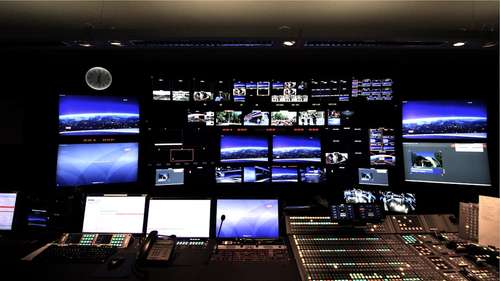
As the military conflict in the Middle East intensifies, a fiercely contested domestic battleground has emerged over how the war is presented to the American public. Federal Communications Commission (FCC) Chairman Brendan Carr has issued an unprecedented FCC license revocation threat to major US broadcasters, warning that networks airing what the administration deems "news distortions" regarding the ongoing war with Iran could lose their broadcasting rights. The explosive ultimatum marks a significant escalation in the administration's relationship with the press, sparking immediate and widespread bipartisan pushback from lawmakers who view the move as a direct assault on constitutional freedoms.
Brendan Carr Targets Operation Epic Fury News
Two weeks into the joint military campaign, the administration's domestic messaging strategy has taken a sharply authoritarian turn. The controversy ignited over the weekend when Carr warned that mainstream news outlets must urgently "correct course" on their Operation Epic Fury news broadcasting or face the immediate cancellation of their spectrum permits. The FCC chairman publicly accused major networks of intentionally misleading the American public and failing to operate in the "public interest" during a sensitive time of war.
This Brendan Carr Iran war directive aligns perfectly with the White House's aggressive posture toward domestic media critics. As allied military forces continue their relentless wave of airstrikes—with allied air commands carrying out over 400 waves of attacks across Iranian cities since the conflict began—the administration is demanding that domestic news coverage reflect its preferred, highly sanitized narrative rather than the complex, often grim realities of an expanding geopolitical conflict.
Kharg Island Strike Coverage Under Fire
The breaking point for the FCC appears to be the recent mainstream Kharg Island strike coverage. Earlier this week, US forces targeted Iran's crucial oil export hub in the Persian Gulf, a sprawling facility that handles the vast majority of the nation's oil exports. President Donald Trump openly boasted that the US military had "totally demolished" the strategic targets, controversially adding in a telephone interview with NBC News that the military might strike the island a few more times "just for fun".
When major broadcast networks critically analyzed the geopolitical and economic ramifications of these Kharg Island strikes—including the severe disruption to global oil supplies, heightened risks in the Strait of Hormuz, and the subsequent decision by airlines like Delta to pause all flights to Israel—the administration pushed back aggressively. The White House has heavily gamified its own official messaging, releasing highly edited, "unclassified" strike videos spliced with audio from popular media like Mortal Kombat, Top Gun, and Grand Theft Auto. Broadcasters who refuse to adopt this stylized, celebratory presentation of the war—which includes official videos ending with the Mortal Kombat voiceover declaring "Flawless victory"—are now finding themselves squarely in the FCC's regulatory crosshairs.
Bipartisan Alarm Over First Amendment Media Rights
The overt threat to pull foundational network licenses has triggered immediate, deafening alarms on Capitol Hill. Lawmakers from both sides of the political aisle are accusing the executive branch of an unconstitutional power grab. Defending First Amendment media rights has historically been a unifying issue in Washington, and this escalating US-Iran war political fallout is proving to be no different.
Outraged members of Congress argue that the FCC was established as an independent federal agency meant to manage the public airwaves impartially, not as a punitive enforcement arm designed to mandate state-sanctioned wartime propaganda. Threatening to strip a news organization of its legal ability to broadcast simply because it reports on the harsh, unvarnished realities of war crosses a definitive red line for constitutional scholars and civil liberties advocates. The pushback highlights a growing, bipartisan unease among lawmakers regarding the executive branch's unchecked authority and rhetoric during Operation Epic Fury.
The Trump Media Crackdown 2026
Legal experts and media watchdogs are actively categorizing Carr's ultimatum as the single most aggressive maneuver in the broader Trump media crackdown 2026. While ideological tensions between the White House and the Washington press corps are a longstanding fixture of American politics, weaponizing the federal regulatory apparatus to explicitly threaten the existence of mainstream news networks over their tone and wartime coverage is entirely uncharted territory.
Journalism advocates warn that if the FCC follows through on these unprecedented threats, it could create a massive chilling effect across the entire American broadcasting industry. Local affiliates and national stations alike might preemptively sanitize their reporting, deliberately downplay civilian impacts, or intentionally ignore international criticism of the conflict out of a very real fear of losing their commercial livelihoods.
Navigating the US-Iran War Political Fallout
As the administration and military officials signal that the hot war in Iran is expected to continue for at least three more weeks, the stakes for American journalism have arguably never been higher. A democratic public inherently relies on objective, independent reporting to fully understand the true costs, risks, and consequences of international military conflicts. Attempting to suppress critical, factual coverage of the Kharg Island offensive and the broader regional instability only serves to deepen the dangerous divide between the government and the governed.
American broadcasters now face a profoundly precarious balancing act. They must courageously continue to fulfill their fundamental journalistic duty to report the undisputed facts on the ground while skillfully navigating an increasingly hostile, heavily politicized regulatory environment. Whether the FCC will actually act on its historic threat remains to be seen, but the mere issuance of the warning has already permanently altered the fragile landscape of wartime journalism in the United States.