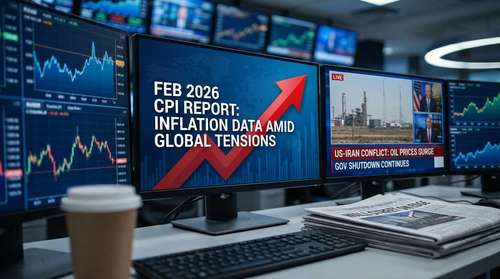
If you are watching the financial markets this Wednesday morning, the tension is palpable. Investors are on edge as the Bureau of Labor Statistics prepares to release the highly anticipated February CPI report 2026. Following a grueling, historic 43-day government closure, Wall Street is desperately seeking clarity on inflation. However, conflicting signals from the White House regarding the U.S.-Iran war are adding a dense layer of geopolitical fog to an already complex economic picture.
Safe Havens Surge as US Stock Market Futures Slip
As the opening bell approaches, US stock market futures are flashing red across the board. Traders are rapidly digesting the latest overnight developments in the Middle East, pushing futures on the Dow Jones Industrial Average down 0.25%, while the S&P 500 and Nasdaq 100 slipped 0.13% and 0.12%, respectively.
This widespread retreat from equities has triggered a massive, global flight to safety. Precious metals are experiencing unprecedented trading volume, with bullion trading around an astonishing $5,158 per ounce—officially establishing a massive gold spot price record. This aggressive pivot toward safe-haven assets underscores the deep anxiety institutional investors feel regarding prolonged geopolitical instability, supply chain fracturing, and persistent domestic price pressures.
Deciphering the Iran War Oil Price Impact
Ahead of today's release, economists project that headline inflation will hold steady at 2.4% year-over-year, with a modest month-over-month increase of 0.3%. Core inflation, which strictly strips out volatile food and energy sectors, is expected to match its January level of 2.5%. Beneath the surface, the data is expected to show a cooling trend in used vehicle prices and housing, largely offset by the early stages of rising transportation costs.
While it is unlikely higher gas prices will drastically alter the February CPI report 2026, analysts warn that these numbers come with a massive caveat. The February data was largely collected before the most recent escalation in the Middle East, meaning the full Iran war oil price impact will not be visible until next month's highly anticipated March release.
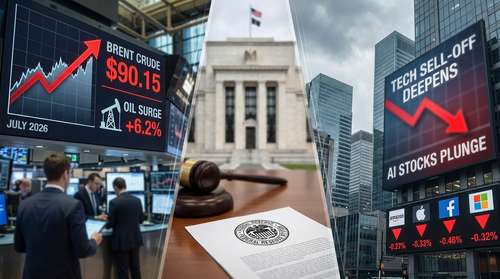
Crude markets have been on a violent roller-coaster ride over the past 48 hours. After threatening to break well into triple digits earlier this week, West Texas Intermediate (WTI) temporarily settled near $87.09 per barrel, and Brent crude retreated to $91.33. Despite this brief intraday pullback, gasoline prices at the pump have jumped more than 18% since the conflict began. Retail fuel costs are now nearing $3.54 per gallon nationwide, threatening to severely erode consumer spending power right as the crucial spring shopping season begins.
The Toll on Main Street Operations
The combination of global geopolitical shocks and lingering domestic friction is weighing heavily on local enterprises. The latest small business sentiment index from the NFIB reflects this intense strain, with optimism falling to 98.8 in February. Owners are reporting severe difficulties in forecasting real sales volumes, while simultaneously facing a tightening credit market.
Many of these local firms are still piecing together the fragile government shutdown economic recovery. The unprecedented 43-day federal lapse heavily dragged down fourth-quarter GDP to a sluggish 1.4% annualized rate, disrupting everything from federal contracting to basic consumer confidence. Just as supply chains finally began to normalize, the sudden spike in energy and freight costs has forced countless business owners to permanently shelve their 2026 expansion plans.
Navigating the Fed Rate Outlook 2026
All eyes now turn to the Federal Reserve's upcoming March 18 policy meeting. Just a few short months ago, market consensus confidently priced in a dovish pivot and a rate cut for the spring. Now, the Fed rate outlook 2026 appears decidedly hawkish, fundamentally rewritten by international conflict.
Incoming Fed Chair Kevin Warsh faces a daunting immediate challenge: balancing a softly cooling labor market against the very real, impending threat of stagflation. While the U.S. economy managed to add 130,000 jobs in January and nudged the unemployment rate down to 4.3%, manufacturing surveys paint a divided picture. The prices paid component of the ISM Manufacturing PMI recently jumped to 70.5, signaling intense input price pressures that are bound to trickle down to the consumer level.
Consequently, an imminent interest rate cut is now viewed as highly improbable. Analysts at major institutions recently noted that elevated oil prices and defense spending will likely keep the central bank firmly on hold. Current CME FedWatch Tool data indicates that traders have practically abandoned all hopes for a March rate reduction, reluctantly shifting their expectations to late summer or perhaps even October.
As Wall Street parses the final numbers of the February CPI report 2026, policymakers find themselves fundamentally trapped between a rock and a hard place. If energy costs continue to unilaterally dictate broader consumer prices, the Fed may have no choice but to endure a domestic economic slowdown to prevent inflation from running hot once again. Until a decisive resolution emerges in the Middle East, market volatility will likely remain the only absolute certainty for investors.