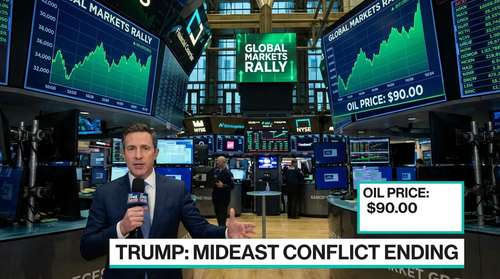
Financial markets experienced a dramatic reversal on Tuesday as the oil price crash 2026 materialized, bringing rapid relief to investors worldwide. After briefly surging near the $120 mark, international benchmark Brent crude tumbled back to roughly $90 a barrel following a pivotal Trump Iran war update. This sudden de-escalation signal instantly cooled fears of a prolonged Middle East conflict economic impact, triggering a massive global stock market rally that swept across Asian, European, and American trading sessions. For institutional and retail investors alike, the last 48 hours have served as a masterclass in headline-driven trading, highlighting how deeply intertwined modern geopolitical developments are with domestic equity performance.
Trump Iran War Update Sparks Rapid Market Reversal
The catalyst for this week's extreme energy market volatility was a televised address that completely shifted trader sentiment. Speaking to CBS News on Monday, President Donald Trump stated that the military operations in Iran are "very complete, pretty much" and progressing far ahead of his initial four- to five-week estimated time frame. He pointedly noted that the opposing forces lack functional naval and aerial capabilities, and that targeted strikes had effectively neutralized drone manufacturing facilities. These remarks immediately deflated the risk premium that had built up over the past ten days as the conflict intensified and the Strait of Hormuz effectively closed to shipping.
While the administration maintained a hardline stance—warning that any attempt by Tehran to "hold the world hostage" by blocking the globe's oil supply would be met with severe retaliation—the suggestion that direct military engagement could end soon gave markets exactly what they needed. The recent appointment of Mojtaba Khamenei as Iran's new Supreme Leader had previously stoked fears of entrenched hostilities, an action the US President publicly dismissed as a "big mistake". However, the latest communications from Washington suggest a narrower scope of future military action than initially feared, allowing traders to breathe a collective sigh of relief.
Oil Price Crash 2026: Crude Oil 90 Dollars in Focus
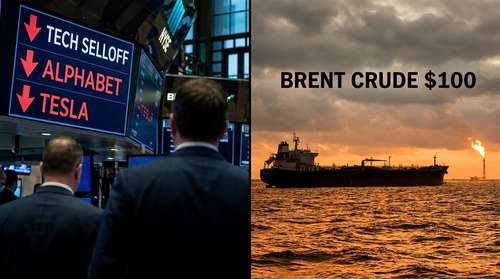
Energy traders experienced intense whiplash between Monday morning and Tuesday afternoon. Brent crude had skyrocketed past $118—its highest level since the 2022 supply shocks following Russia's invasion of Ukraine—before the geopolitical risk premium violently collapsed. By Tuesday morning, the market witnessed the defining oil price crash 2026, with Brent sliding down to $87.20 and West Texas Intermediate (WTI) falling to $88.30 per barrel. This represented a swift roughly 25% reversal from peak panic levels.
Seeing crude oil 90 dollars again was not just a reaction to diplomatic soundbites. Behind the scenes, structural interventions helped calm the panic. The Group of Seven (G7) energy ministers, alongside the International Energy Agency, signaled their readiness to release millions of barrels from strategic petroleum reserves to offset any major disruptions caused by the Gulf conflict. This coordinated international backstop forced speculators to quickly unwind their long positions, accelerating the downward pressure on crude contracts. Analysts caution that the situation remains fluid, but the sheer velocity of the selloff indicates that worst-case supply disruption scenarios are being priced out of the market.
The Middle East Conflict Economic Impact Moderates
When oil threatens the $120 threshold, the entire macroeconomic picture darkens significantly. Elevated energy costs act as a regressive tax on consumers and threaten to reignite sticky inflation, which would force central banks like the Federal Reserve to abandon rate cuts and hold borrowing costs higher for longer. By crashing back to the $90 range, crude oil has removed the immediate threat of energy-driven stagflation. Retail gasoline prices, which typically lag wholesale crude movements, are now expected to stabilize just in time for the spring driving season, offering a critical buffer for consumer spending.
S&P 500 Futures Today Lead Global Equities Higher
The equity landscape transformed entirely as crude prices sank. Looking at S&P 500 futures today, contracts tracking the broader index rose 0.4% to 6,830.75, erasing steep overnight losses that had previously plunged the futures market by nearly 2.5% during the Asian session. Dow Jones Industrial Average futures simultaneously recovered, adding around 0.4% to hover near 47,970, a stark contrast to the 1,000-point tumble experienced just days prior. Tech-heavy Nasdaq futures also joined the ascent, climbing back above the 25,000 mark as bond yields cooled in tandem with oil.
This localized optimism quickly evolved into a synchronized global stock market rally. Japan's Nikkei 225 closed with a massive 2.9% gain at 54,248.39, aided by upwardly revised domestic economic growth data showing a 1.3% annualized expansion. In Europe, Germany's DAX surged 2.4% and Britain's FTSE 100 gained 1.6%, breaking weeks of persistent downward pressure. Institutional investors reallocated capital away from safe-haven assets and back into growth-oriented sectors that are highly sensitive to inflation expectations.
Moving forward, Wall Street remains highly attentive to the incoming US consumer inflation figures. While the immediate panic has subsided, traders will keep a close eye on the Persian Gulf. Any disruption to the roughly 20% of global oil shipments that pass through the Strait of Hormuz could easily reignite energy market volatility. For now, however, equities are celebrating a much-needed reprieve, and buyers are confidently stepping back into the fray.