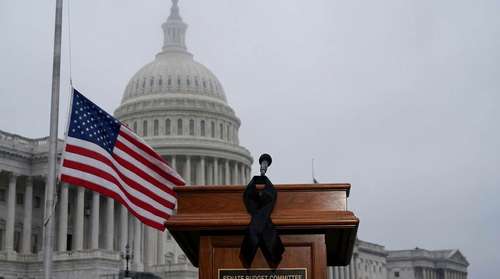
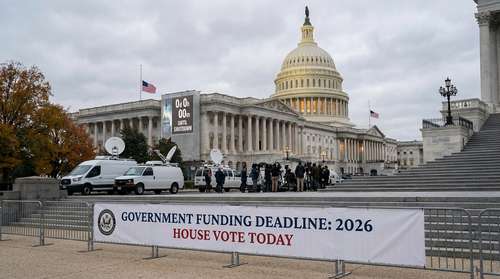
The U.S. Capitol is buzzing with renewed urgency this Monday as the House of Representatives returns to Washington, D.C., attempting to end a partial government shutdown 2026 that has entered its third day. With federal agencies partially shuttered and thousands of employees facing furloughs, Speaker Mike Johnson is rallying his conference to pass a Senate-brokered funding package. The high-stakes vote, expected to take place by Tuesday, hinges on a delicate compromise: passing five full-year appropriations bills while temporarily extending funding for the Department of Homeland Security (DHS) to buy time for contentious immigration negotiations.
The Senate Minibus Deal: What’s on the Table?
The path to reopening the government relies on the House accepting a legislative package passed by the Senate late Friday night. This "minibus" deal is designed to resolve the majority of the fiscal year's outstanding budget battles while isolating the most explosive issue—border security—for a later date. Specifically, the package includes full FY2026 funding for key departments, including Defense, State, and Treasury, ensuring the military and diplomatic corps remain fully operational through September.
However, the deal stops short of a complete resolution. To avoid a total collapse of negotiations, Senate leaders attached a two-week continuing resolution (CR) for the Department of Homeland Security. This stopgap measure is intended to keep DHS running until February 13, creating a narrow window for lawmakers to hash out differences regarding Immigration and Customs Enforcement (ICE) protocols following recent controversies in Minnesota.
Why the DHS Funding is the Sticking Point
The FY2026 federal budget negotiations hit a wall last week after Senate Democrats demanded significant reforms to ICE operations. The standoff was triggered by the fatal shootings of two U.S. citizens by federal agents in Minneapolis earlier this month, incidents that sparked outrage and calls for stricter oversight, including mandatory body cameras and changes to engagement rules.
By severing DHS funding from the rest of the package, the Senate minibus deal allows less controversial agencies to reopen immediately. Yet, this strategy merely delays the inevitable clash. "We are buying time, but the clock is ticking loudly," noted one senior Senate aide. The two-week patch means that even if the government reopens this week, Congress will face another potential shutdown cliff for homeland security agencies in less than a fortnight.
Speaker Mike Johnson Faces a Numbers Game
For Speaker Mike Johnson, the challenge is not just the policy, but the math. With a razor-thin Republican majority, Johnson cannot afford significant defections. House Democrats, led by Minority Leader Hakeem Jeffries, have indicated they will not support a fast-tracked "suspension of the rules" vote—which requires a two-thirds majority—unless further concessions are made. This forces Republican leadership to pursue a standard "rule" vote, a procedurally slower path that requires near-unanimous GOP unity.
Speaking on Sunday, Speaker Johnson expressed confidence that he has the votes to reopen the government "at least by Tuesday." He acknowledged the logistical hurdles of getting members back to D.C. following winter storms but remained firm that the Senate's compromise was the only viable path forward. "We have a responsibility to govern, and we will get this done," Johnson told reporters.
Impact of the Shutdown: Delayed Jobs Report and Furloughs
While this shutdown is currently limited in scope compared to historical precedents, its effects are already rippling through the economy. The Department of Labor confirmed Monday that the release of the highly anticipated January 2026 jobs report, originally scheduled for Friday, will be delayed. The Bureau of Labor Statistics (BLS) cited the suspension of data processing activities due to the funding lapse.
For federal workers, the uncertainty is familiar but frustrating. Thousands of employees across the nine affected departments have been placed on furlough or are working without pay. The federal government reopening update many are waiting for depends entirely on the House Rules Committee meeting scheduled for Monday afternoon, which will set the stage for the final floor vote. If successful, agencies could resume normal operations as early as Wednesday morning.
What to Expect Next in the House Funding Vote
As the House gavels back into session, the political atmosphere is tense. The Freedom Caucus remains a wildcard, with some members expressing skepticism about the two-week DHS extension, viewing it as a surrender of leverage. However, with President Trump endorsing the package over the weekend to avoid a prolonged distraction, internal GOP opposition may be muted.
The timeline for the House funding vote is tight. Procedural votes are expected Monday evening, with final passage of the minibus slated for Tuesday. If the measure passes, it will go directly to the President's desk for a signature, officially ending the partial shutdown. However, the reprieve will be short-lived. The February 13 deadline for DHS funding looms large, promising another round of intense negotiations over immigration policy and enforcement reform in the days ahead.