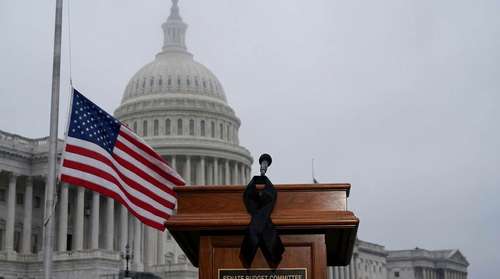
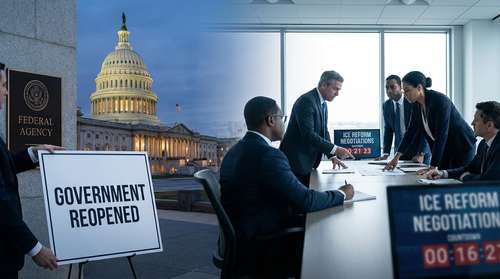
WASHINGTON — The U.S. House of Representatives narrowly passed a $1.2 trillion spending package late Tuesday, ending a four-day partial government shutdown and restoring funding to federal agencies. The vote, which fell 217-214, provides full-year funding for most government operations through September but sets up a volatile 10-day deadline to negotiate controversial reforms for U.S. Immigration and Customs Enforcement (ICE).
Government Reopens, But DHS Funding Deadline Looms
The bipartisan deal marks a temporary truce in what has become one of the most contentious budget battles of the 119th Congress. While the legislation secures funding for the Pentagon, the Department of Health and Human Services, and other key agencies, it leaves the Department of Homeland Security (DHS) on a short leash. Lawmakers have until February 13 to bridge a deep partisan divide over immigration enforcement tactics.
Speaker Mike Johnson (R-La.) relied on 21 Democrats to carry the bill across the finish line, overcoming resistance from hardline conservatives who demanded steeper cuts. "We have a logistical challenge, but we have a duty to govern," Johnson told reporters after the vote. "This agreement keeps our military paid and our government open while we finalize necessary guardrails for homeland security."
Minneapolis Shootings Spark Demand for ICE Reform
The impasse over DHS funding is directly tied to the recent fatal shootings of two civilians by federal agents in Minneapolis, incidents that have ignited nationwide protests and demands for accountability. The shootings occurred during "Operation Metro Surge," a controversial aggressive enforcement campaign launched by the administration earlier this year.
Democrats successfully leveraged the shutdown negotiations to demand changes after the death of Renee Nicole Good, 37, who was shot by an ICE officer in her vehicle on January 7, and Alex Jeffrey Pretti, a VA nurse killed by Border Patrol agents weeks later. "We cannot sign a blank check for an agency that operates with impunity in our streets," said House Minority Leader Hakeem Jeffries (D-N.Y.).
The short-term funding patch for DHS is designed to force a negotiation on specific reforms. Democrats are pushing for measures that go beyond the $20 million for body cameras already included in the bill. Their demands include:
- Mandatory judicial warrants for ICE agents entering private residences.
- A prohibition on agents concealing their identities with face masks during non-tactical operations.
- An end to "roving patrols" in sanctuary jurisdictions.
Administration's Stance on Enforcement
President Donald Trump, now in the second year of his second term, signaled support for the stopgap measure to reopen the government but has remained steadfast in his support for DHS leadership. DHS Secretary Kristi Noem has pushed back against what she calls "micromanagement" of law enforcement, though she conceded on the immediate deployment of body cameras to agents in the Twin Cities.
"The President wants the border secure and our communities safe," Noem stated in a press briefing Monday. "We will discuss protocols, but we will not defang the men and women protecting this country."
What's Next: The 10-Day Countdown
With the government reopening Wednesday morning, attention immediately shifts to the February 13 deadline. If a deal on ICE reforms isn't reached, Congress faces the prospect of a targeted shutdown of the Department of Homeland Security, which would furlough thousands of administrative staff while leaving essential agents working without pay.
The negotiations are expected to be tense. Progressive Democrats have vowed to vote against any final DHS package that doesn't include statutory restrictions on use of force, while the House Freedom Caucus has threatened to revolt if the agency's operational capacity is restricted. For Speaker Johnson, the next week represents another high-wire act as he attempts to balance his slim majority against the urgent need for immigration enforcement accountability.