
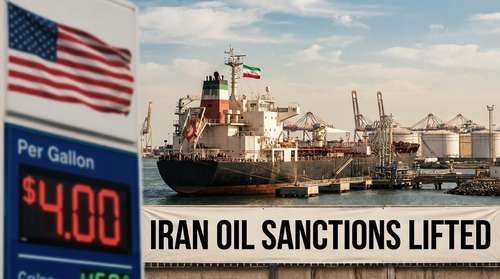
The global energy market is experiencing unprecedented volatility as the oil price surge 2026 sends shockwaves through the broader economy. With U.S. gas prices $4 gallon becoming a grim reality for consumers, the Trump administration has executed a drastic and controversial policy maneuver. In a scramble to mitigate a spiraling US energy crisis, the Treasury Department authorized the release of 140 million barrels of sanctioned Iranian oil currently stranded at sea. The sudden shift aims to cool down overheated markets triggered by the Strait of Hormuz closure, though it has sparked fierce bipartisan debate over the financial lifeline it provides to Tehran amid active military engagements.
The Strategic Shift: Iran Oil Sanctions Lifted
Late Friday, Treasury Secretary Scott Bessent announced General License U, a narrowly tailored directive allowing the temporary sale, delivery, and offloading of Iranian crude already loaded onto vessels. Having Iran oil sanctions lifted—even temporarily until the April 19 deadline—unlocks millions of barrels previously trapped by the administration's stringent "maximum pressure" campaign.
The newly issued license covers not only the sale of the cargo but also crucial maritime activities such as docking, anchoring, emergency repairs, bunkering, and insurance for the vessels involved. The authorization is broad but strictly prohibits transactions involving entities in North Korea, Cuba, or Russian-occupied regions of Ukraine.
Administration officials argue that injecting this existing supply into the global market will relieve logistical bottlenecks without directly funding new Iranian extraction. Bessent stated the move prevents the stranded oil from being "hoarded by China on the cheap," aiming instead to weaponize the floating supply to stabilize global energy prices. Security analysts and lawmakers, however, view the authorization with intense skepticism. Critics point out that this maneuver could hand the Iranian regime an unexpected cash windfall estimated at up to $14 billion. Allowing Tehran access to these funds while U.S. forces remain engaged in the region has left foreign policy experts questioning the long-term viability of the strategy.
Strait of Hormuz Closure Triggers Global Shockwaves
The root of this emergency measure lies in the geopolitical flashpoint that erupted in late February. The effective Strait of Hormuz closure to commercial tanker traffic has paralyzed a critical maritime artery that normally handles roughly 20% of the world's seaborne oil trade. With tanker operators avoiding the chokepoint due to active military engagements, missile strikes, and drone threats, major Arab oil producers have struggled to export their petroleum safely.
This logistical nightmare has rapidly accelerated a domestic vulnerability, reminding consumers that global commodities remain deeply interconnected. Recent retaliatory strikes on energy infrastructure—including significant damage to Qatar's Ras Laffan liquefied natural gas facility and Iran's South Pars gas field—have only deepened the supply shock. QatarEnergy recently reported that the attacks wiped out 17% of its LNG capacity for up to five years.
The White House has been forced to search for immediate release valves. Previous strategies, including ordering the release of 172 million barrels from the Strategic Petroleum Reserve and allowing foreign ships to move oil between U.S. ports, failed to meaningfully dent the rally. This prompted the administration to prioritize the newly unlocked 140 million Iranian barrels.
Market Reaction and the Brent Crude Price Today
The financial fallout has been swift and unforgiving across international trading floors. Tracking the Brent crude price today reveals a market on edge; the global benchmark recently spiked to $116 a barrel, marking its highest level since mid-2022, before experiencing a slight pullback. Domestic markets have mirrored this panic, pushing West Texas Intermediate (WTI) futures significantly higher and driving the national average for retail gasoline near four-year highs.
The pain extends beyond liquid crude. European natural gas prices surged over 20% following the infrastructure attacks, creating a compounded energy crisis for U.S. allies. Commodity traders are closely monitoring shipping lanes to see if the sudden introduction of floating storage can offset the estimated two weeks of disrupted flows through the paralyzed strait. So far, the risk premium remains heavily priced into every barrel traded.
The Battle Between Inflation and Oil Prices
Beyond the pump, the cascading effects of this energy crunch are threatening broader macroeconomic stability. The historical relationship between inflation and oil prices is practically ironclad. As baseline energy costs soar, the expense of manufacturing, shipping, and producing everyday consumer goods inevitably follows.
Stock markets across Europe, Asia, and the U.S. slumped late last week as investors digested the implications of a prolonged Middle Eastern conflict combined with surging overhead costs. Federal Reserve officials now face a complicated landscape, as the sudden energy-driven inflationary pressure threatens to undo months of careful economic maneuvering. Major indices have seen cumulative declines as corporate profit margins are squeezed by exorbitant fuel expenses.
By utilizing General License U to free up floating oil reserves, the administration is making a calculated gamble. The objective is to increase global supply just enough to break the inflationary fever and bring relief to working families currently battered by soaring fuel costs. Whether this short-term authorization can successfully balance the scales of global energy demand without compromising ongoing strategic operations will be the defining economic test of the coming weeks.